Coinage of the Late Byzantine period (1071 to 1460 AD)
| No. |
Photo |
Description |
|
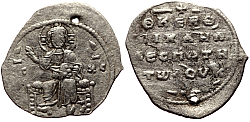 |
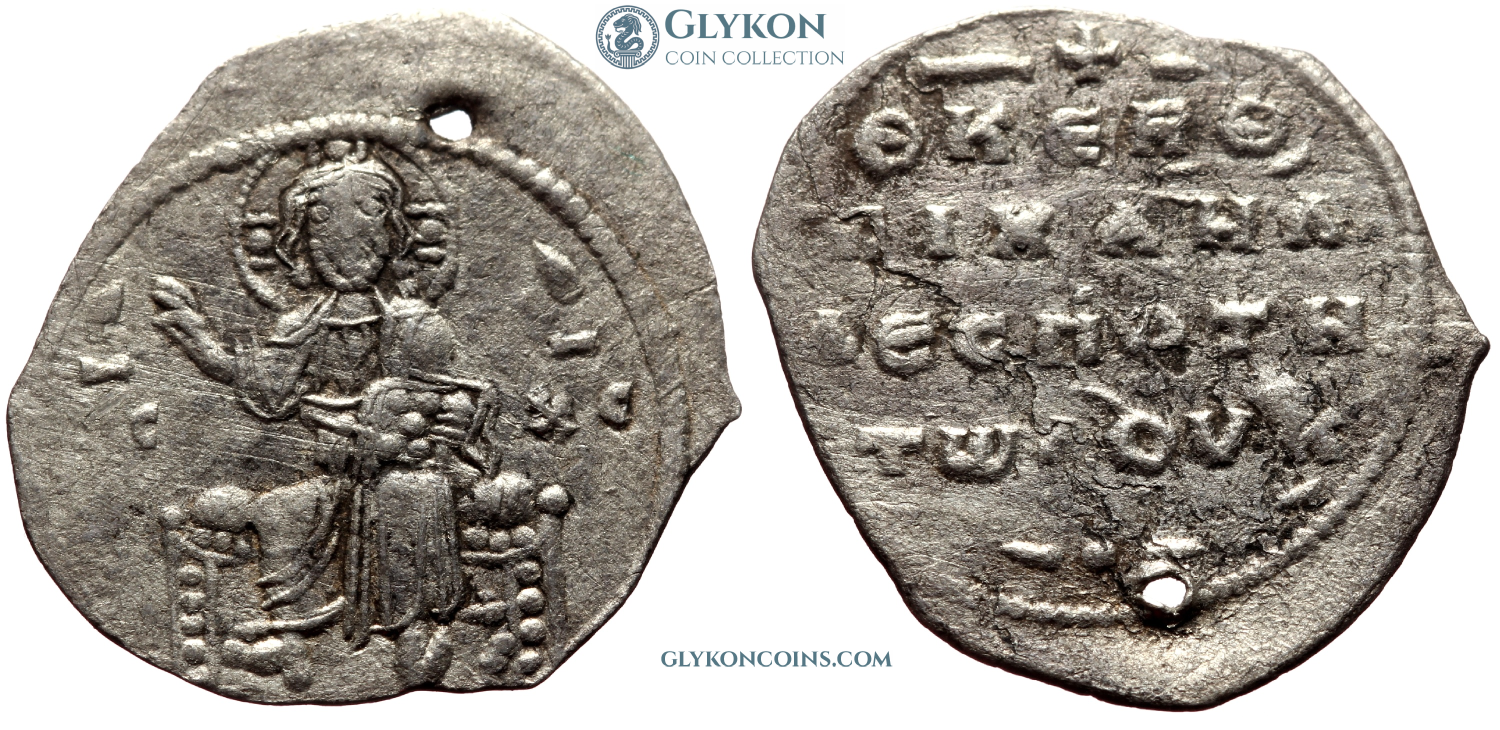
Michael VII Ducas (1071-1078 AD)
Denomination: 2/3 miliaresion
Mint: Constantinople
Time: 1071-1078 AD
Weight: 1.31 g
Diameter: approx. 20.8 mm
Reference: Sear 1875
Obverse: Enthroned Christ with nimbate (that is, haloed) cross behind head, holding a book of gospels and raising His right hand. Legend: IC-XC (monogram of Christ) with lines above.
Reverse: Legend in six lines: -+- / ΘKЄRΘ / MIXAHΛ / ΔЄϹΠΟΤH. / Tω ΔOV KA / -*-
Comment: Drilled hole. Someone used it as a piece of jewelry. |
|
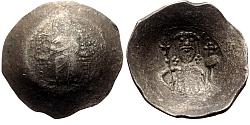 |
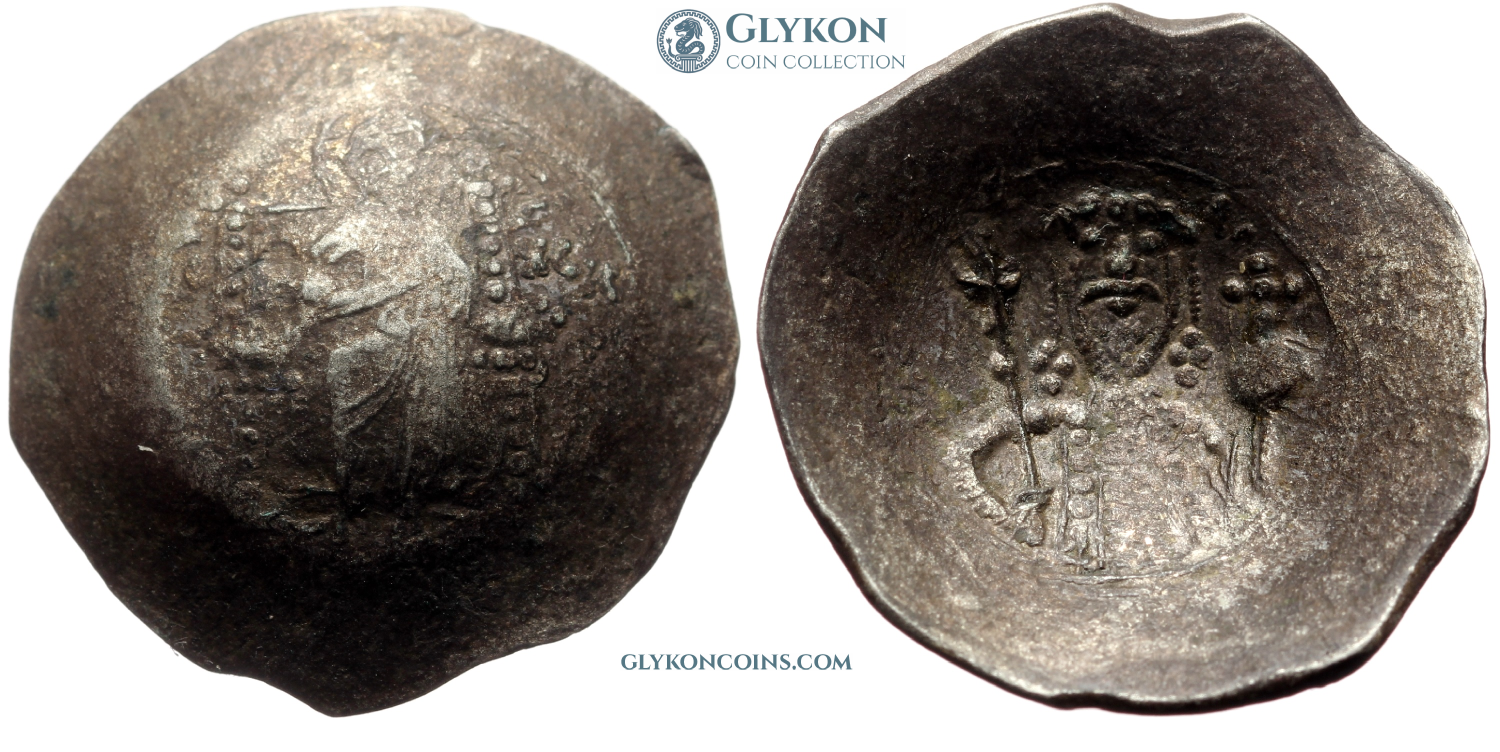
Alexios I Komnenos (1081-1118 AD)
Denomination: billon trachy (aspron trachy)
Mint: Constantinople
Time: 1081-1118 AD
Weight: 3.77 g
Diameter: approx. 26.4 mm
Reference: Sear 1918
Obverse: Christ with nimbate (that is, haloed) cross behind head, seated on a throne, holding a book of gospels. Legend: IC-XC (monogram of Christ).
Reverse: Facing bust of Alexios, crowned, wearing divitision and loros, holding sceptre cruciger in right hand and globus cruciger in left hand. Legend: ΑΛЄΖΙω ΔЄϹΠτ (Emperor Alexios).
Comment: During the Komnenian era, the cup-shaped Byzantine coins known as trachea reached their definitive form. Their strongly concave shape made them extremely difficult to strike properly, so it is almost impossible to find a specimen on which the entire obverse and reverse designs and legends are fully visible and legible at the same time. |
|
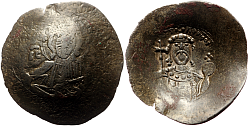 |
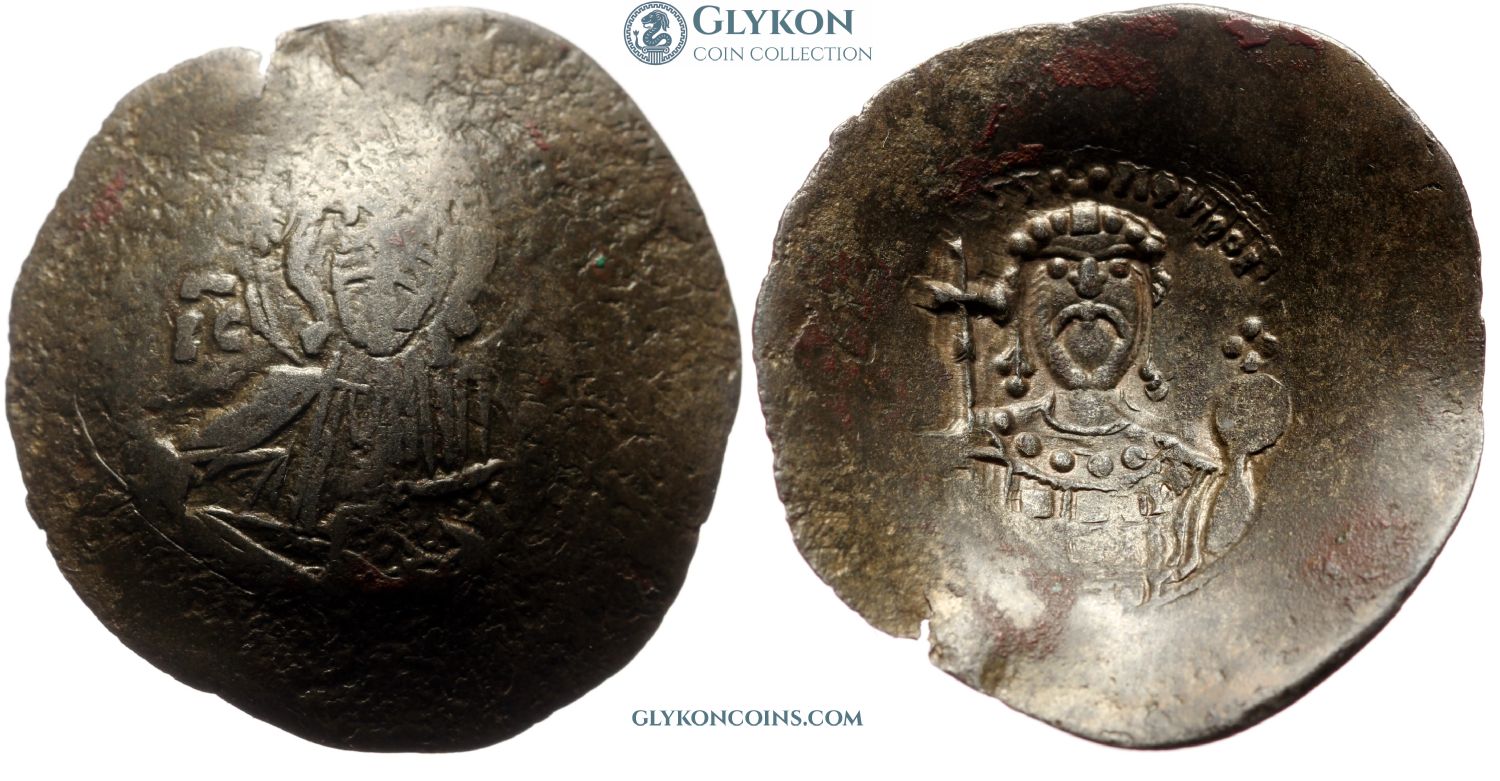
John II Komnenos (1118-1143 AD)
Denomination: billon trachy (aspron trachy)
Mint: Constantinople
Time: 1118-1143 AD
Weight: 3.26 g
Diameter: approx. 29.5 mm
Reference: Sear 1944
Obverse: Facing bust of Christ with nimbate (that is, haloed) cross behind head, holding a dotted book of gospels. Legend: IC-XC (monogram of Christ).
Reverse: Facing bust of John, crowned, wearing divitision and loros, holding sceptre cruciger in right hand and globus cruciger in left hand. Legend: ΙΩ ΔЄϹΠΟΤ Τ ΠΟΥΠΟΓΝΤ (Ioannes Despotes ho Porphyrogennetos - John, emperor, the purple-born). |
|
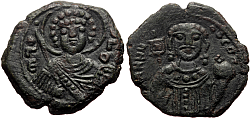 |
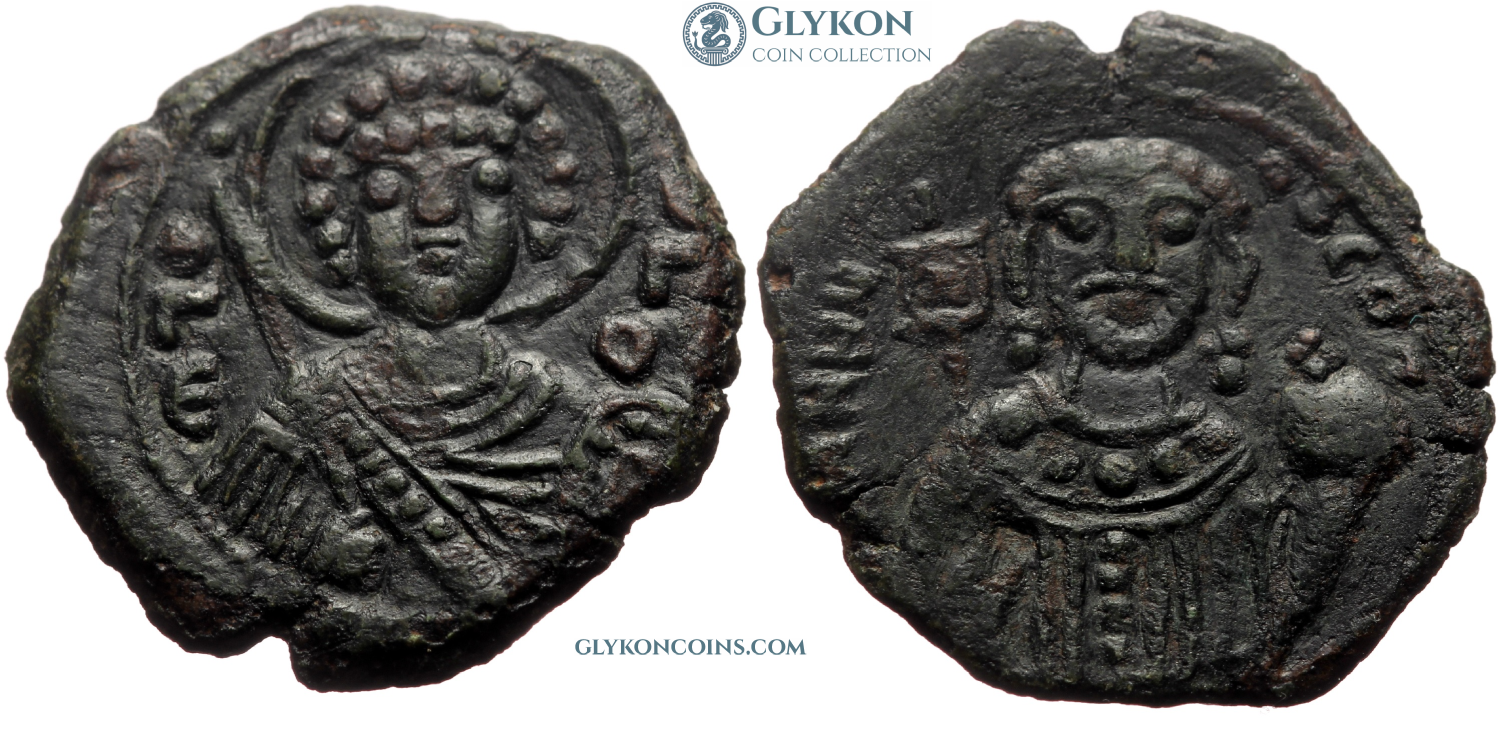
Manuel I Komnenos (1143-1180 AD)
Denomination: Tetarteron
Mint: Thessalonica
Time: 1143-1180 AD
Weight: 3.59 g
Diameter: approx. 19.6 mm
Reference: Sear 1944
Obverse: Facing bust of beardless haloed Saint George in military attire, holding spear and shield. Legend: ΘΓЄ and RωΓIOS.
Reverse: Facing bust of bearded, crowned Manuel wearing loros, holding labarum and globus cruciger. Legend: MANγHΛ ΔΕϹΠΟΤ. |
|
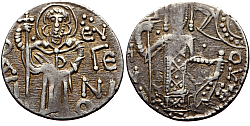 |
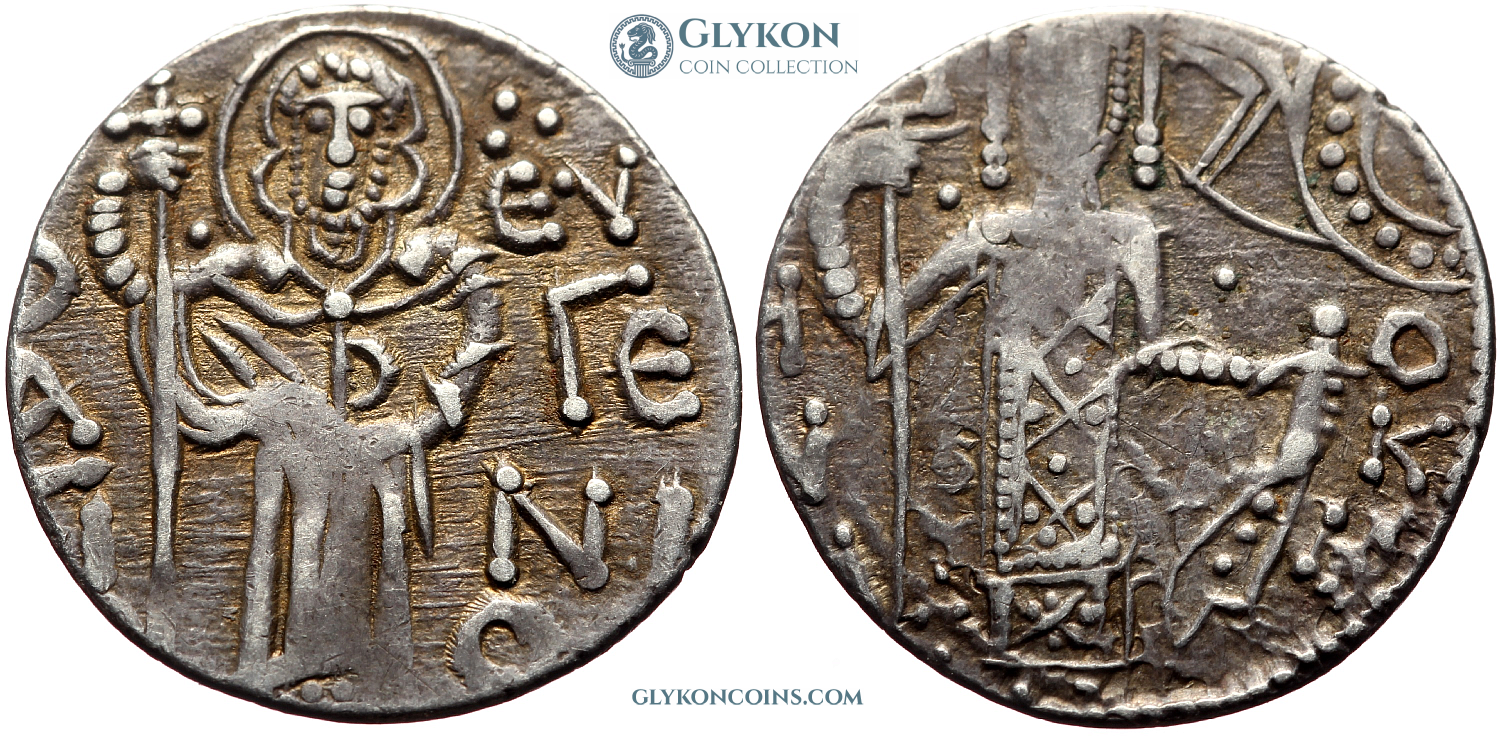
Manuel I Megas Komnenos (1238-1263 AD), Empire of Trebizond
Denomination: silver asper
Mint: Trebizond
Time: 238-1263 AD
Weight: 2.83 g
Diameter: approx. 20.7 mm
Reference: Sear 2601
Obverse: Saint Eugenius standing facing and holding a long cross. Legend: ΟΑΓΙ ЄVΓЄΝΙO.
Reverse: Manuel standing facing holding labarum and akakia, crowned by Manus Dei (Hand of God) above right. Legend: ΜΝΛ ΟΚΗ.
Comment: A coin from the Empire of Trebizond - a pocket empire in what was then already the farthest reaches of the Christian world. Originally a rival regime set up by pretenders to the Byzantine throne even before the Fourth Crusade, it eventually evolved into a state of its own, though struggling to maintain some ties with co-religionists elsewhere. It was the real last island of the former Rome, surrounded on almost all sides by enemies. We know surprisingly little about the fate of this state, and when we do, it's mainly when it is somehow intertwined with wider events. Nevertheless, Trebizond issued a large number of interesting coins, which proves its temporary economic success. This particular coin was minted under Manuel I and is part of the prodigious coinage of that ruler. Ironically, we know almost nothing about him, except that posterity praised him as an unsurpassed commander and ruler. We do know that he managed to recover Sinope from the Turks in the 1250s, and that this city was held by the Trapezuntines for the rest of his life, which shows that his rule most likely coincided with a brief window of success and prosperity. The recovery likely helped to siphon in the lucrative Black Sea trade, giving Trebizond means to mint coinage in large numbers. The temporary coincidence with recovery of Constantinople by the rival empire in Nicaea makes this time the high water mark in the recovery of the Byzantine world post-1204, just before it entered its terminal decline. |
Spotted an error, misattribution, or a forgery? Please contact me!
|