| No. |
Photo |
Description |
|
 |
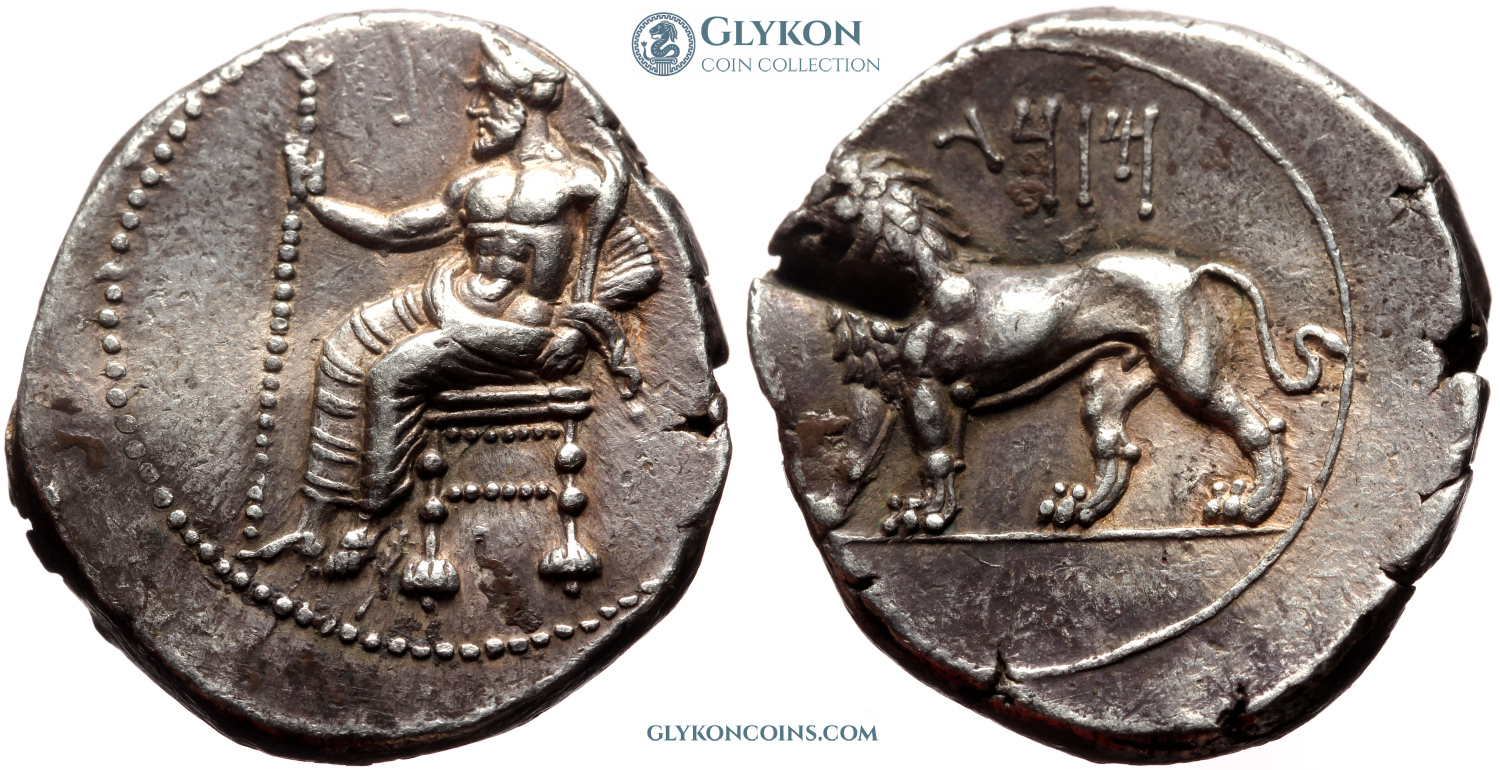
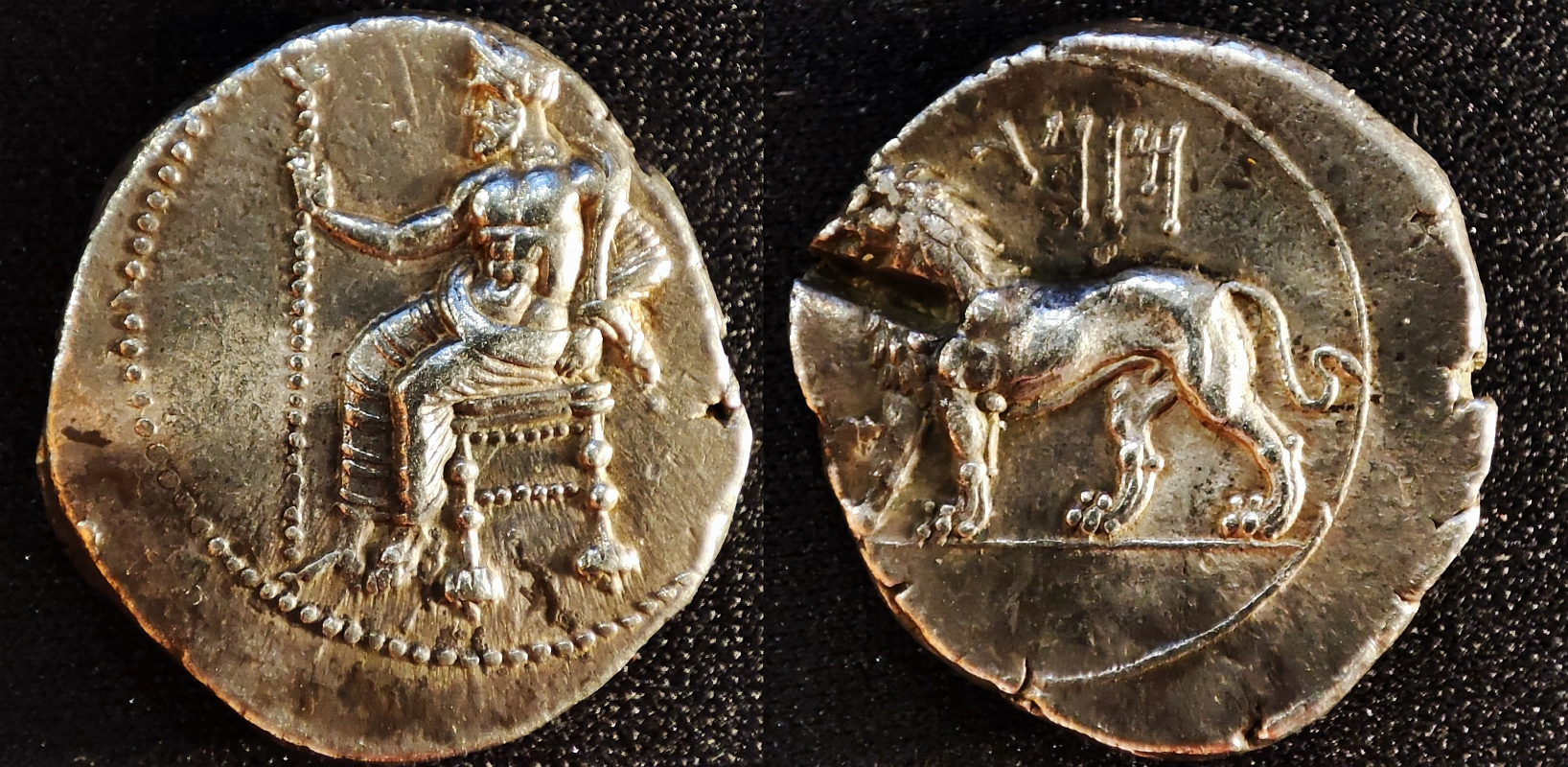
Macedonian Empire under Alexander (336-323 BC), satrap Mazaeus (Mazday)
Denomination: Tetradrachm (or double shekel)
Mint: Babylon
Time: 331-328 BC
Weight: 17.04 g
Diameter: approx. 26.4 mm
Reference: Sear 6139-6141, SNG Cop 260, SNG Berry 1456, BMC Arabia etc. p. 180, 1 var; Ex WCN auction 17/1999 lot 2
Obverse: Baal/Marduk, seated on stool-throne facing left, wearing a himation over his lower limbs, holding a lotus-tipped scepter in outstretched right hand, BLTRZ (Baaltarz) in Aramaic right.
Reverse: Lion walking to left, MZDI (Mazaeus) in Aramaic above. Test cut.
Comment: Mazaeus, a Persian, is a very prominent figure in ancient numismatics, noted for prodigious coinage in Cilicia and later in Babylon. As the last Achaemenid satrap of Babylon he made the prudent move of surrendering the city to Alexander without a fight. He was rewarded by remaining in office and retaining the privilege of minting coins in his own name. This was unprecedented for Alexander's empire. No one else, not even Aleksander's old comrades, was in this position. Mazaeus remained satrap until his natural death in 328 BC. Some speculate that the famous “Alexander Sarcophagus” was made personally for him. |
|
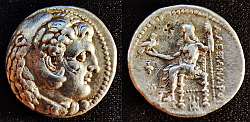 |
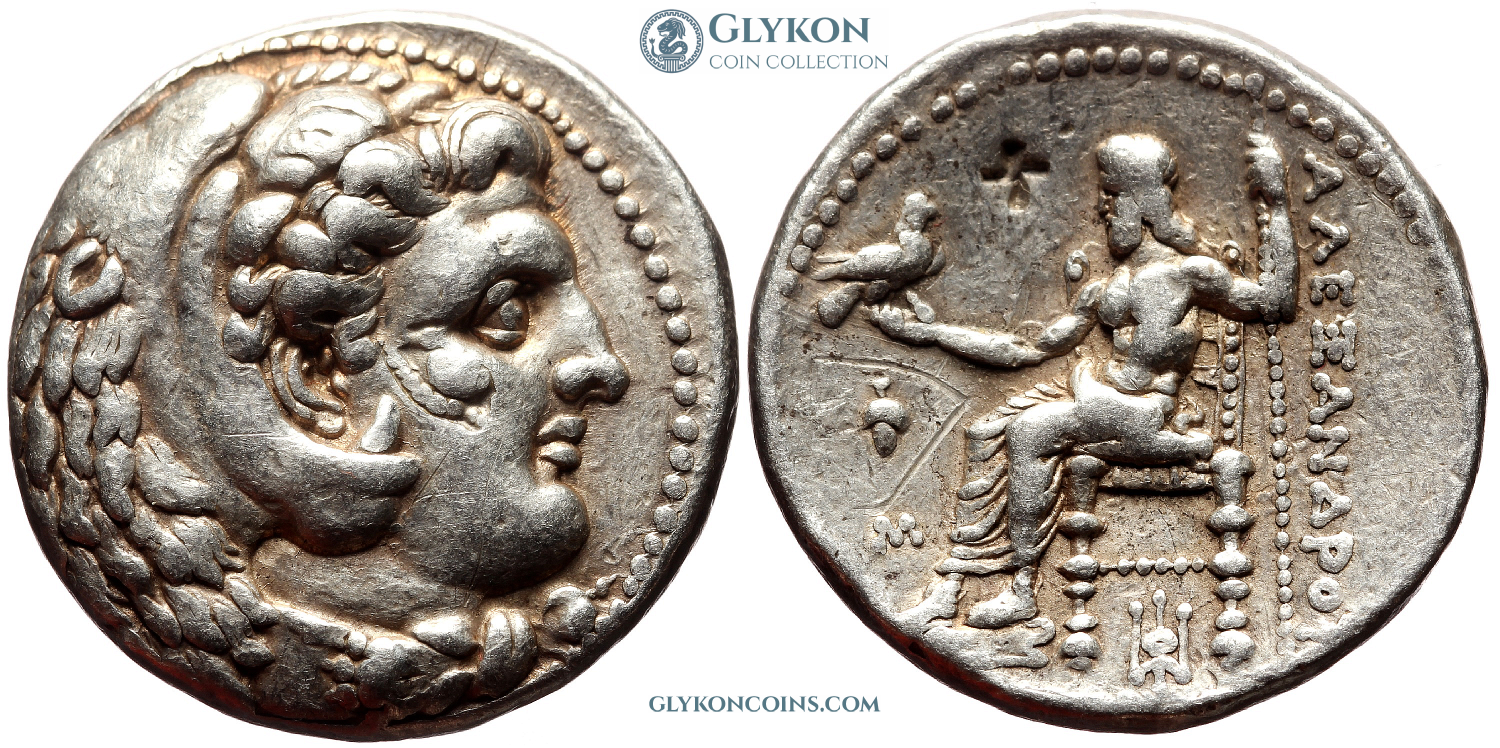
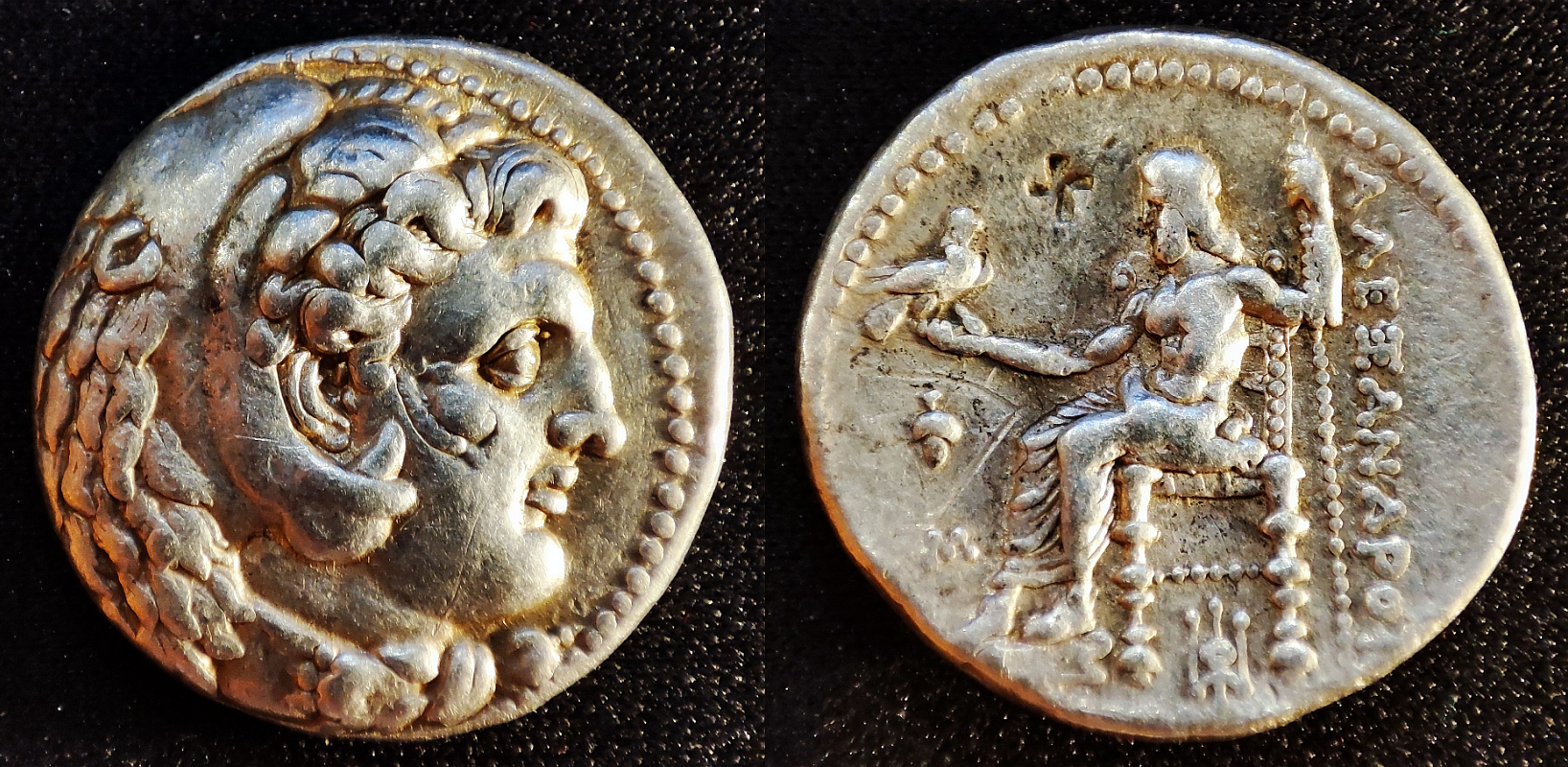
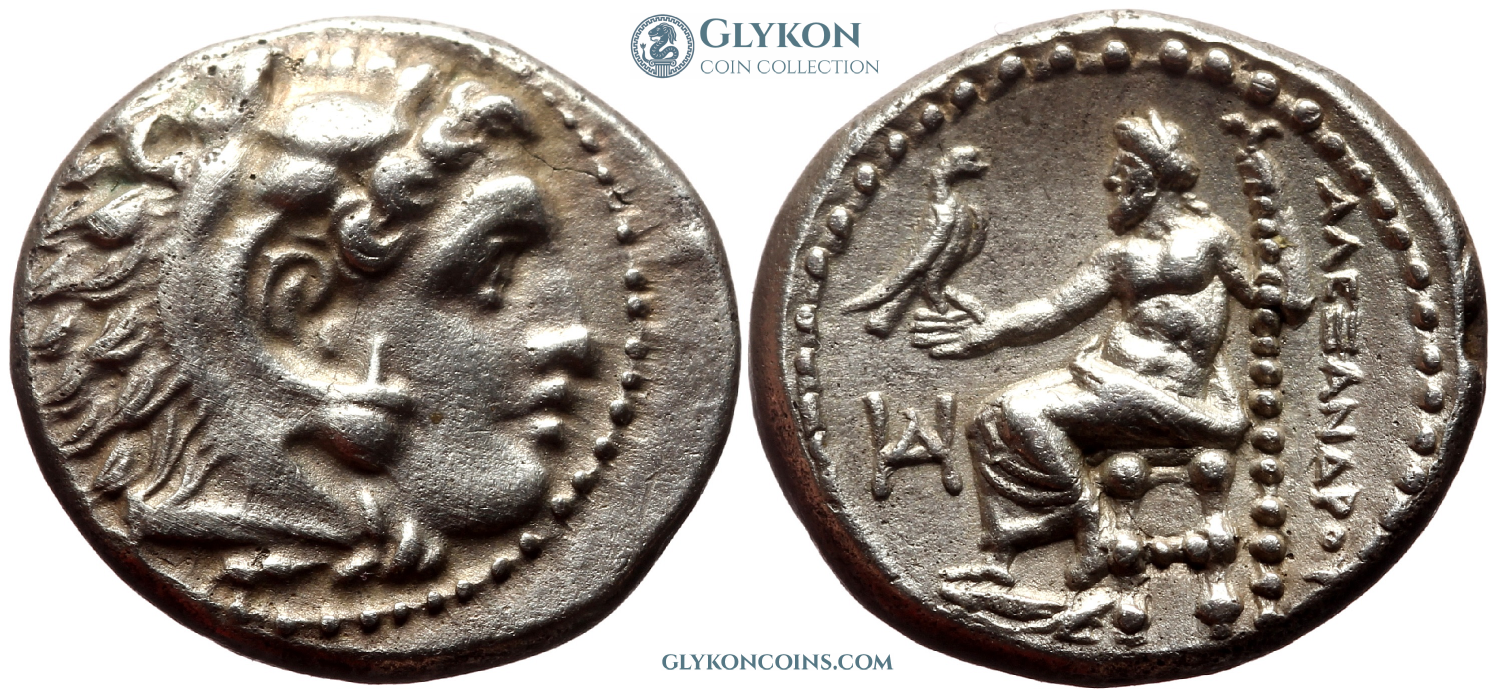
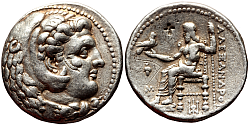
Macedonian Empire under Alexander (336-323 BC)
Denomination: Tetradrachm
Mint: Babylon
Time: 325-323 BC (lifetime)
Weight: 17.23 g
Diameter: approx. 25.6 mm
Reference: Price 3641
Obverse: Head of beardless Heracles wearing lionskin headdress facing right. Eye-like countermark on Heracles' cheek.
Reverse: Zeus Aetophoros (Eagle-bearer) seated on stool-throne facing left, wearing a himation over his lower limbs, eagle on outstretched right hand, scepter in left hand. Legend ΑΛΕΞΑΝΔΡΟΥ (of Alexander) to the right. Grape and Μ as control marks. Cross-shaped countermark, graffiti.
Comment: Lifetime issue, as opposed to massive posthumous coinage in the name of Alexander. Interesting countermarks indicating wide circulation. Also of note is the graffiti, which in my opinion were marks of ownership. Perhaps some soldier, who shared accomodations with his peers for years, did not want his coins to be "claimed" by someone else. While without doubt some rudimentary banking services were developed by the camp followers who accompanied armies at the time, it's fair to assume that not every soldier trusted those shady bankers. |
|
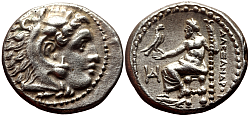 |
Macedonian Empire under Alexander (336-323 BC)
Denomination: Drachm
Mint: Miletus
Time: 336-323 BC (lifetime)
Weight: 4.20 g
Diameter: approx. 15.8 mm
Reference: Price 2090
Obverse: Head of beardless Heracles wearing lionskin headdress to right.
Reverse: Zeus Aetophoros (Eagle-bearer) seated on stool-throne to left, wearing a himation over his lower limbs, eagle on outstretched right hand, scepter in left hand. Legend ΑΛΕΞΑΝΔΡΟΥ (of Alexander) to the right. Control mark. |
|
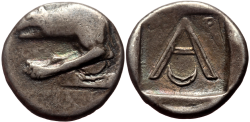 |
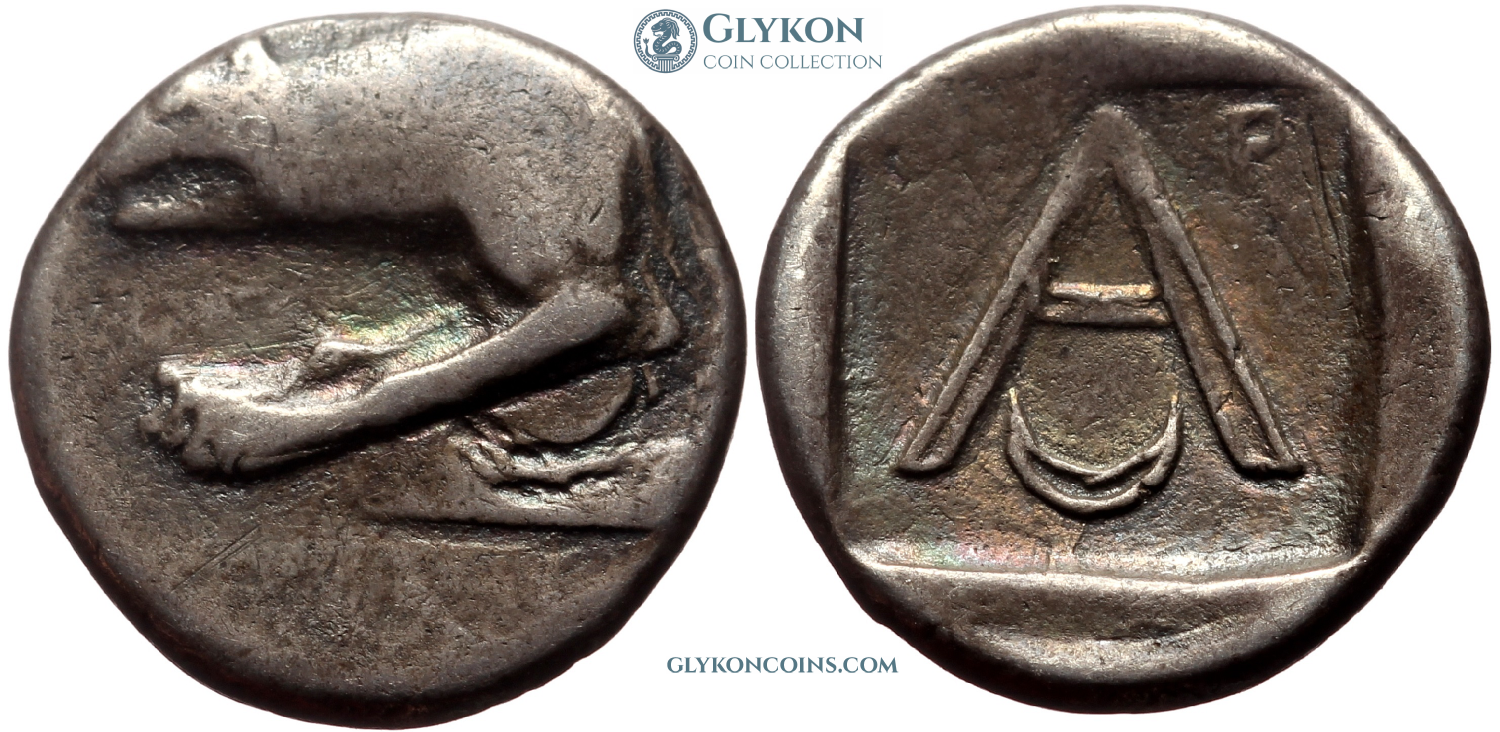
Argos (Peloponnese)
Denomination: Hemidrachm (triobol)
Time: 300-270 BC
Weight: 2.45 g
Diameter: approx. 14.6 mm
Reference: BCD Peloponnesos 1094; HGC 5, 667
Obverse: Forepart of a wolf facing left.
Reverse: Within square incuse: large Α, crescent below, Α-Ρ above. |
|
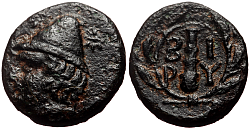 |
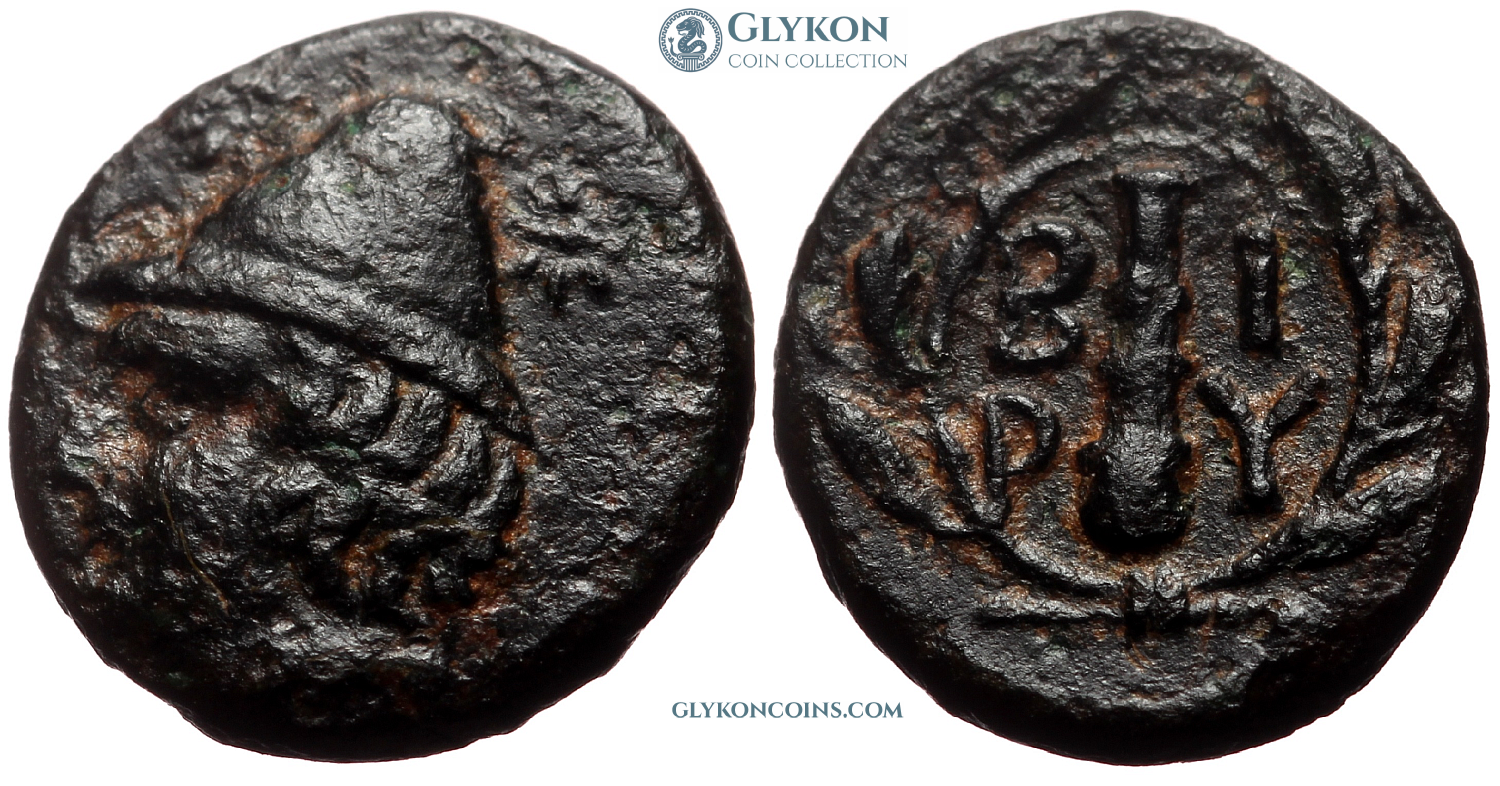
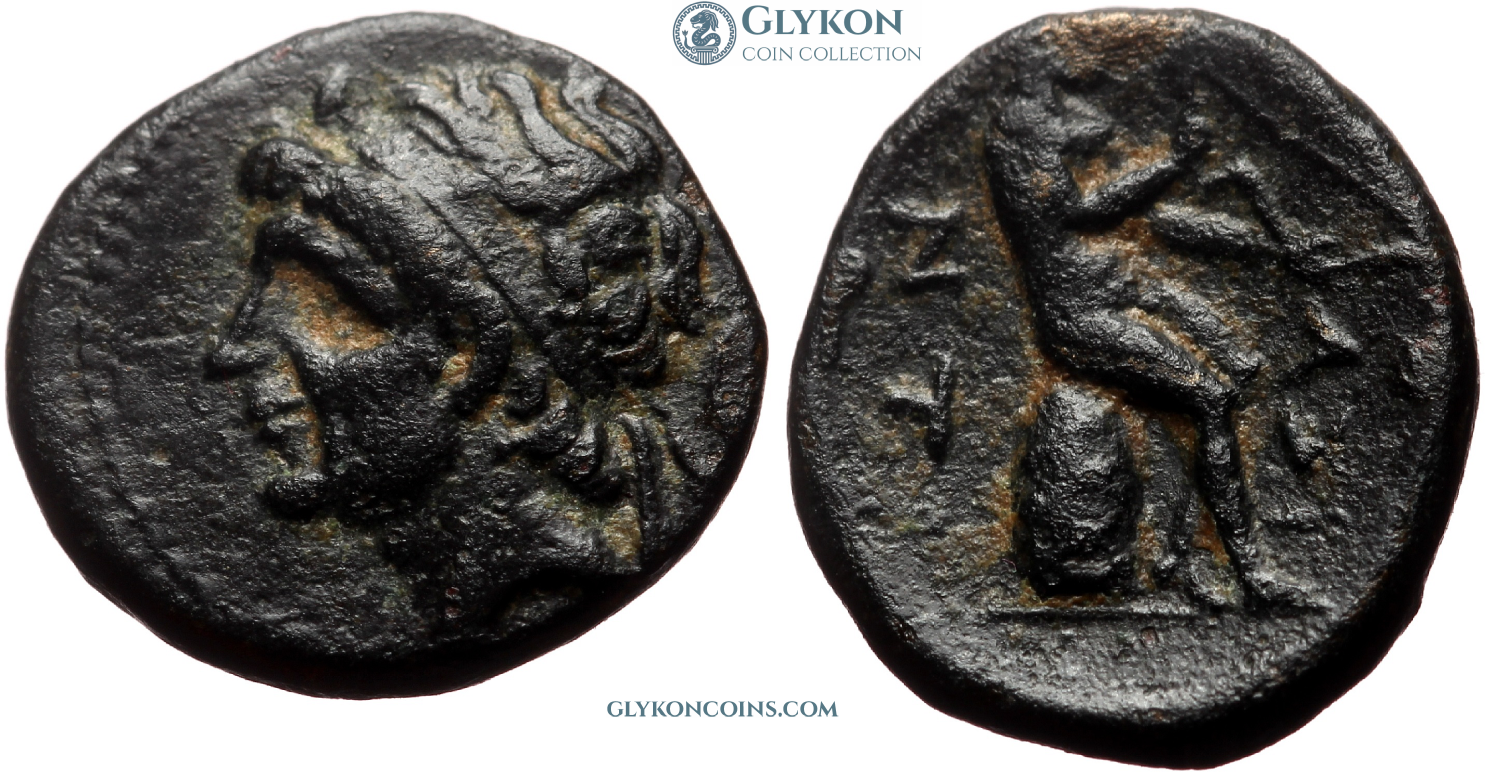
Birytis (Troas)
Denomination: AE11 (Chalkon)
Time: 300- BC
Weight: 1.31 g
Diameter: approx. 11.4 mm
Reference: BMC Vol. 17, pg. 40, 4; SNG Cop. 249
Obverse: Head of Kabeiros (enigmatic Aegean deity), beardless and wearing pilos (conical hat), facing left. Two stars flanking pilos.
Reverse: Within a laurel wreath B-I/P-Y around a club pointed downwards. |
|
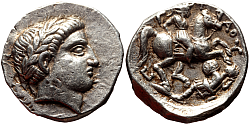 |
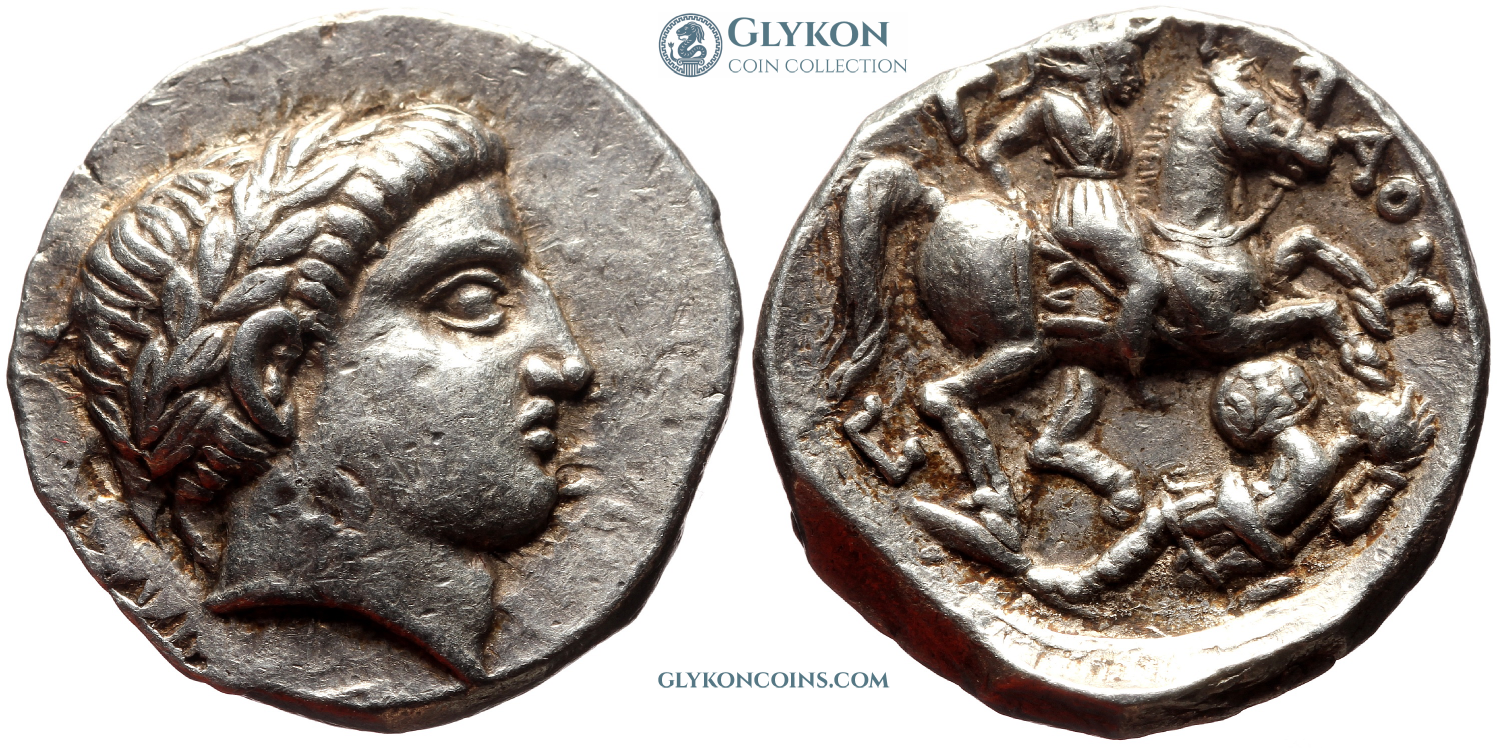
Patraos, King of Paeonia (340-315 BC)
Denomination: Tetradrachm
Mint: ---
Time: 323-315 BC
Weight: 12.67 g
Diameter: approx. 24.7 mm
Reference: Sear Greek (Europe) 1520
Obverse: Laureate head of Apollo facing right.
Reverse: Armed warrior on horse riding to right, spearing a fallen enemy dressed and armed in Macedonian fashion. Legend: ΠATΡAOY (of Patraos) above.
Comment: Paeonia was a kingdom north of Macedon. It was occasionally vassalized by its powerful neighbor and its soldiers took part in the wars of Alexander the Great. This coin probably celebrates a successful rebellion shortly after Alexander's death, which is inferred from the Macedonian arms and armor of the defeated enemy. |
|
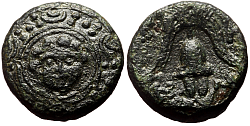 |
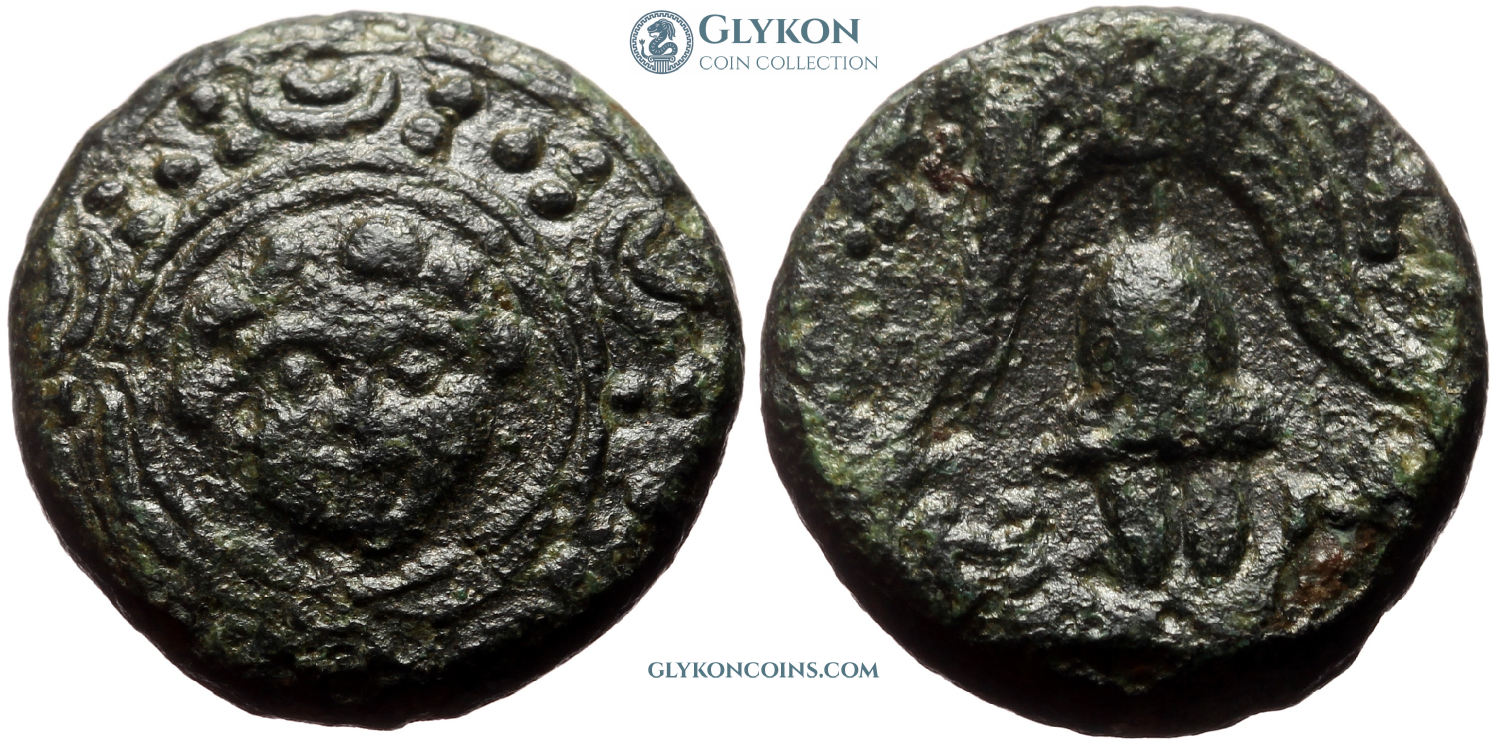
Macedonian Empire, regency for Alexander IV (323/322–309 BC) and Philip III (323–317 BC)
Denomination: AE15
Mint: Salamis (Cyprus)
Time: 323-315 BC
Weight: 3.82 g
Diameter: approx. 14.7 mm
Reference: Price 3158
Obverse: Facing head of a Gorgoneion on a decorated Macedonian shield.
Reverse: Macedonian plumed helmet, caduceus below. Legend: B-A. |
|
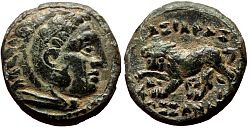 |
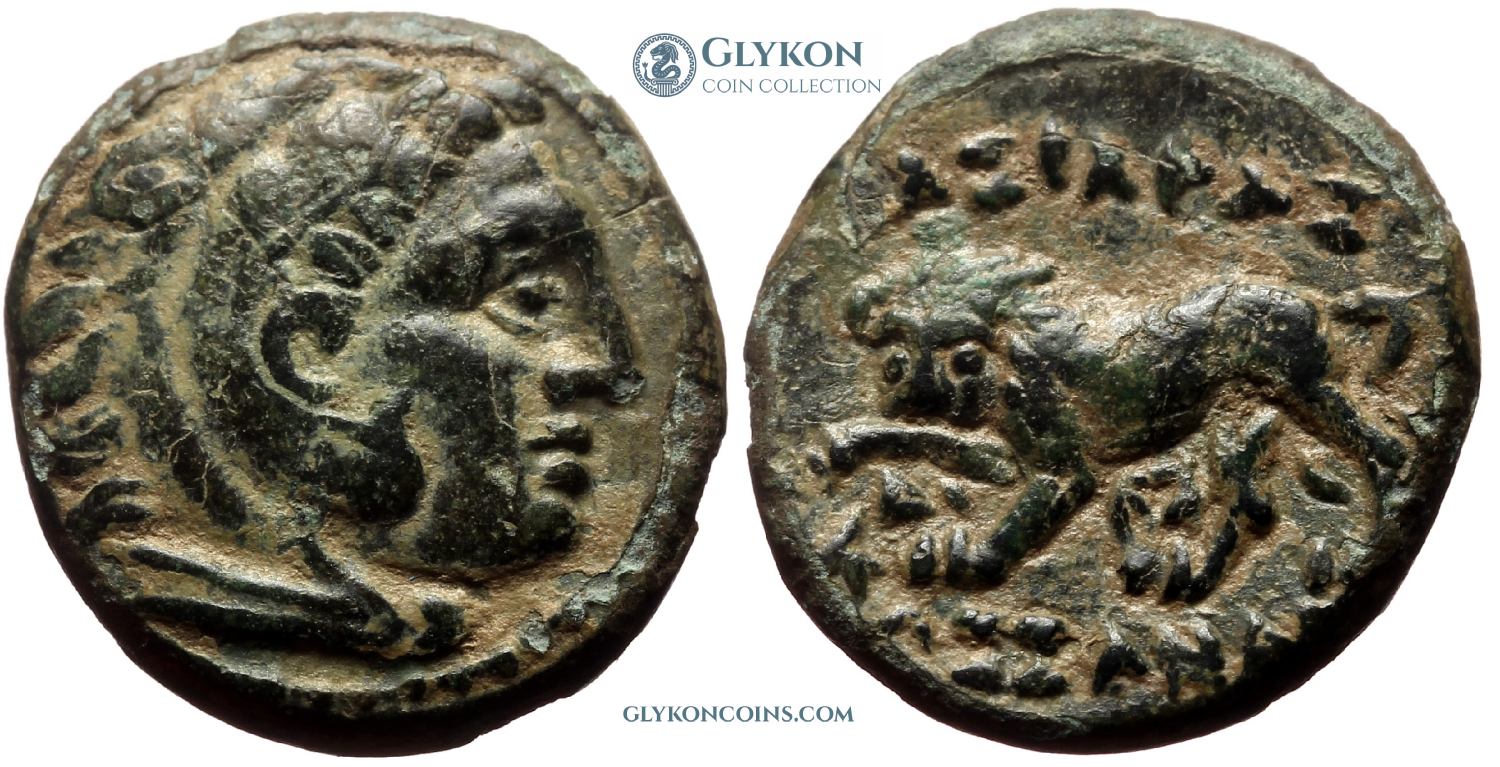
Macedon, Cassander (305–297 BC)
Denomination: AE16
Mint: Pella or Amphipolis
Time: 305–297 BC
Weight: 3.28 g
Diameter: approx. 16.1 mm
Reference: SNG Cop. 1154; SNG Tubingen 1169
Obverse: Head of beardless Heracles wearing lionskin headdress facing right.
Reverse: Lion stalking to left. Legend: BAΣIΛEΩΣ KAΣΣANΔPOY (of king Cassander). |
|
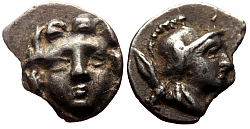 |
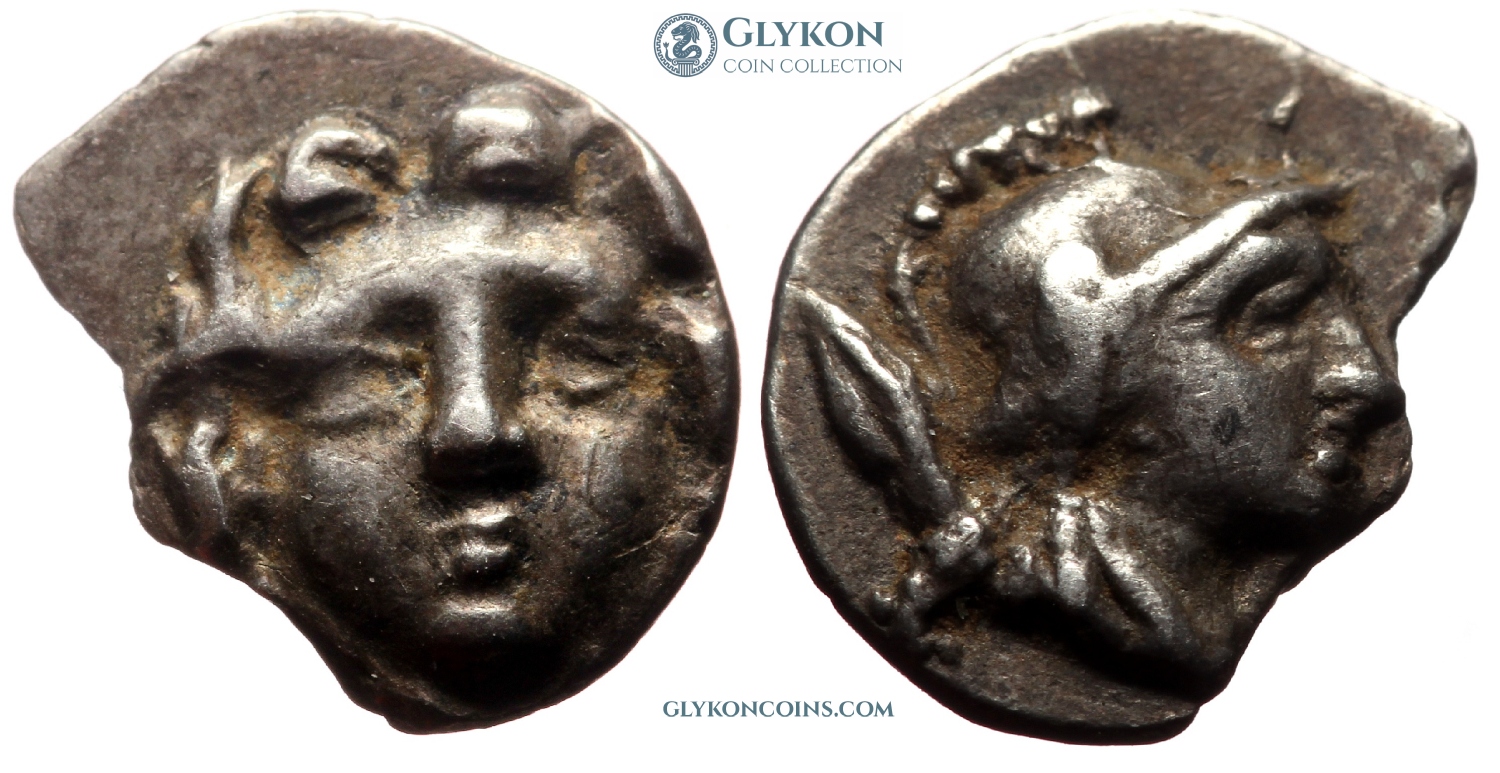
Selge (Pisidia)
Denomination: Trihemiobol (2/3 Obol)
Time: 300- BC
Weight: 0.64 g
Diameter: approx. 10.3 mm
Reference: SNG von Aulock 5278; Sear 5479
Obverse: Facing head of Gorgoneion.
Reverse: Head of Athena wearing a crested helmet facing right, spearhead and astragalos symbol behind.
Comment: reportedly from the collection of E. E. Clain-Stefanelli, I was unable to verify it. |
|
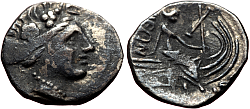 |
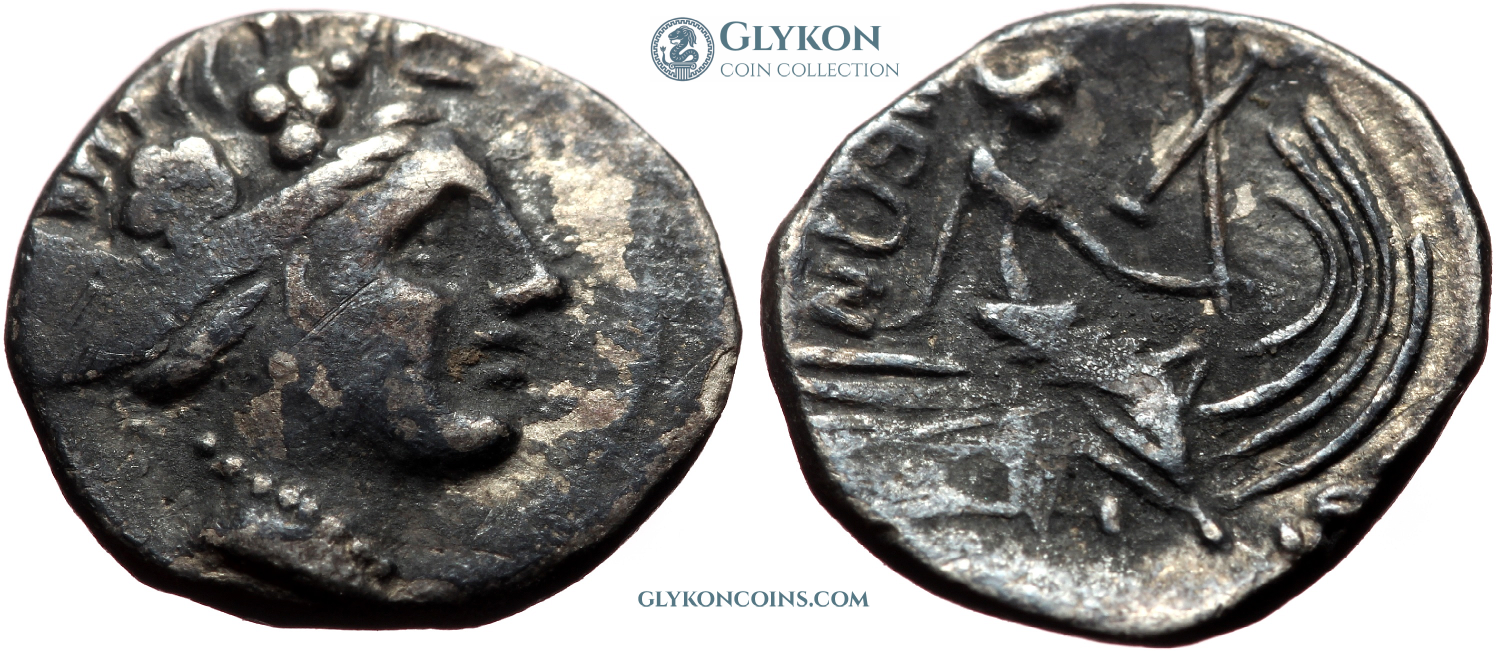
Histaia (Eubea)
Denomination: Tetrabol
Time: 300- BC
Weight: 1.41 g
Diameter: approx. 12.3 mm
Reference: Sear 2494-2498
Obverse: Head of the eponymous nymph Histaia wearing a flower/fruit headgear and pearl necklace facing right.
Reverse: Histaia sitting on a galley prow facing right. Legend: IΣTIAIEΩN (Histaia). |
|
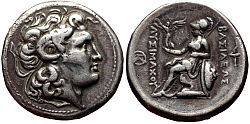 |
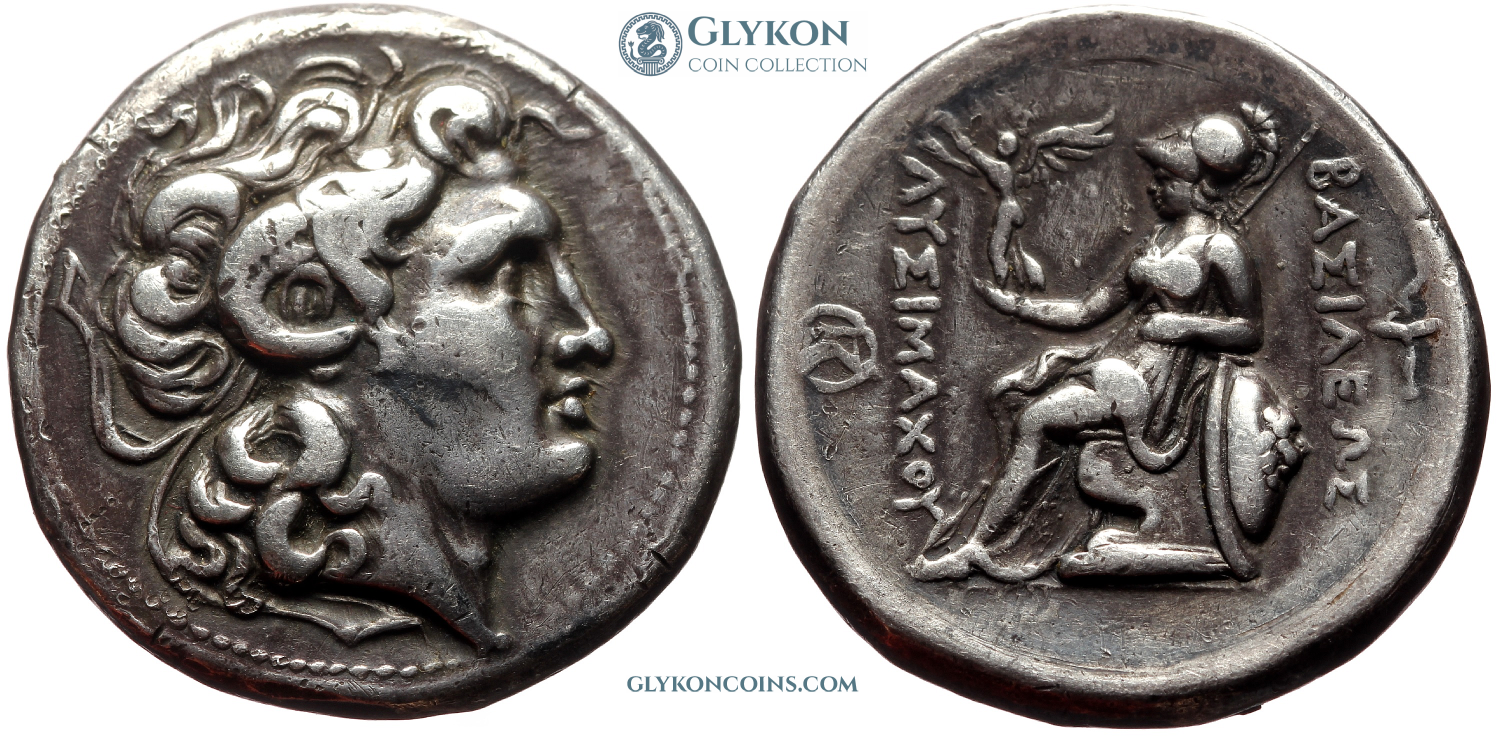
Thrace, Lysimachus (306-281 BC)
Denomination: Tetradrachm
Mint: Lampsacus
Time: 297-281 BC
Weight: 17.08 g
Diameter: approx. 27.9 mm
Reference: Thompson 42
Obverse: Head of the deified Alexander facing right, diademed and adorned with bull horns (horns of Ammon).
Reverse: Seated Athena Nikephoros ("Athena Bringer of Victory") facing left, resting on shield and holding winged Nike, spear behind. Monogram ΠA on left, torch on right. Legend: BAΣIΛEΩΣ ΛYΣIMAXOY (of king Lysimachus). |
|
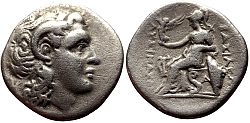 |
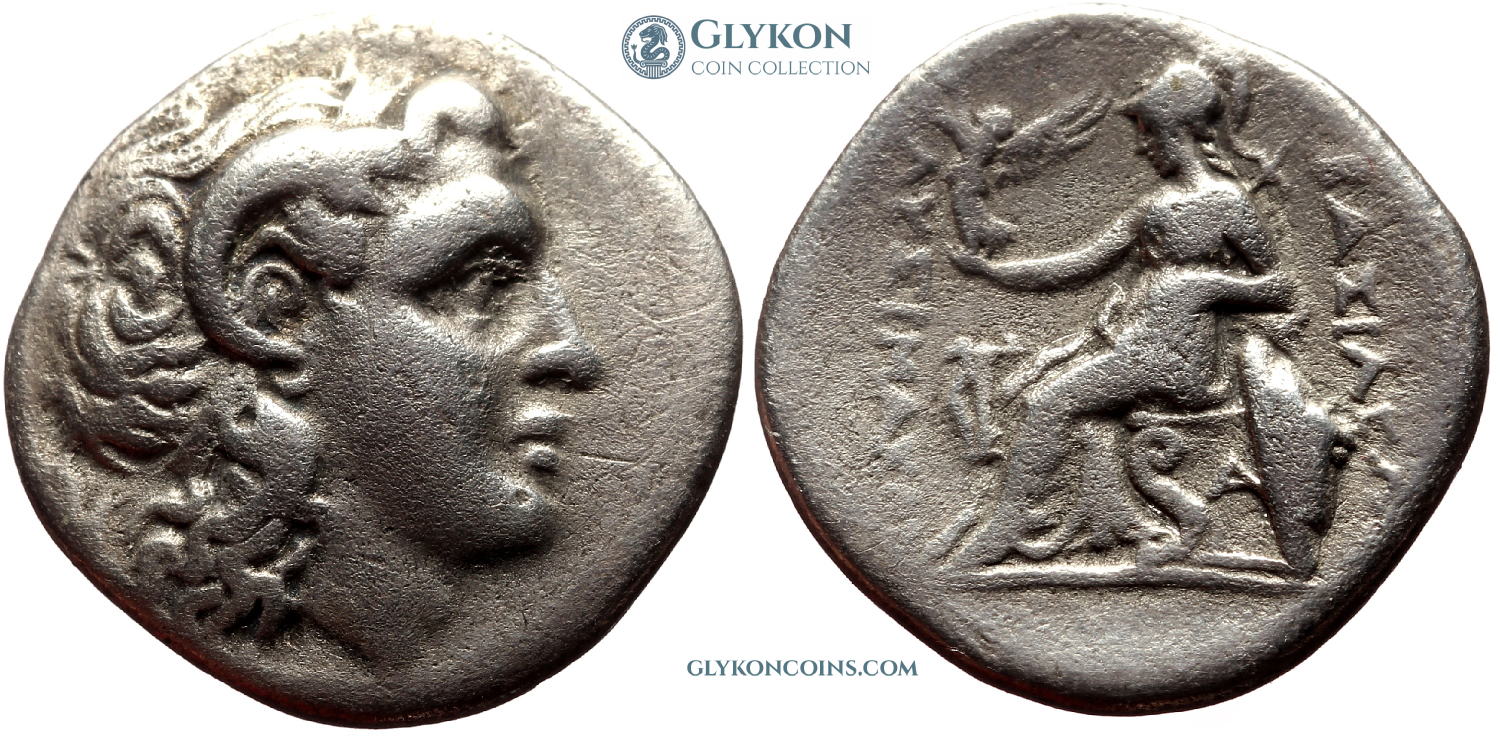
Thrace, Lysimachus (306-281 BC)
Denomination: Drachm
Mint: Ephesus
Time: 294-287 BC
Weight: 3.89 g
Diameter: approx. 18.5 mm
Reference: Thompson 174
Obverse: Head of the deified Alexander facing right, diademed and adorned with bull horns (horns of Ammon).
Reverse: Seated Athena Nikephoros ("Athena Bringer of Victory") facing left, resting on shield and holding winged Nike, spear behind. Lyre on left, A under the throne. Legend: BAΣIΛEΩΣ ΛYΣIMAXOY (of king Lysimachus). |
|
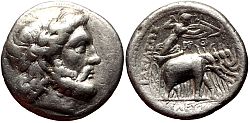 |
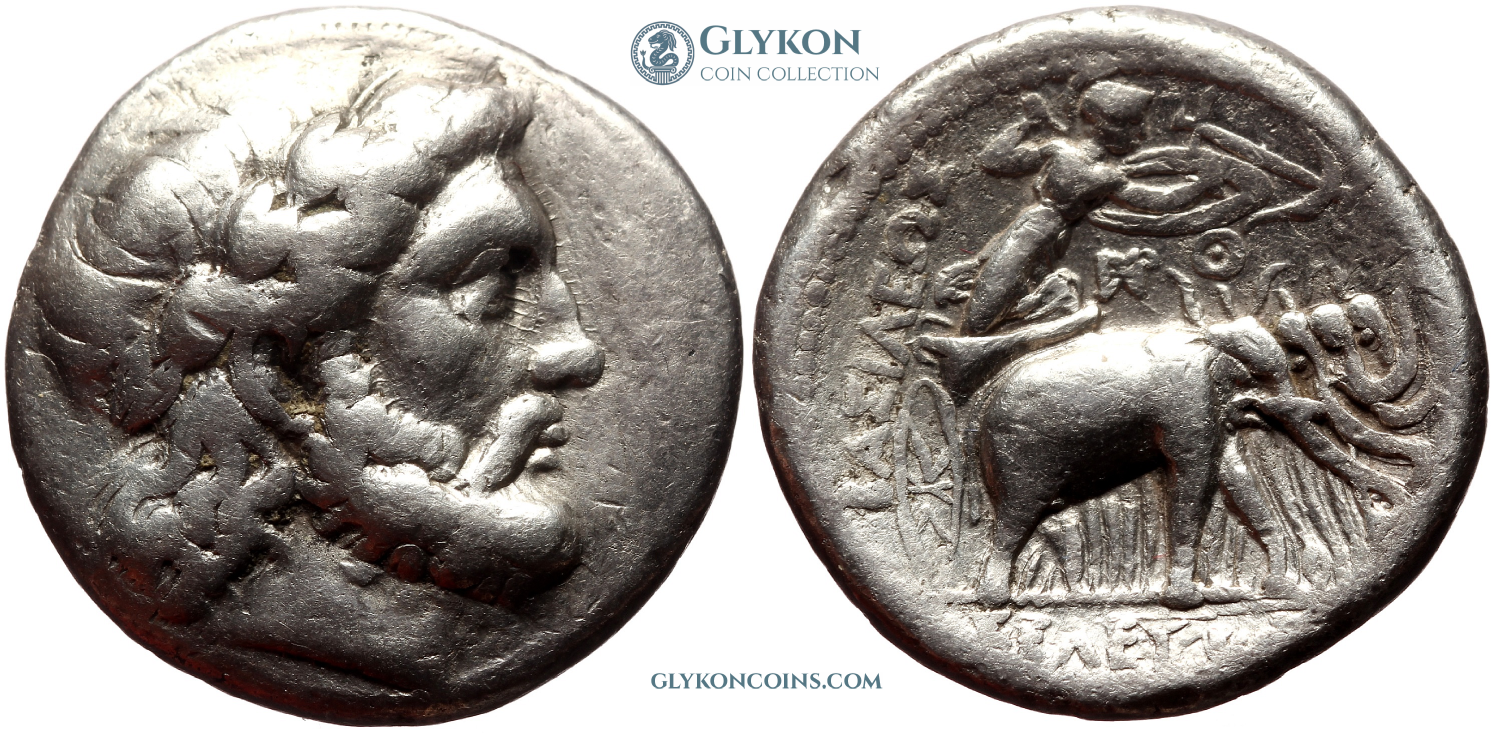
Seleucid Empire, Seleucus I Nicator (305-281 BC)
Denomination: Tetradrachm
Mint: Seleucia on the Tigris
Time: 296-294 BC
Weight: 16.91 g
Diameter: approx. 25.7 mm
Reference: SC 130.43; Sear 6831; Newell, ESM 79
Obverse: Laureate head of Zeus facing right.
Reverse: Athena Promachos ("Athena fighting in the frontline") facing right, riding in a quadriga drawn by four elephants adorned with bull horns. Monogram and Θ before and anchor above Athena. Legend: BAΣIΛEΩΣ ΣEΛEYKOY (of king Seleucus). |
|
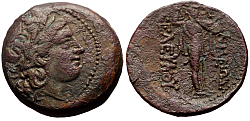 |
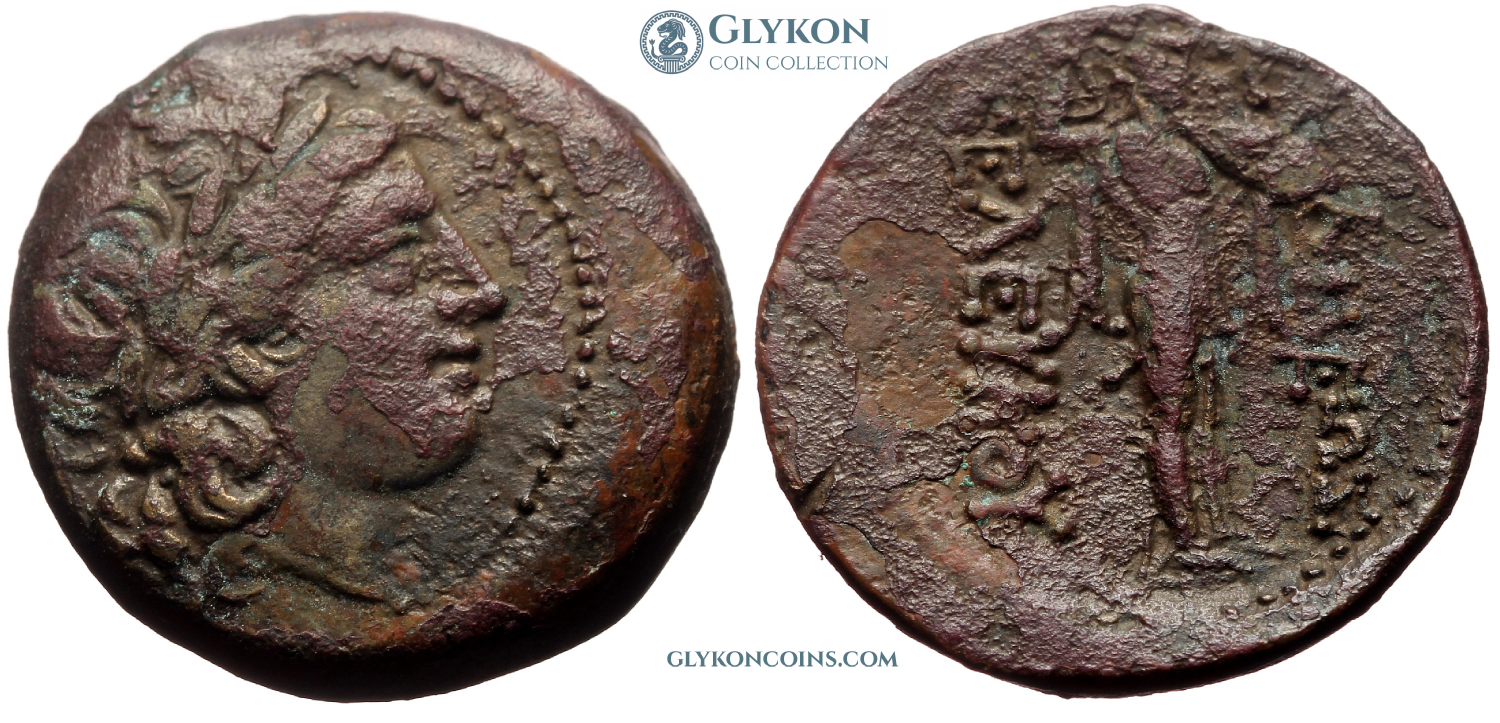
Seleucid Empire, Seleucus I Nicator (305-281 BC)
Denomination: AE21
Mint: Antioch
Time: 300-281 BC
Weight: 8.56 g
Diameter: approx. 21.8 mm
Reference: SC 15.2; SNG Spaer 6, Houghton 3
Obverse: Laureate head of Apollo facing right.
Reverse: Athena Promachos ("Athena fighting in the frontline") standing facing right. Legend: BAΣIΛEΩΣ ΣEΛEYKOY (of king Seleucus). |
|
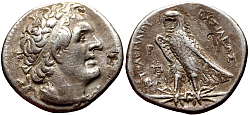 |
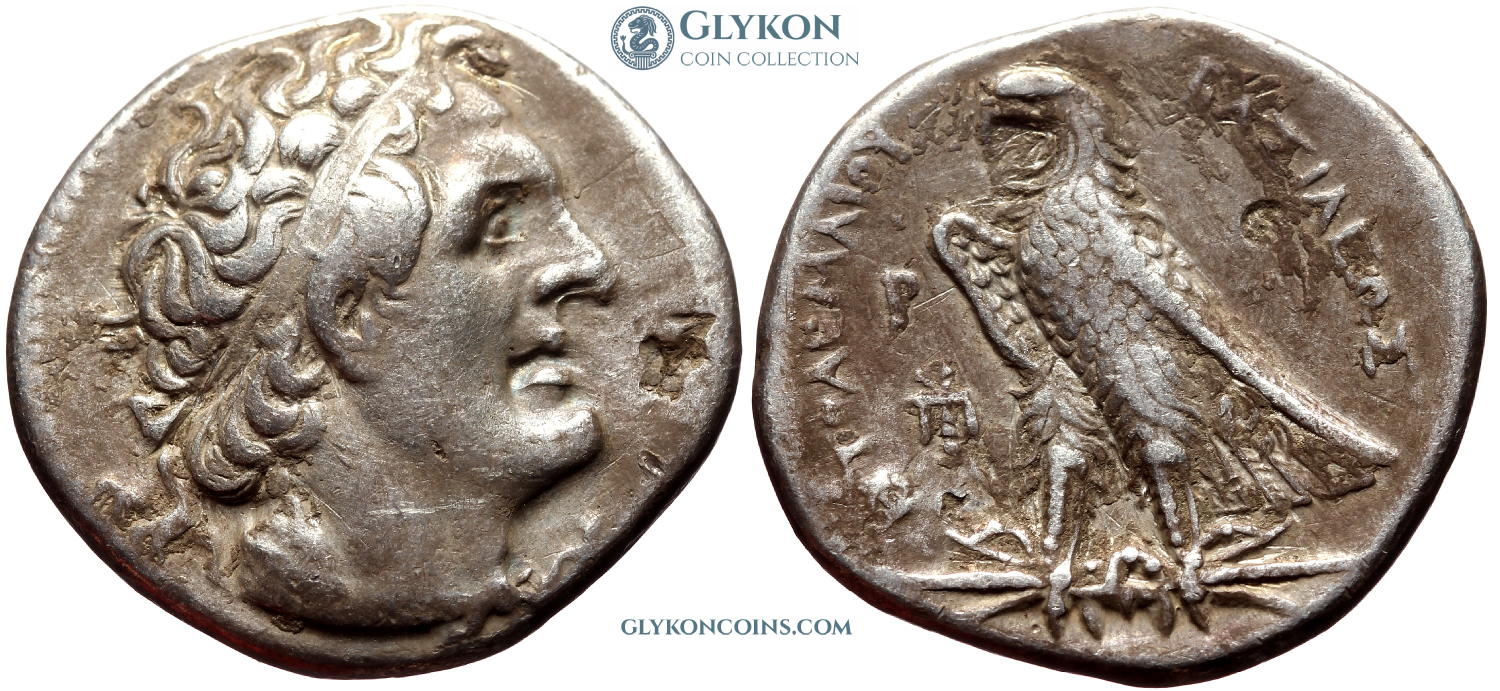
Ptolemaic Kingdom, Ptolemy I Soter (305-282 BC)
Denomination: Tetradrachm
Mint: Alexandria
Time: 305-282 BC
Weight: 13,86 g
Diameter: approx. 28.0 mm
Reference: Svoronos 259; SNG Cop 72
Obverse: Diademed head of Ptolemy I facing right, tiny Δ behind ear. Monograms. Banker Mark.
Reverse: Eagle standing on a thunderbolt facing left. Banker Mark. Legend: BAΣIΛEΩΣ ΠΤΟΛΕΜΑΙΟΥ (of king Ptolemy).
Comment: Work of the famous "Delta engraver", as indicated by the tiny Δ on the obverse. |
|
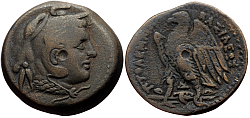 |
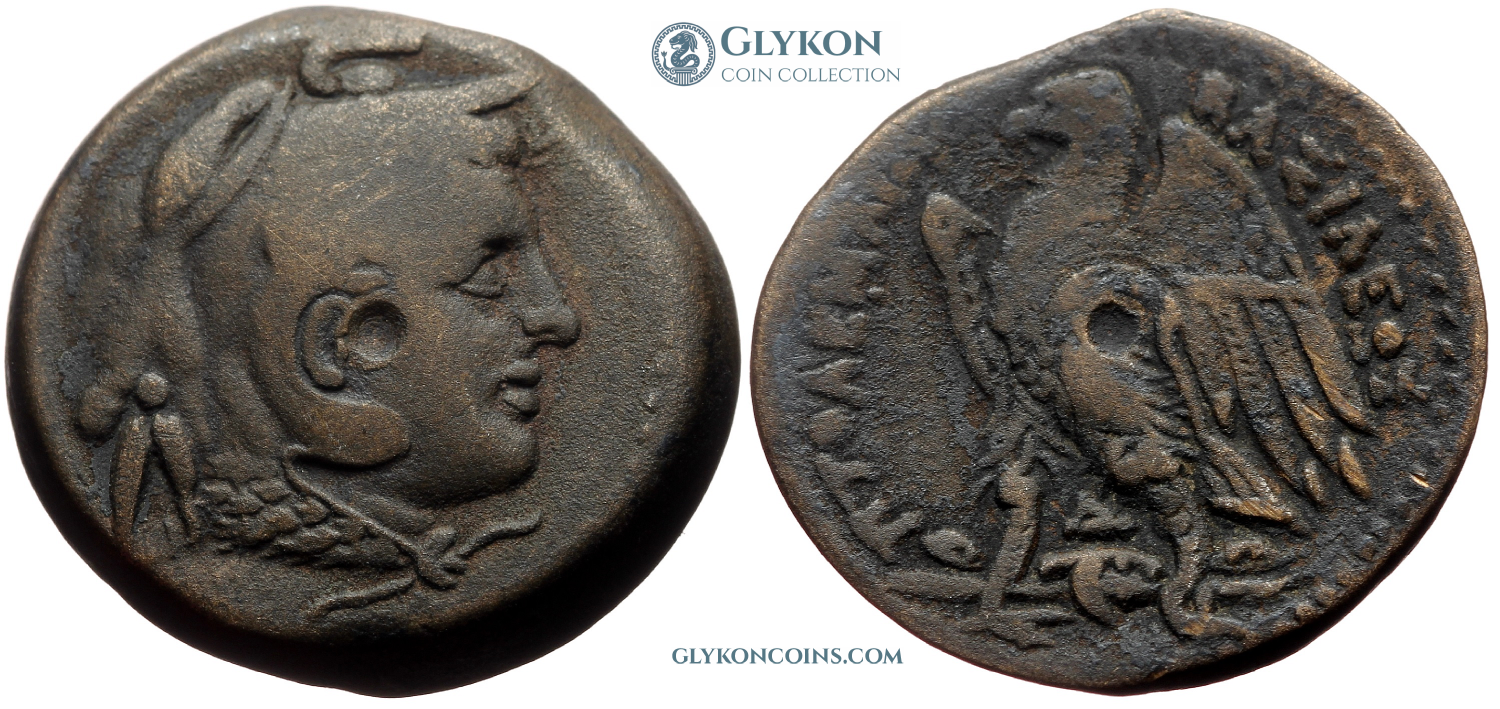
Ptolemaic Kingdom, Ptolemy II Philadelphus (284-246 BC)
Denomination: Bronze Obol
Mint: Alexandria
Time: 284-246 BC
Weight: 10,82 g
Diameter: approx. 23.2 mm
Reference: Svoronos 439; SNG Cop 158
Obverse: Head of deified Alexander the Great wearing an elephant skin headdress facing right.
Reverse: Eagle standing on a thunderbolt facing left, ∆ between legs. Legend: BAΣIΛEΩΣ ΠΤΟΛΕΜΑΙΟΥ (of king Ptolemy).
Comment: The Ptolemaic dynasty derived much of its legitimacy from the cult of deified Alexander, with the Ptolemies styling themselves as his rightful successors. |
|
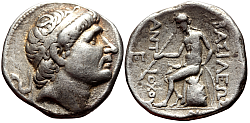 |
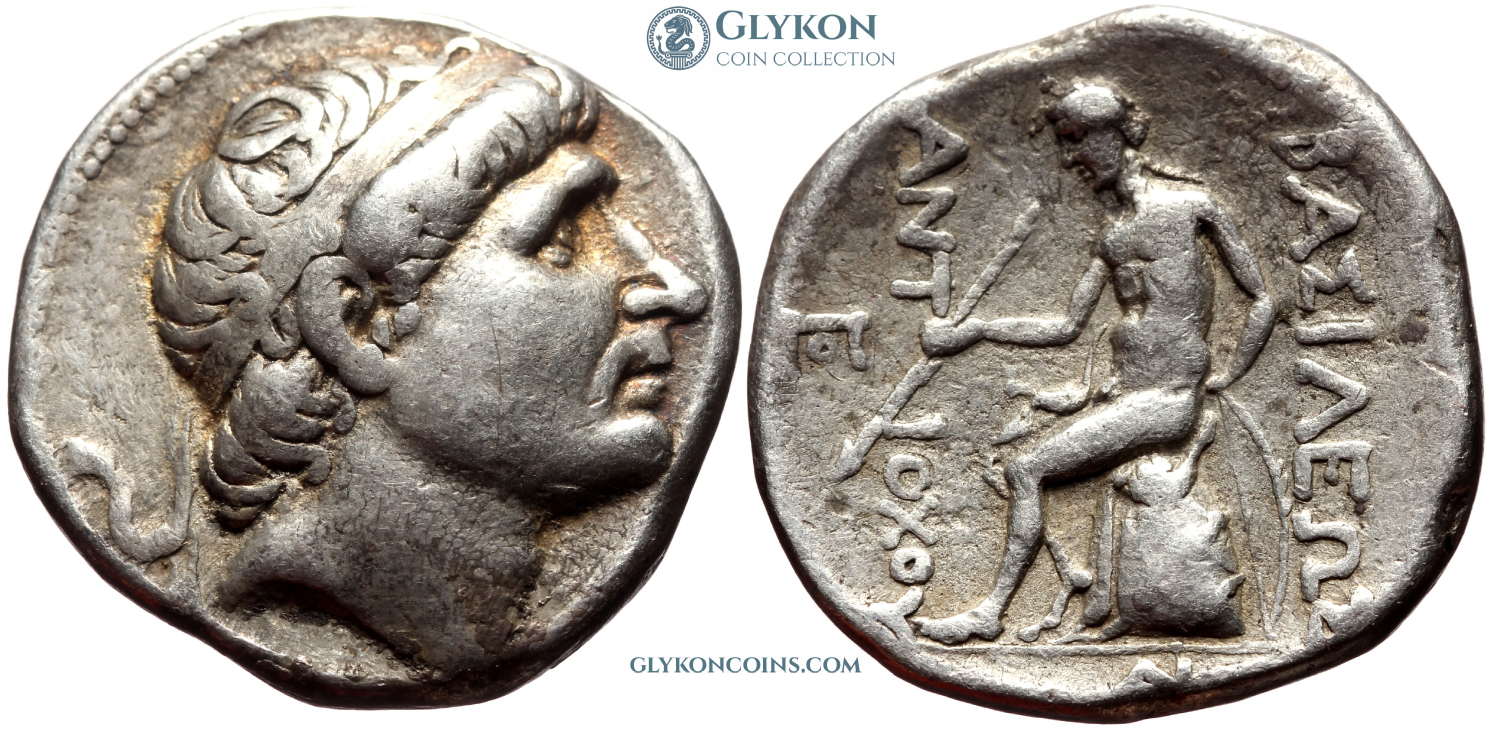
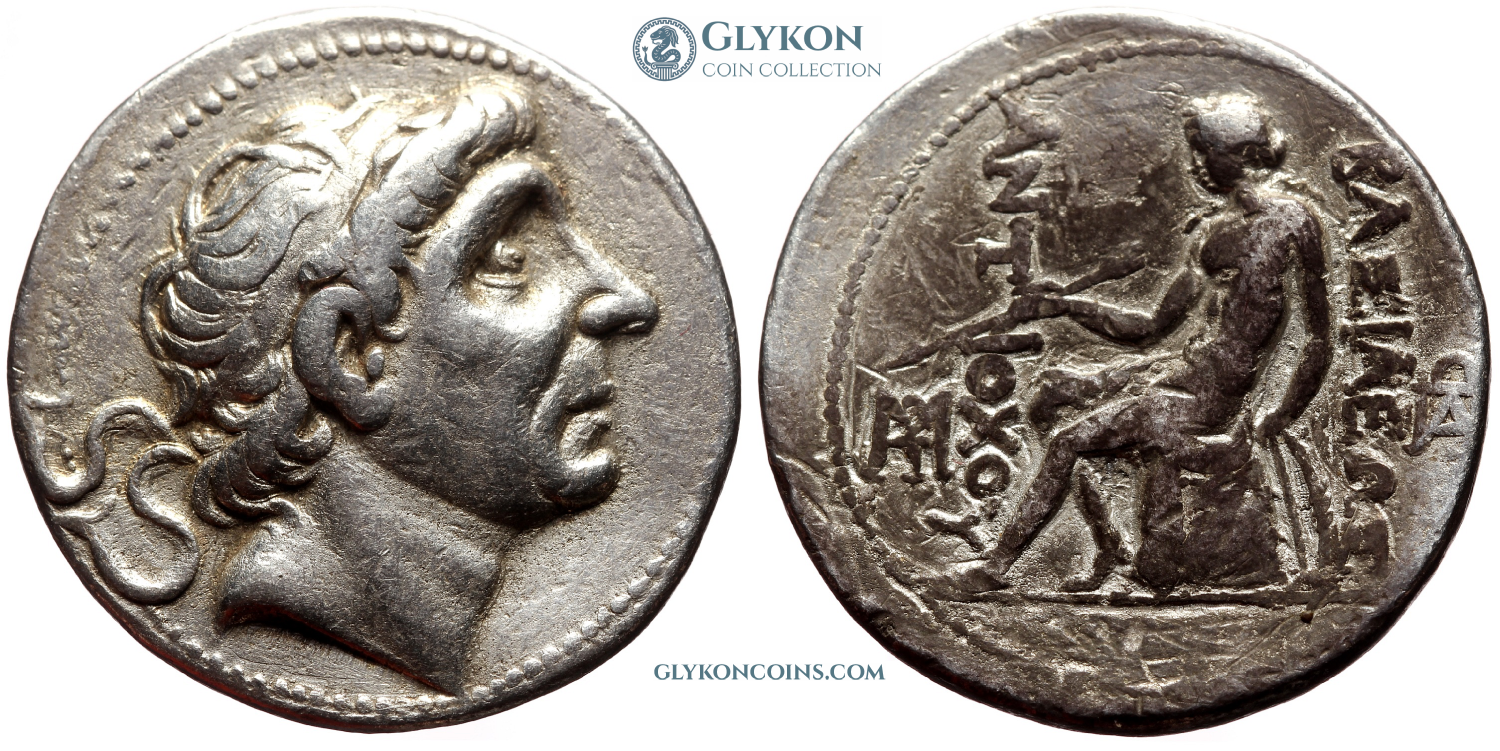
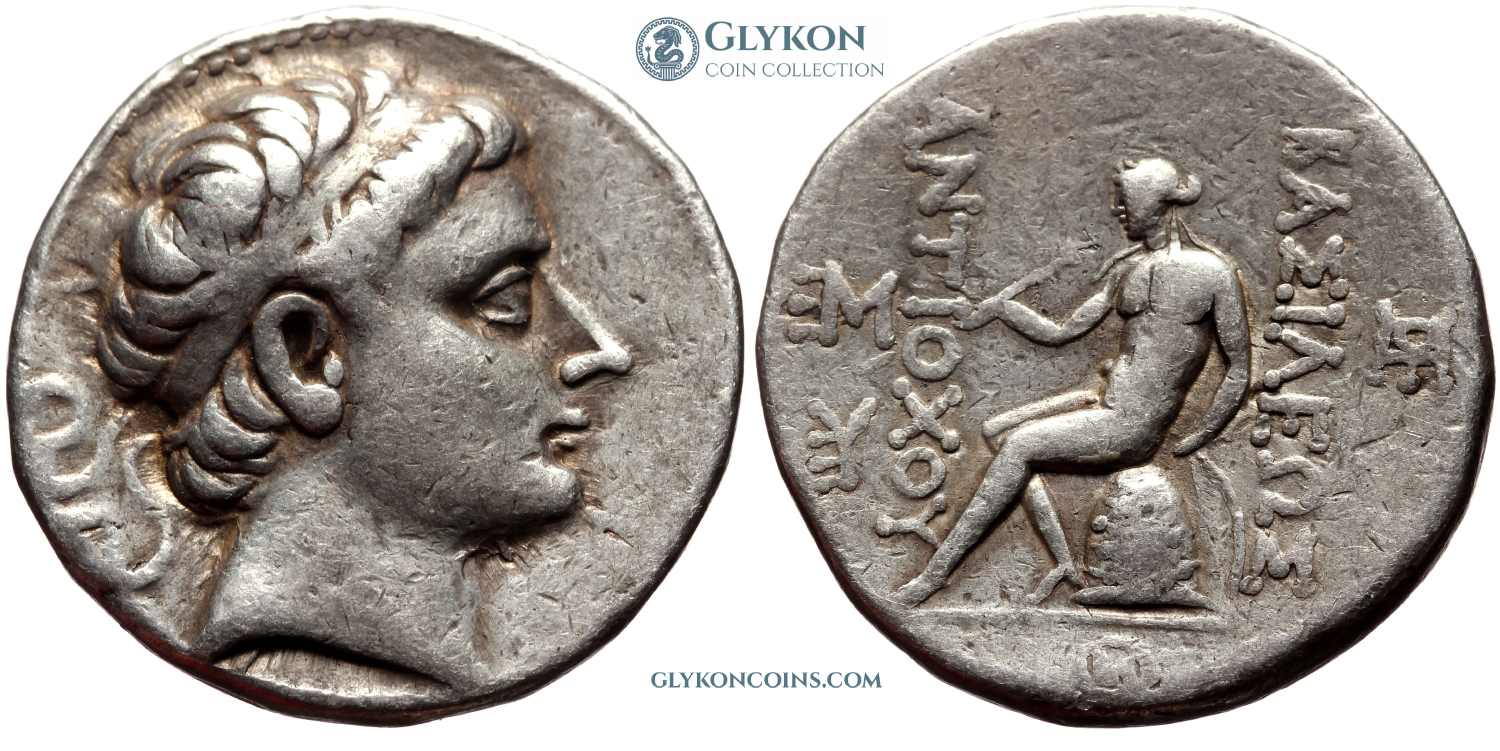
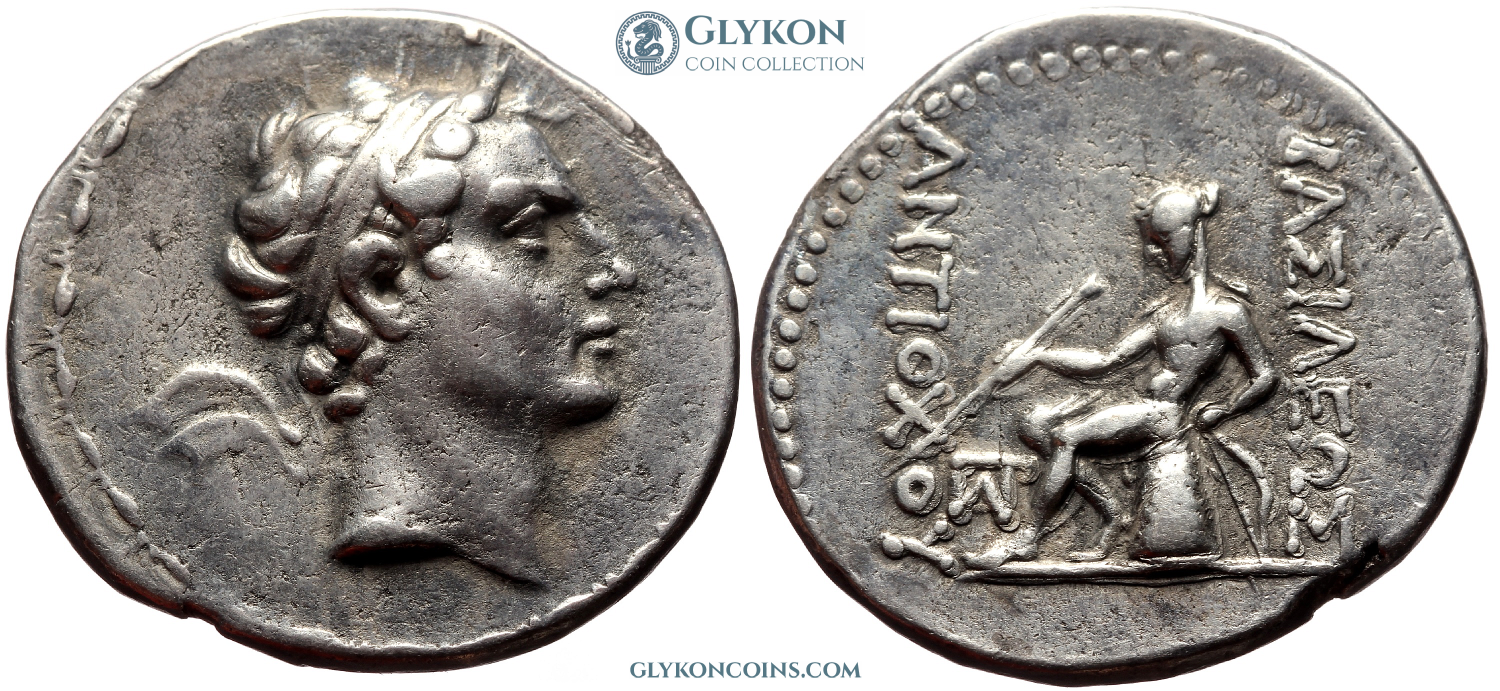
Seleucid Empire, Antiochus I Soter (281-261 BC)
Denomination: Tetradrachm
Mint: Antioch on the Orontes
Time: 281-261 BC
Weight: 16.75 g
Diameter: approx. 27.3 mm
Reference: SC 335.1; SCO 555
Obverse: Diademed head of Antiochus I right.
Reverse: Naked Apollo seated on omphalus ("navel of the world") to left, examining an arrow and holding a bow. ΠO monogram left. Legend: BAΣIΛEΩΣ ANTIOXOY (of king Antiochus). |
|
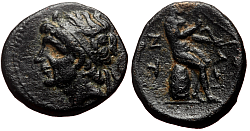 |
Seleucid Empire, Antiochus I Soter (281-261 BC)
Denomination: AE12
Mint: Antioch on the Orontes
Time: 281-261 BC
Weight: 1.66 g
Diameter: approx. 12.9 mm
Reference: SC 352; SNG Spaer 215; Houghton 32; BMC 24
Obverse: Diademed head of Antiochus I left.
Reverse: Naked Apollo seated on omphalus ("navel of the world") right, holding a bow in both hands. Ρ left, Θ right. Legend: BAΣI-ANTI (short for "king Antiochus"). |
|
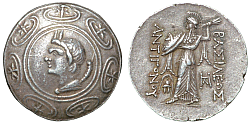 |
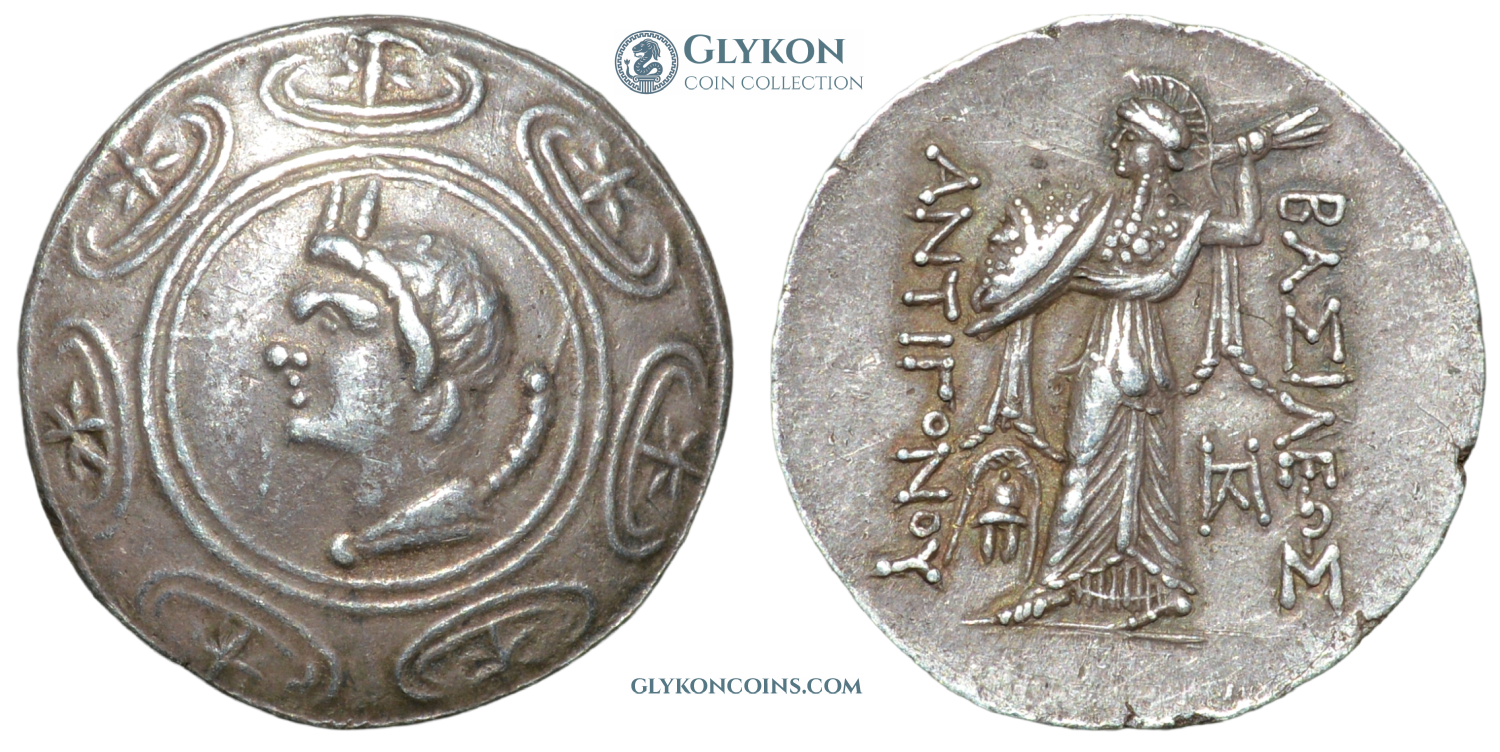
Antigonid Kingdom of Macedon, Antigonus II Gonatas (277-274, 272-239 BC)
Denomination: Tetradrachm
Mint: Amphipolis
Time: 271-255 BC
Weight: 17.05 g
Diameter: approx. 31.9 mm
Reference: SNG Cop 1199; provenance: Rauch Auction 120 (23-24 Jun 2025), lot 68 (https://www.numisbids.com/sale/9441/lot/?lot=68)
Obverse: On a decorated Macedonian shield draped bust of horned Pan (possibly with Antigonus' facial features) facing left, lagobolon (hunting stick) rested on shoulder.
Reverse: Athena Alkidemos ("Athena defender of the people") advancing left, holding thunderbolt and aegis. A crested helmet on lower left, monogram HΛ on lower right. Legend: ΒΑΣΙΛΕΩΣ ΑΝΤΙΓΟΝΟΥ (of king Antigonus).
Comment: This coin was likely minted in celebration of Antigonus' famous victory over marauding Gauls, who were reportedly gripped with supernatural fear (panikon, hence "panic") caused by Pan.
Of little connection to this coin but nevertheless an interesting piece of ancient trivia is that Pan was the rare example of a Greek deity of whom it was said and widely believed (as reported by Plutarch) that he died. It supposedly happened during the reign of Roman emperor Tiberius. |
|
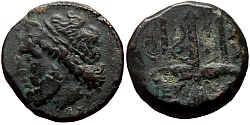 |
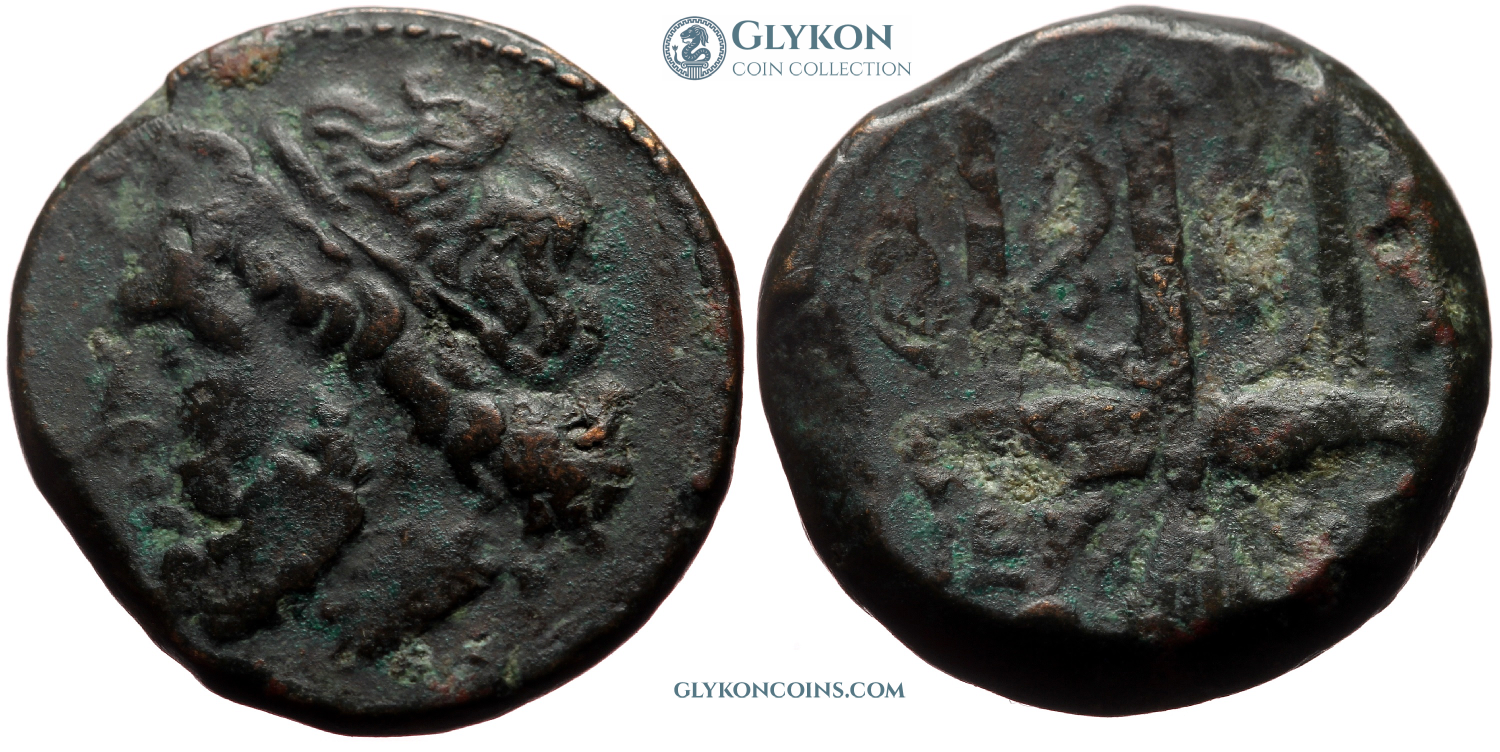
Syracuse (Sicily), tyranny of Hiero II (275 BC-215 BC)
Denomination: AE18
Time: 275 BC-215 BC
Weight: 6.54 g
Diameter: approx. 18.3 mm
Reference: SNG Cop. 850; BMC 530
Obverse: Diademed head of Poseidon left.
Reverse: Decorated trident head flanked by dolphins. Legend: IEΡΩ-NOΣ (Hiero). |
|
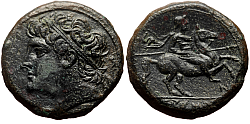 |
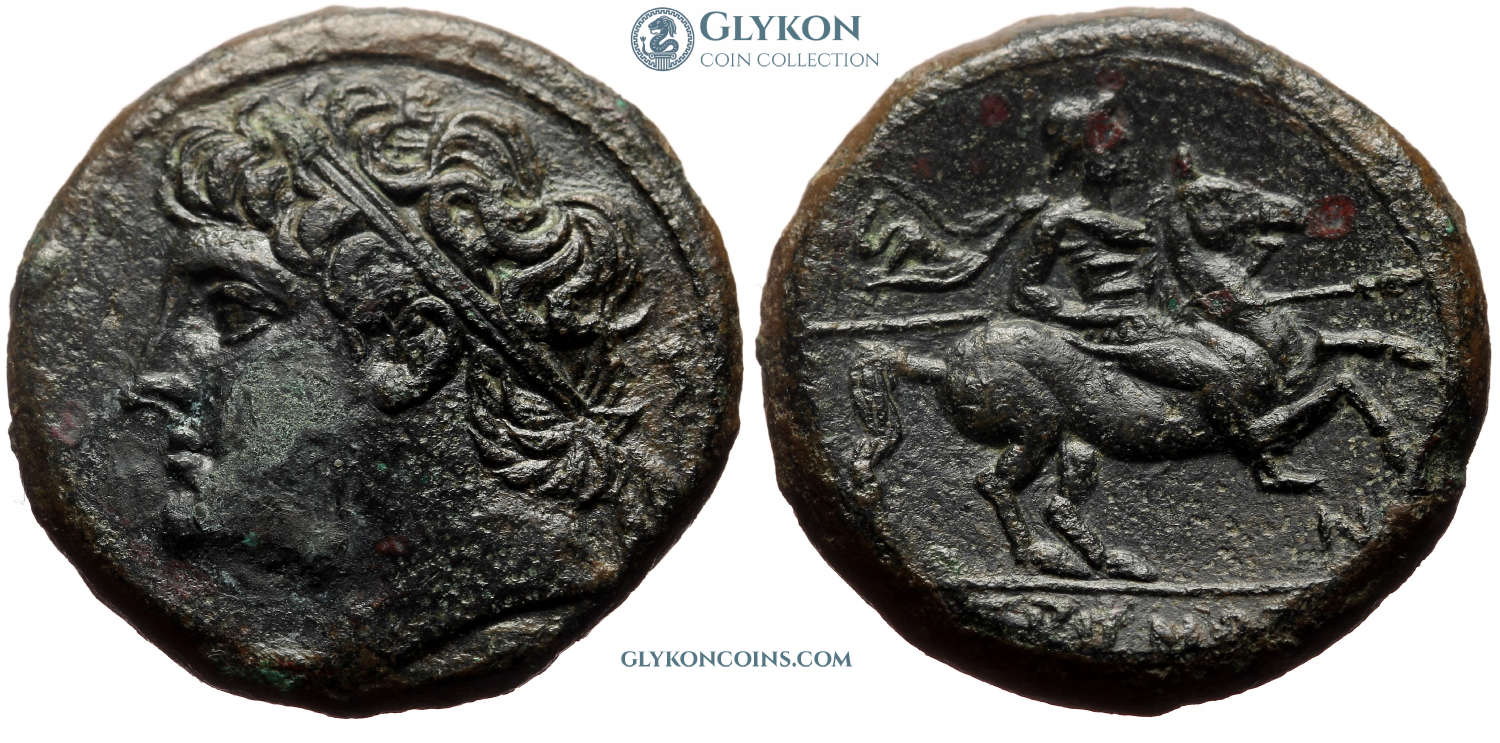
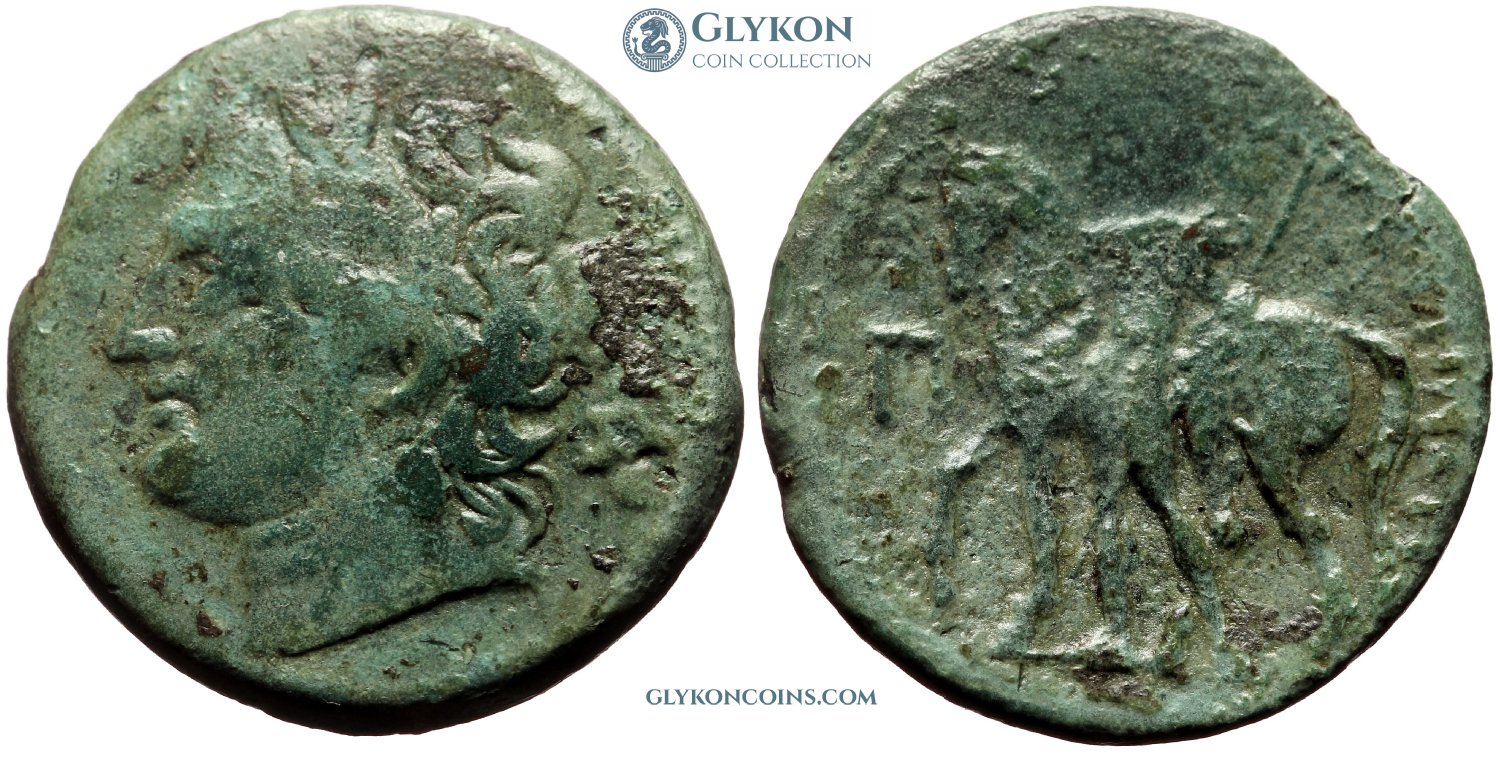
Syracuse (Sicily), tyranny of Hiero II (275 BC-215 BC)
Denomination: AE27
Time: 275 BC-215 BC
Weight: 17.09 g
Diameter: approx. 27.0 mm
Reference: Calciati 195; SNG ANS 924; BMC 588
Obverse: Diademed head of Hiero II left .
Reverse: Armed and armored cavalryman galloping right, lance in hand. In exergue legend: IEΡΩNOΣ (Hiero).
Comment: This is the King Hiero famous for his association with his kinsman Archimedes. |
|
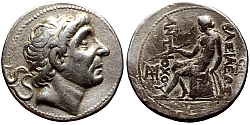 |
Seleucid Empire, Antiochus II Theos (261-246 BC)
Denomination: Tetradrachm
Mint: Seleucia on the Tigris
Time: 261-246 BC
Weight: 16.65 g
Diameter: approx. 30.1 mm
Reference: SC 587.4b; ESM 189
Obverse: Diademed head of elder Antiochus I right.
Reverse: Naked Apollo seated on omphalus ("navel of the world") to left, examining an arrow and holding a bow. Monograms left and right. Legend: BAΣIΛEΩΣ ANTIOXOY (of king Antiochus).
Comment: Pedigree coinage celebrating Antiochus II's deceased father. |
|
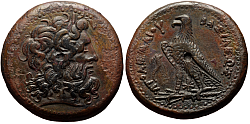 |
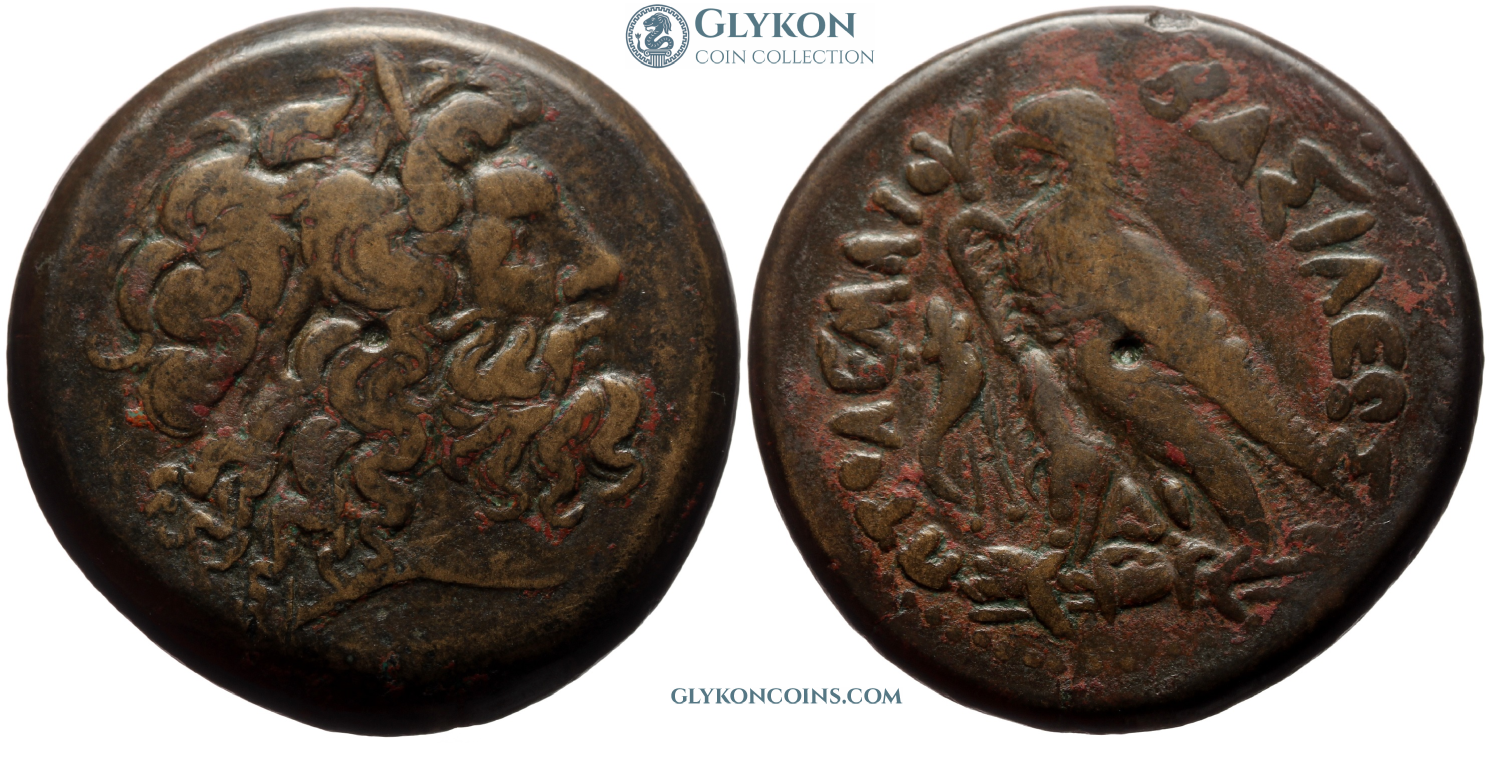
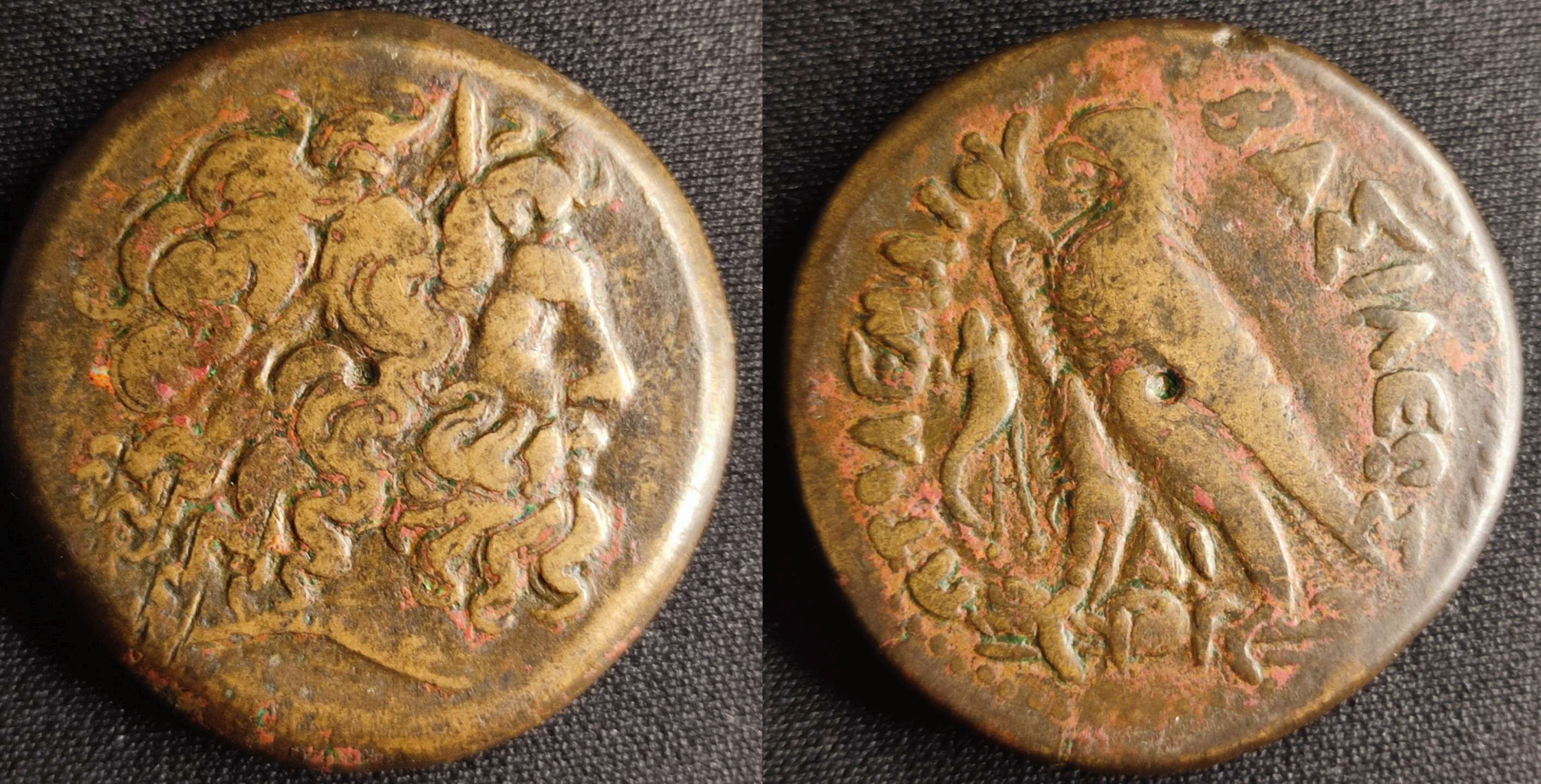
Ptolemaic Kingdom, Ptolemy III Euergetes (246-222 BC)
Denomination: Bronze Hemidrachm (AE34)
Mint: Alexandria
Time: 246-222 BC
Weight: 31,87 g
Diameter: approx. 36.2 mm
Reference: Svoronos 965; SNG Cop 173
Obverse: Diademed head of Zeus-Amun (Zeus Ammon) right.
Reverse: Eagle standing on a thunderbolt left, ΡX (Chi-Rho) between legs. Cornucopia on a rack left. Legend: BAΣIΛEΩΣ ΠΤΟΛΕΜΑΙΟΥ (of king Ptolemy).
Comment: Notable early appearance of a Chi-Rho symbol, unrelated to the later Christian usage. |
|
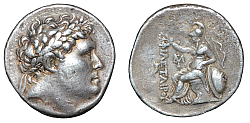 |
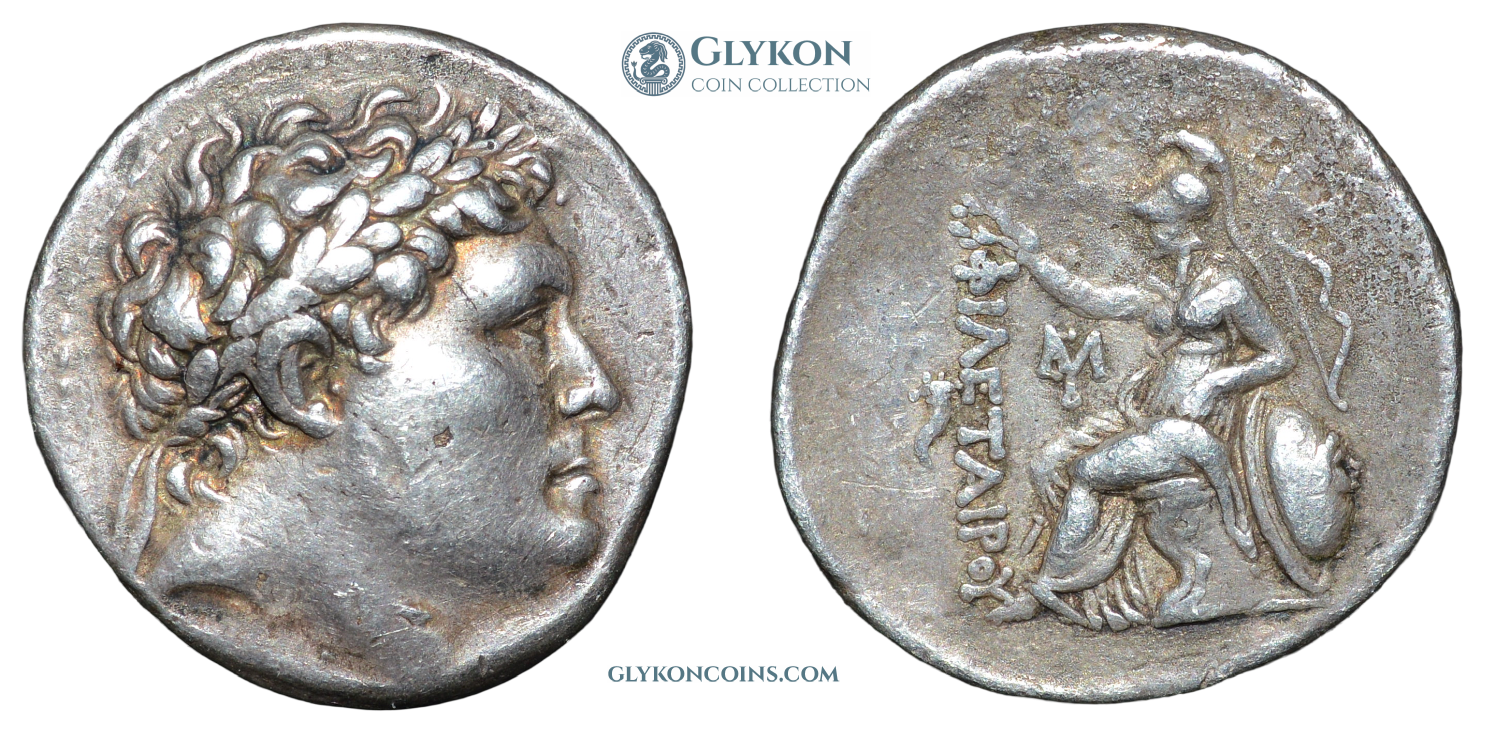
Kingdom of Pergamon (Mysia), Attalus I (241-197 BC)
Denomination: Tetradrachm
Time: 241-235 BC
Weight: 16.79 g
Diameter: approx. 28.9 mm
Reference: SNG Cop 339; BMC 42 (misattributed to Eumenes II)
Obverse: Laureate head of Philetaerus facing right.
Reverse: Seated Athena facing left, resting on shield and holding wreath in extended hand. Monogram EYMO and cornucopia on the left, bow on the right. Legend: ΦIΛETAIΡOY (of Philetaerus).
Comment: Kingdom of Pergamon was the rump state of the realm carved out by Lysimachus. Initially vassal of the Seleucids, they later made great career by aligning themselves with the growing power of Rome, essentially acting as Roman agent and collaborator within the Greek world. Curiously, the kingdom minted most of its coins in the name of Philetaerus, founder of the dynasty who never personally claimed the title of a king. |
|
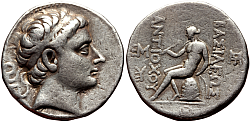 |
Seleucid Empire, Antiochus III the Great (223-187 BC)
Denomination: Tetradrachm
Mint: Seleucia on the Tigris
Time: 223-187 BC
Weight: 16.94 g
Diameter: approx. 28.0 mm
Reference: SC 1161.1
Obverse: Diademed head of Antiochus III right.
Reverse: Naked Apollo seated on omphalus ("navel of the world") to left, examining an arrow and holding a bow. Monograms left, right and in exergue. Legend: BAΣIΛEΩΣ ANTIOXOY (of king Antiochus). |
|
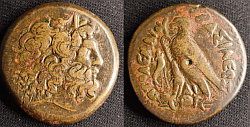 |
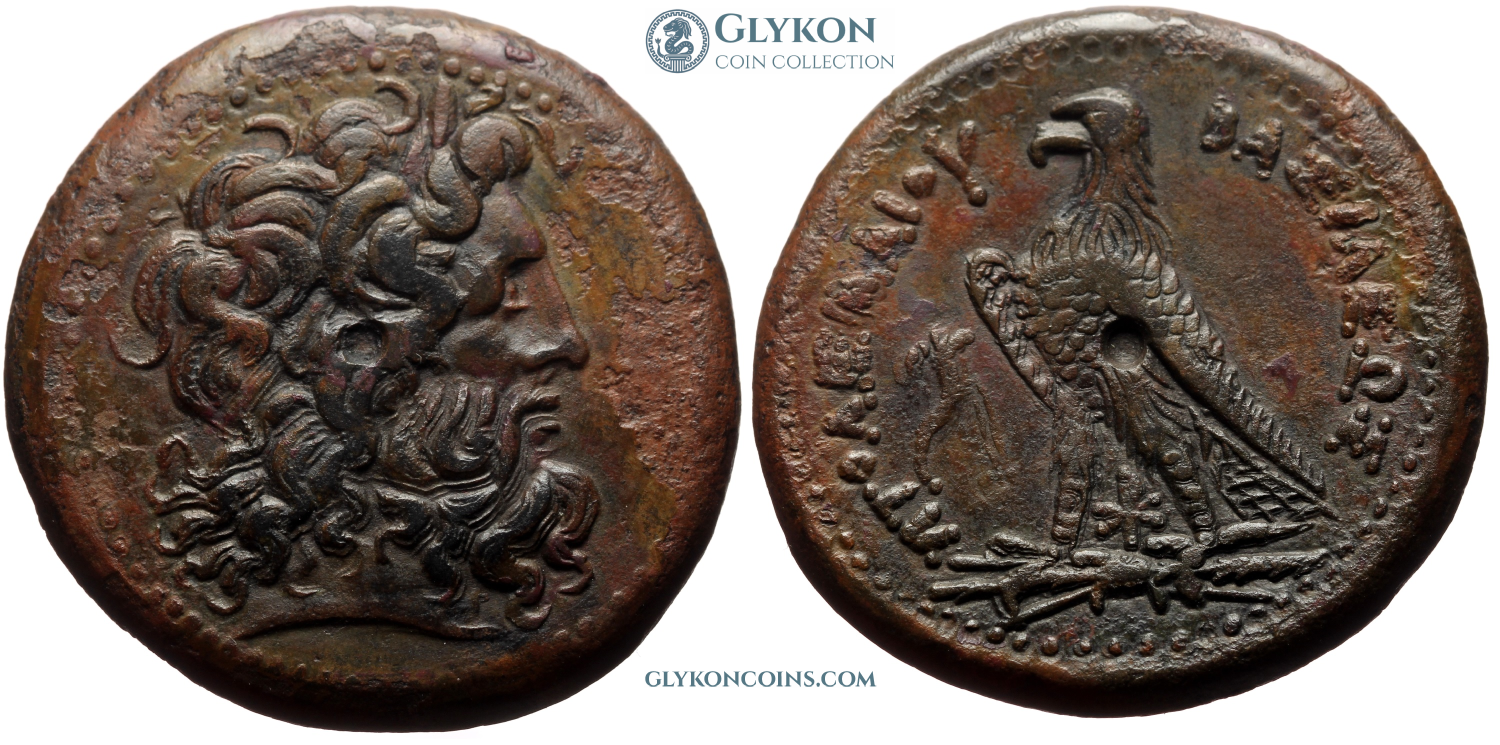
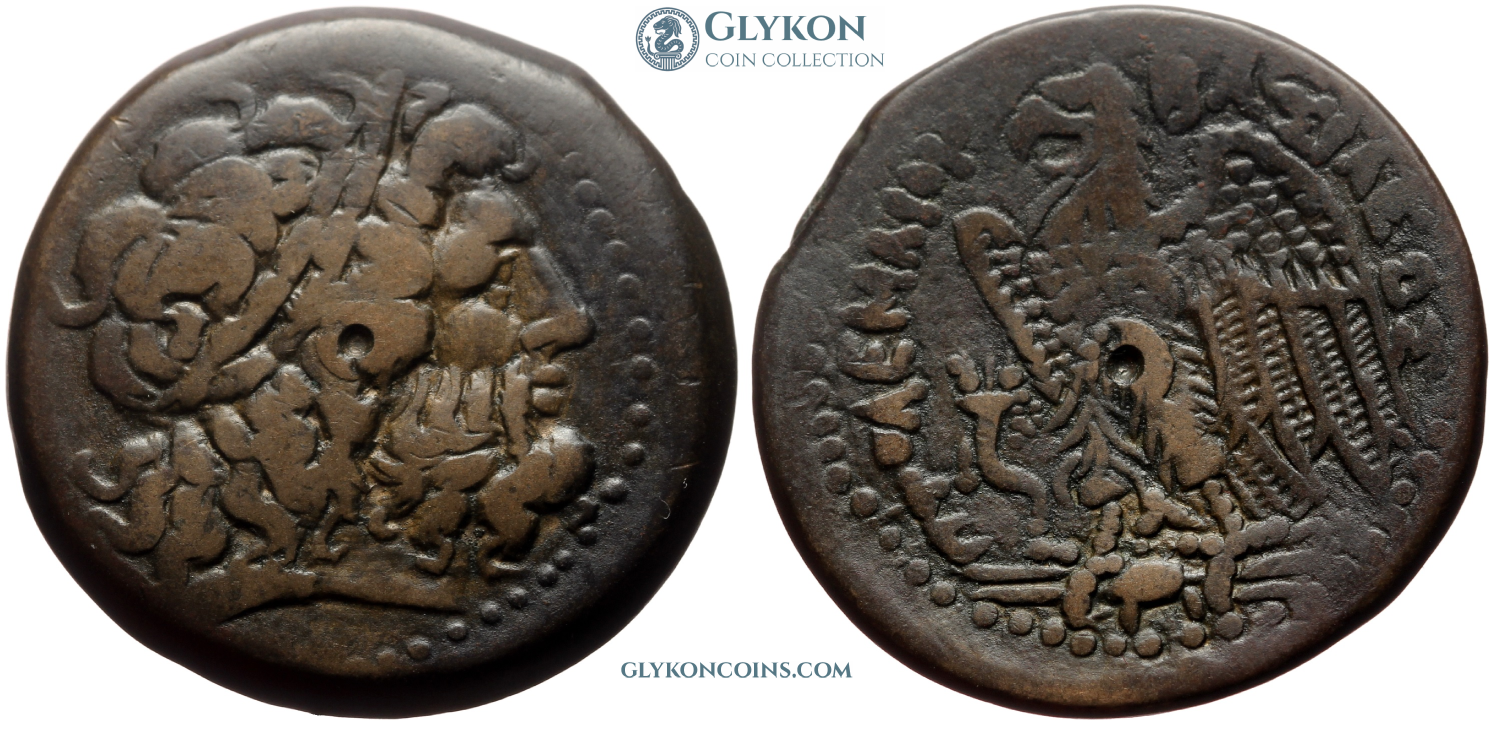
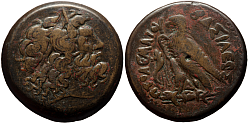
Ptolemaic Kingdom, Ptolemy IV Philopator (221-204 BC)
Denomination: Bronze Drachm (AE40)
Mint: Alexandria
Time: 221-204 BC
Weight: 68,37 g
Diameter: approx. 40.3 mm
Reference: Svoronos 1125; Sear 7841; SNG Cop 199
Obverse: Diademed head of Zeus-Amun (Zeus Ammon) right.
Reverse: Eagle standing on a thunderbolt left, ΔI (Delta-Iota) between legs. Cornucopia on a rack left. Legend: BAΣIΛEΩΣ ΠΤΟΛΕΜΑΙΟΥ (of king Ptolemy).
Comment: Lack of silver and the desire to create a closed currency system promted the kings of the Ptolemaic dynasty to mint large bronze coins. Some of them actually became so large that today some collectors jokingly call them "hockey pucks". |
|
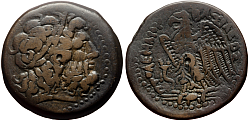 |
Ptolemaic Kingdom, Ptolemy IV Philopator (221-204 BC)
Denomination: Bronze Trihemiobol (AE28)
Mint: Alexandria
Time: 221-204 BC
Weight: 17.38 g
Diameter: approx. 28.7 mm
Reference: Svoronos 1169; SNG Cop 223
Obverse: Diademed head of Zeus-Amun (Zeus Ammon) right.
Reverse: Eagle standing on a thunderbolt left, Λ (Lambda) between legs. Cornucopia on a rack left. Legend: BAΣIΛEΩΣ ΠΤΟΛΕΜΑΙΟΥ (of king Ptolemy). |
|
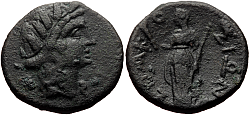 |
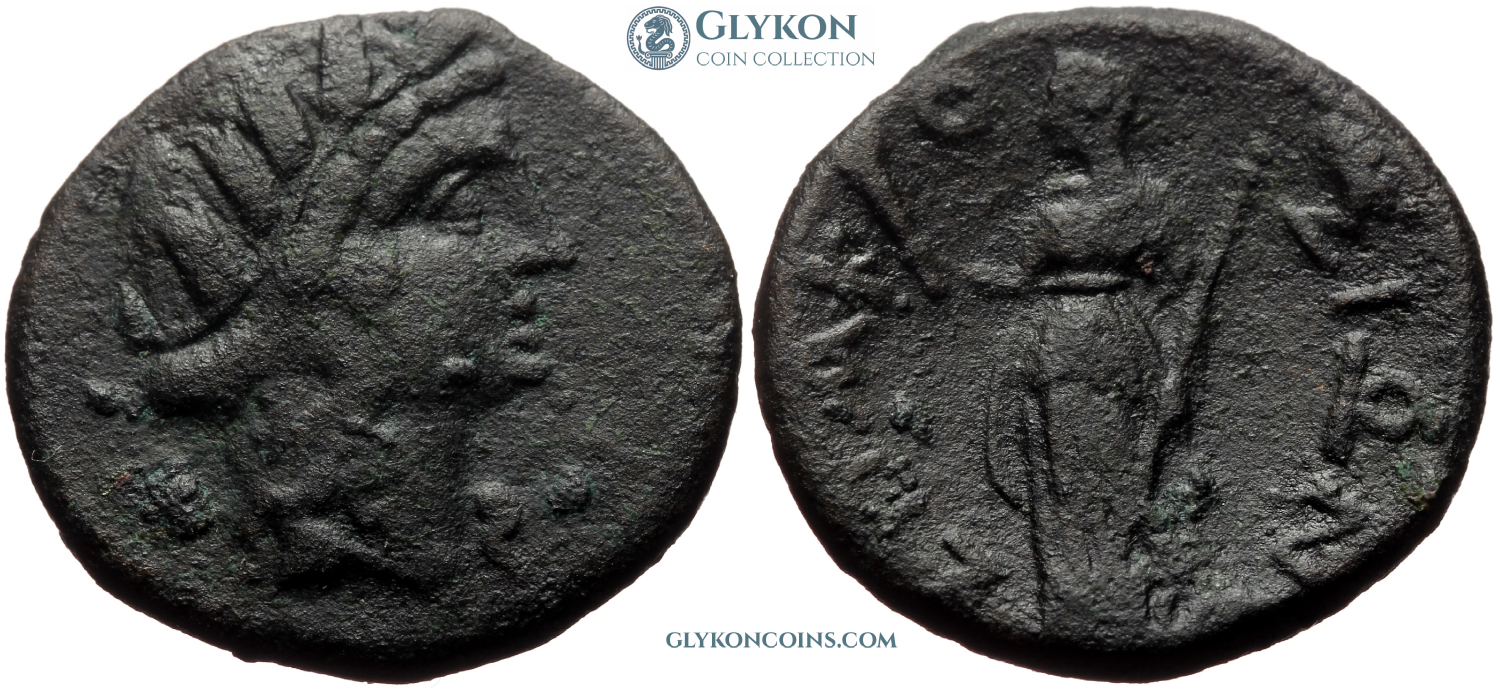
Syracuse (Sicily), early Roman rule (after 212 BC)
Denomination: AE20
Time: 212- BC
Weight: 7.24 g
Diameter: approx. 22.1 mm
Reference: SNG Cop 911; Calciati II 231; Dreer 554
Obverse: Crowned or wreathed head of Persephone right.
Reverse: Demeter standing left, with and sceptre. Legend: ΣYΡAK-OΣIΩN. |
|
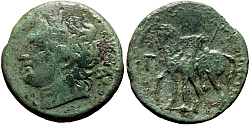 |
Messina (Sicily) under Mamertines
Denomination: AE Pentonkion
Time: 220-200 BC
Weight: 11.08 g
Diameter: approx. 26.4 mm
Reference: BMC 33; Sear 1143; HCG 2,849
Obverse: Diademed head of Mars to left, Phrygian helmet behind.
Reverse: Warrior holding a horse by the reins and a spear. Π left. Legend: MAMEΡTINΩN.
Comment: Mamertines ("Sons of Mars") were a group of Italian (mostly Campanian) mercenaries active in Sicily in the 3rd century BC. Unemployed after the end of one of many wars, they treacherously made themselves masters of the city of Messina after slaughtering its male population and established a small robber fiefdom there. When local Greek forces were on the verge of dislodging them, the Mamertines appealed to both Rome and Carthage for aid, unexpectedly pitting the two powers against each other. The resulting tensions spiralled out of control into the Punic Wars. Although the Mamertines disappear from the pages of history after that, they apparently remained in the city they seized. Many decades later the inhabitants of the city were still called "Mamertines", while the wine produced in Messina was called "Mamertine" and enjoyed great fame in the ancient world. It was reportedly Julius Caesar's favorite brand. |
|
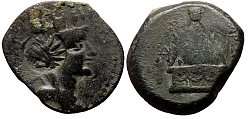 |
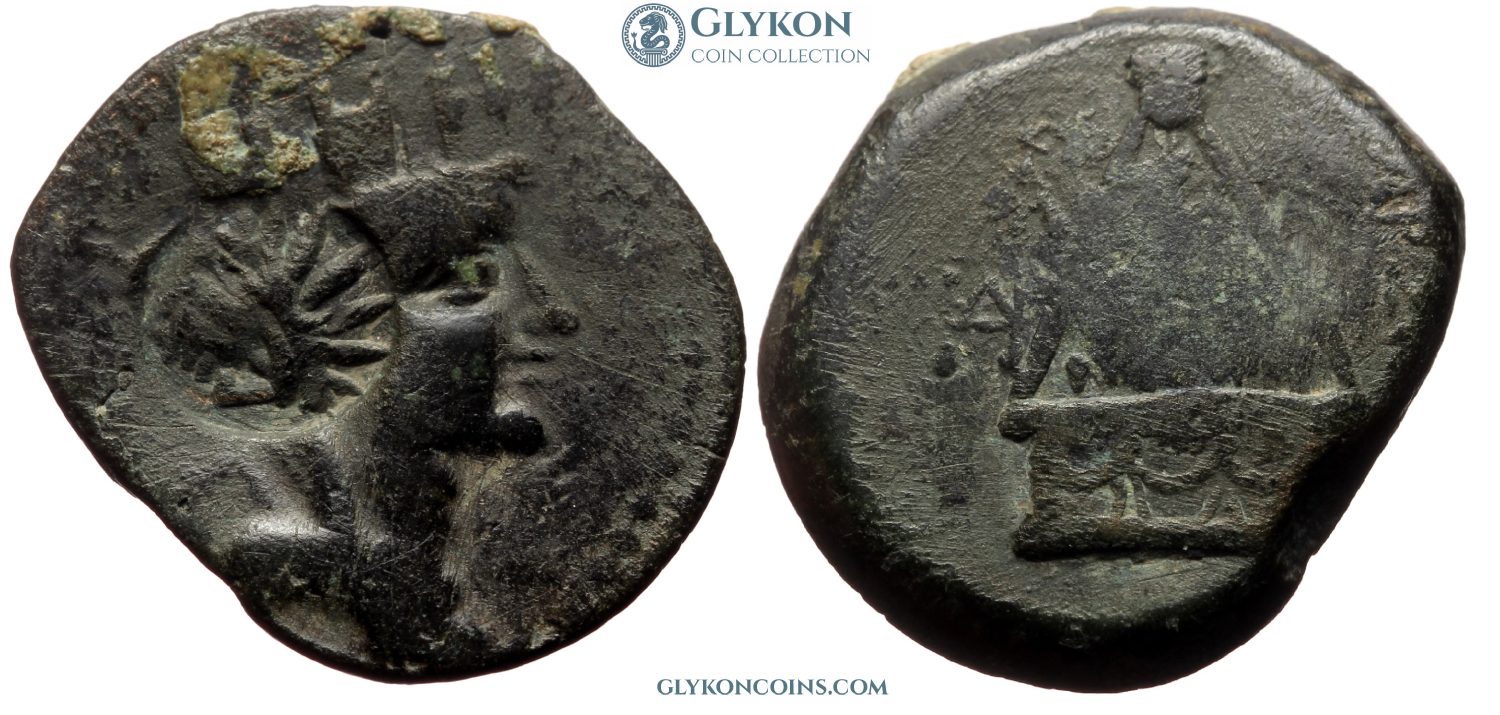
Tarsus (Cilicia)
Denomination: AE21
Time: 2nd-1st century BC
Weight: 6.63 g
Diameter: approx. 21.0 mm
Reference: SNG Cop 340
Obverse: Crowned and veiled head of Tyche to right. Inside a countermark: head in a radiate crown right.
Reverse: Decorated pyramidal pyre, inside a votive figure of deity Sandan on a mythical beast (not visible). Control marks left. Legend: TAPΣEΩN downward right.
Comment: Interesting countermark on the obverse depicting either Helios (Rhodes?) or a deified king (Seleucid?). |
|
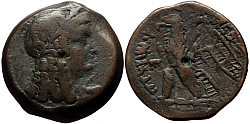 |
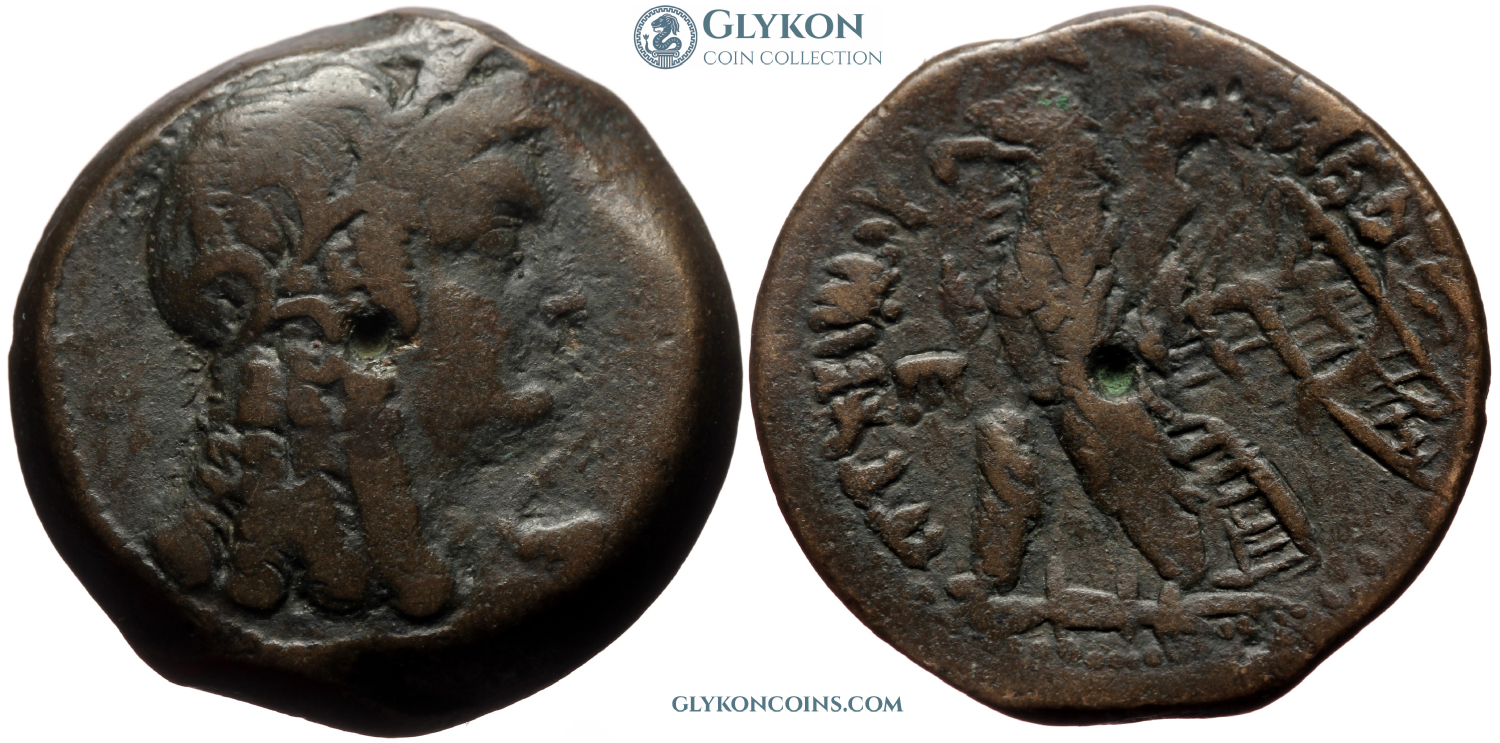
Ptolemaic Kingdom, Ptolemy VI Philometor (180-145 BC), regency of Cleopatra I Syra
Denomination: Bronze Trihemiobol (AE26)
Mint: Alexandria
Time: 180-176 BC
Weight: 15.53 g
Diameter: approx. 27.2 mm
Reference: Svoronos 1235; SNG Cop 248
Obverse: Wreathed head of Isis (perhaps with face of Cleopatra I herself) to right.
Reverse: Eagle standing on a thunderbolt to left. Monogram left. Legend: BAΣIΛEΩΣ ΠΤΟΛΕΜΑΙΟΥ (of king Ptolemy). |
|
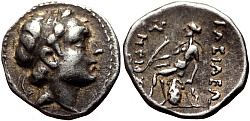 |
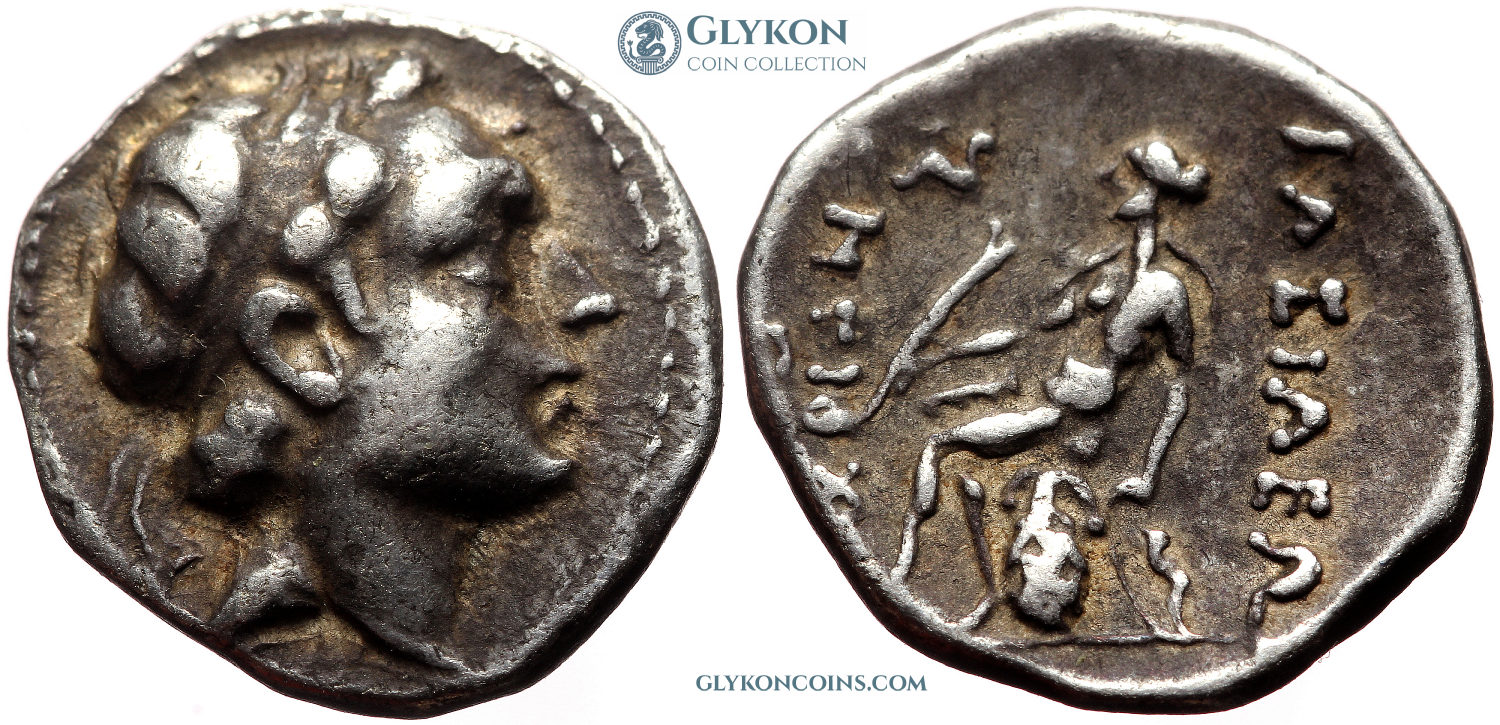
Seleucid Empire, Antiochus IV Epiphanes (175-164 BC)
Denomination: Drachm
Mint: Ectabana in Media or some unidentified eastern mint, pehaps in Hyrcania
Time: 175-164 BC
Weight: 4.03 g
Diameter: approx. 17.2 mm
Reference: SC 1559.3; HGC 9 623e; Sear 6981
Obverse: Diademed head of Antiochus IV to right.
Reverse: Naked Apollo seated on omphalus ("navel of the world") to left, examining an arrow and holding a bow. Monogram. Legend: BAΣIΛEΩΣ ANTIOXOY (of king Antiochus). |
|
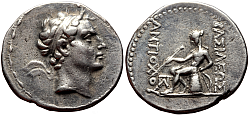 |
Seleucid Empire, Antiochus IV Epiphanes (175-164 BC)
Denomination: Tetradrachm
Mint: Seleucia on the Tigris
Time: 175-164 BC
Weight: 16.96 g
Diameter: approx. 28 mm
Reference: SC 1506.2; HGC 9, 615h
Obverse: Diademed head of Antiochus IV to right.
Reverse: Naked Apollo seated on omphalus ("navel of the world") to left, examining an arrow and holding a bow. Monogram. Legend: BAΣIΛEΩΣ ANTIOXOY (of king Antiochus). |
|
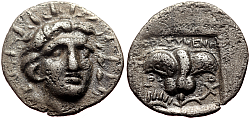 |
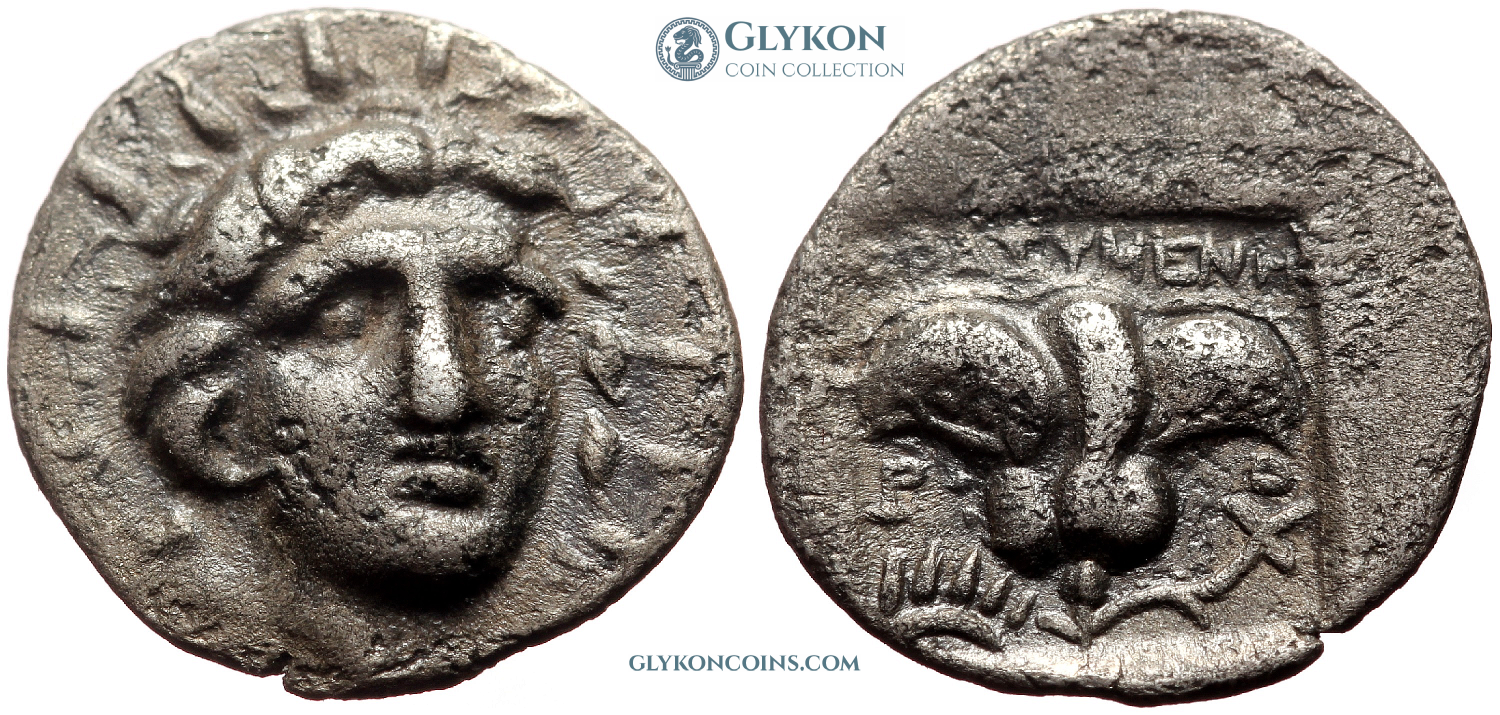
Rhodes
Denomination: Hemidrachm
Time: 170-150 BC; magistrate Thrasymenes
Weight: 1.25 g
Diameter: approx. 13.1 mm
Reference: Jenkins 1989, Group B, 38; SNG Keckman 643-644
Obverse: Radiate head of Helios three-quarter to right.
Reverse: Within square incuse rose flower between P and O. Bud right, rising sun left. Legend: ΘΡAΣYMENHΣ (Thrasymenes). |
|
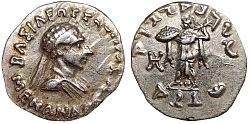 |
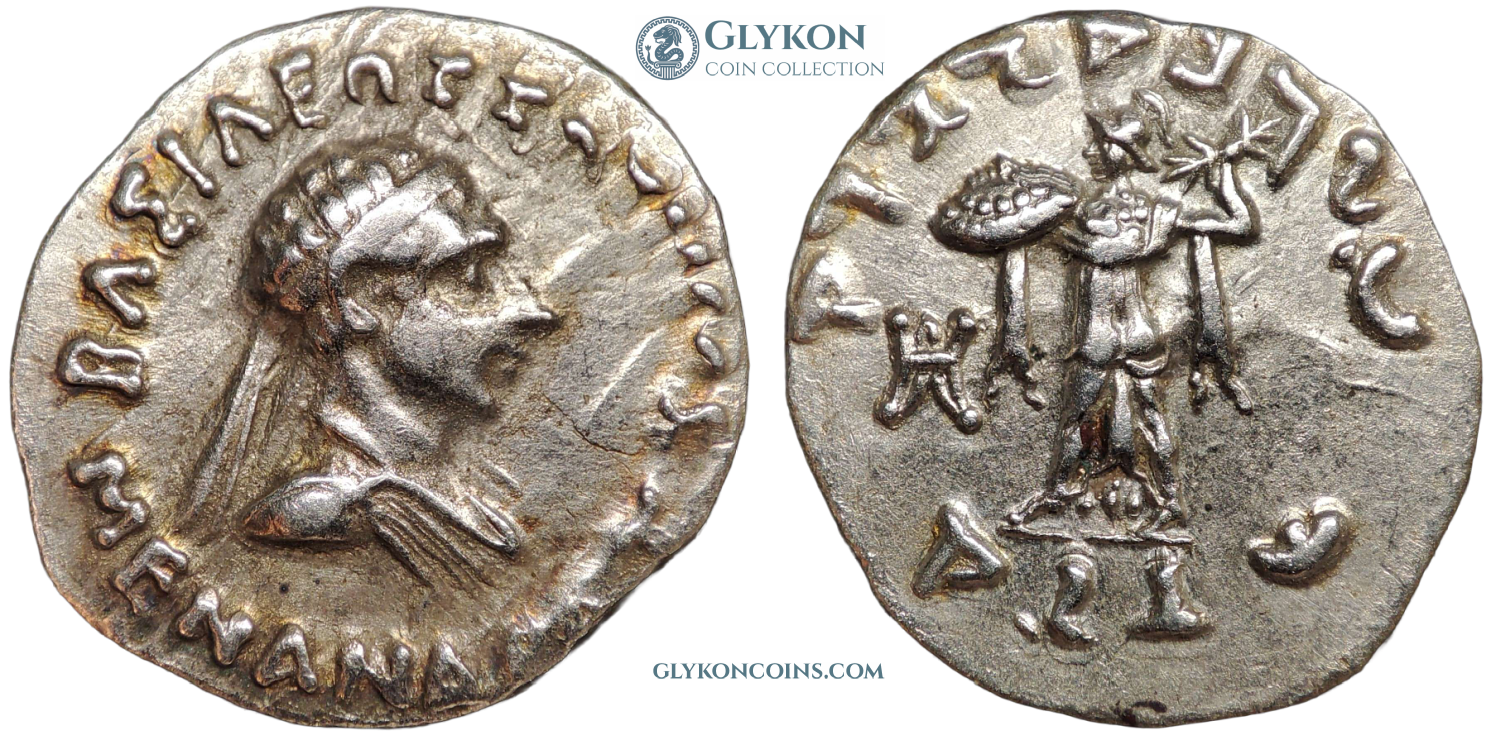
Indo-Greek Kingdom, Menander I Soter (165-130 BC)
Denomination: Drachm
Mint: ---
Time: 165-130 BC
Weight: 2.38 g
Diameter: approx. 17.1 mm
Reference: Bop 91 series 13; SNG Cop. 289 v.; Sear 7600 var
Obverse: Diademed and draped bust of Menander I to right. Legend: BAΣIΛEΩΣ ΣΩTHΡOΣ MENANΔΡOY (of king savour Menander).
Reverse: Athena Alkidemos ("Athena defender of the people") walking to left, holding thunderbolt and aegis. Monogram lower left. Legend in Kharoṣṭhī script: Maharajasa tratarasa Menamdrasa (of king savour Menander).
Comment: At the turn of the 3rd and 2nd centuries BC, the Greeks ruling in Bactria successfully broke into northern India and established a long-lasting kingdom or kingdoms there. Unfortunately, the paucity of written sources makes coins the main source of information about this fascinating period. One of the few rulers about whom we have more information is Menander I, who was probably the greatest Greek king who reigned in India. He probably also professed Buddhism and entered the canon of Buddhist scriptures under the name Milinda. |
|
 |
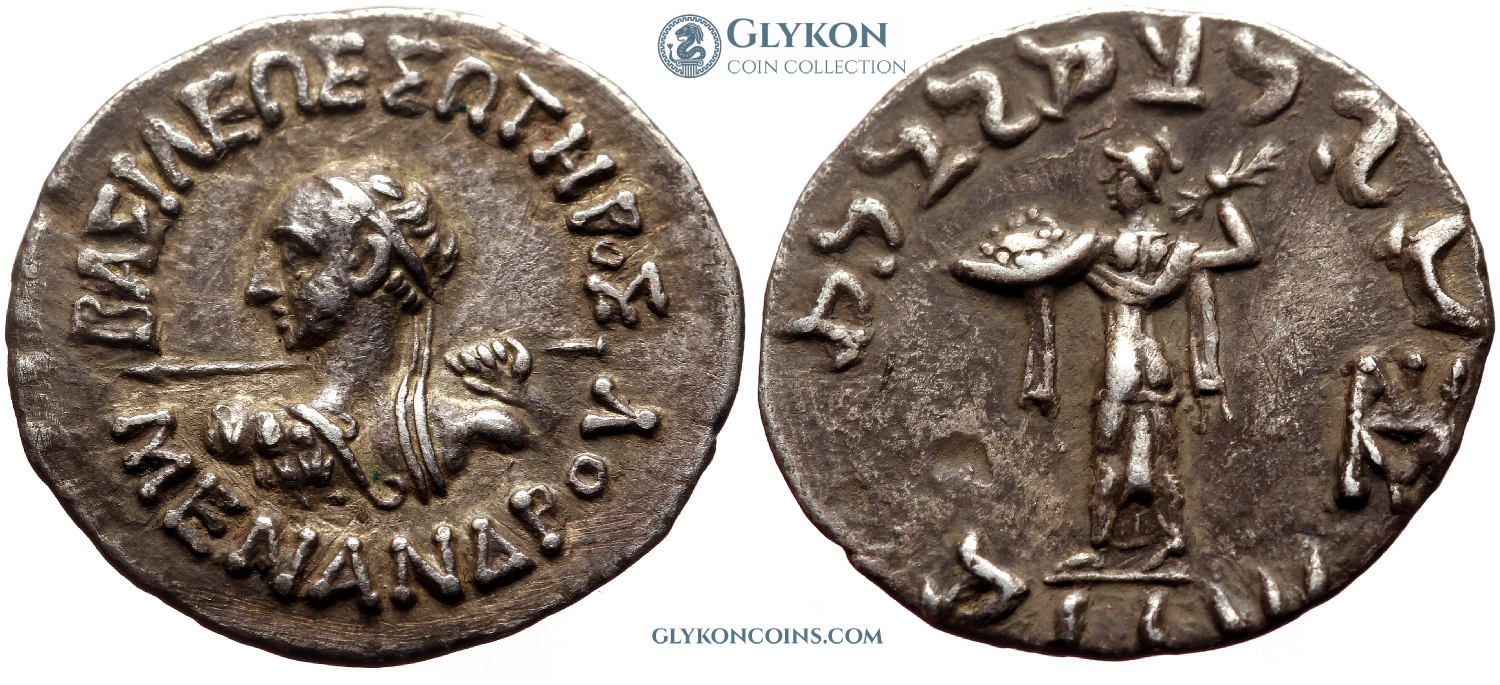
Indo-Greek Kingdom, Menander I Soter (165-130 BC)
Denomination: Drachm
Mint: ---
Time: 165-130 BC
Weight: 2.37 g
Diameter: approx. 18.6 mm
Reference: Bopearachchi 7B; SNG ANS 733-8
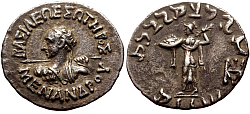
Obverse: Diademed and cuirassed bust of Menander I to left, thrusting spear held in right hand. Legend: BAΣIΛEΩΣ ΣΩTHΡOΣ MENANΔΡOY (of king savour Menander)
Reverse: Athena Alkidemos ("Athena defender of the people") walking to left, holding thunderbolt and aegis. Monogram lower right. Legend in Kharoṣṭhī script: Maharajasa tratarasa Menamdrasa (of king savour Menander). |
|
 |
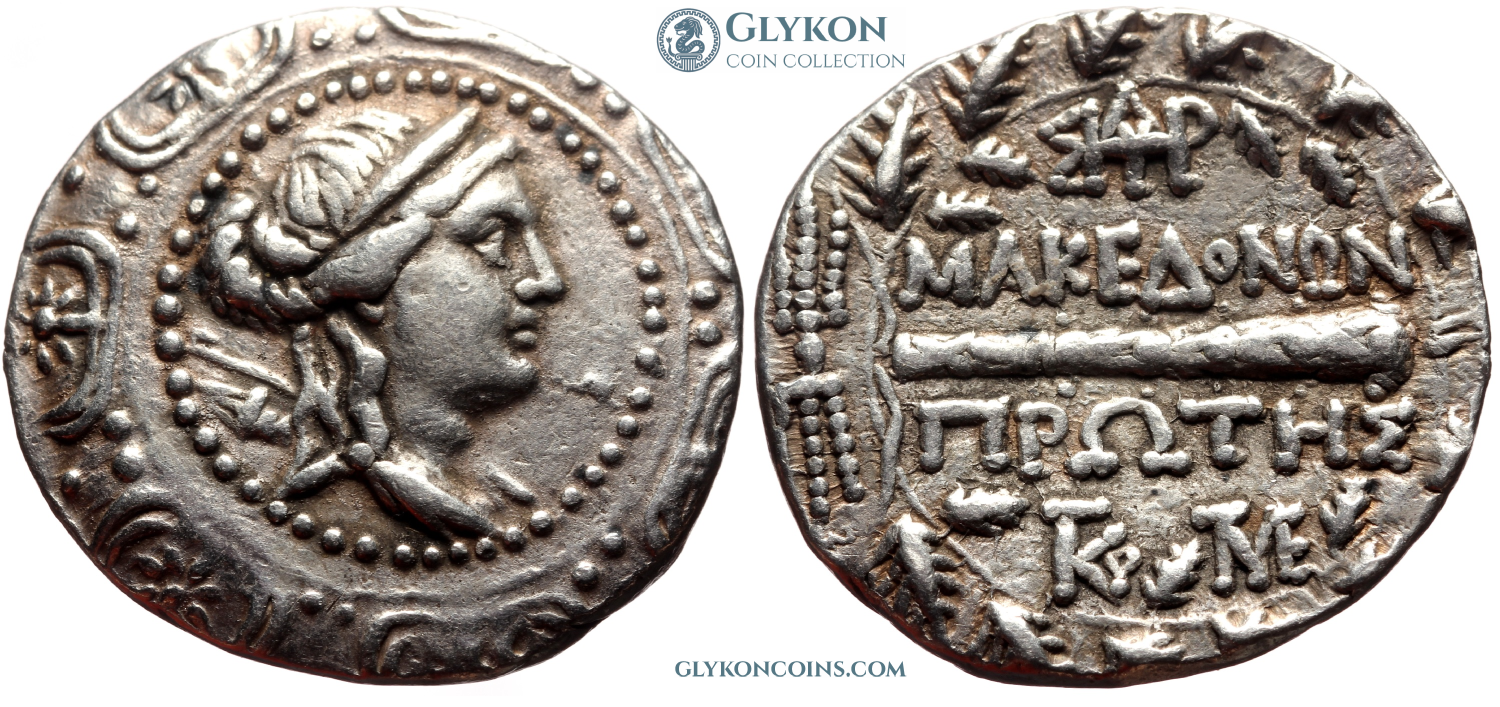
Macedon, early Roman rule. First republic.
Denomination: Tetradrachm
Time: 158-148 BC BC
Weight: 16.89 g
Diameter: approx. 30.4 mm
Reference: SNG Cop 1314-15; BMC 8
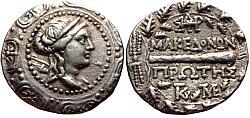
Obverse: On a decorated Macedonian shield, diademed and draped bust of Artemis to right, bow and quiver over her shoulder.
Reverse: Within oak wreath, Heracles' club to right surrounded by legend MAKEΔONΩN ΠΡΩTHΣ (of Macedon the First). Monograms below and above. Thunderbolt left, outside of the wreath.
Comment: After the crushing victory at Pydna in 168 BC and capturing king Perseus, the Romans didn't immidiately annex Macedon. Instead, the old kingdom was divided into four satellite republics. This state of affairs lasted into 149/8 BC when a pretender named Andriscus led a failed rebellion, which prompted the Romans to finally annex Macedon, ending the history of one of antiquity's most significant realms. |
|
 |
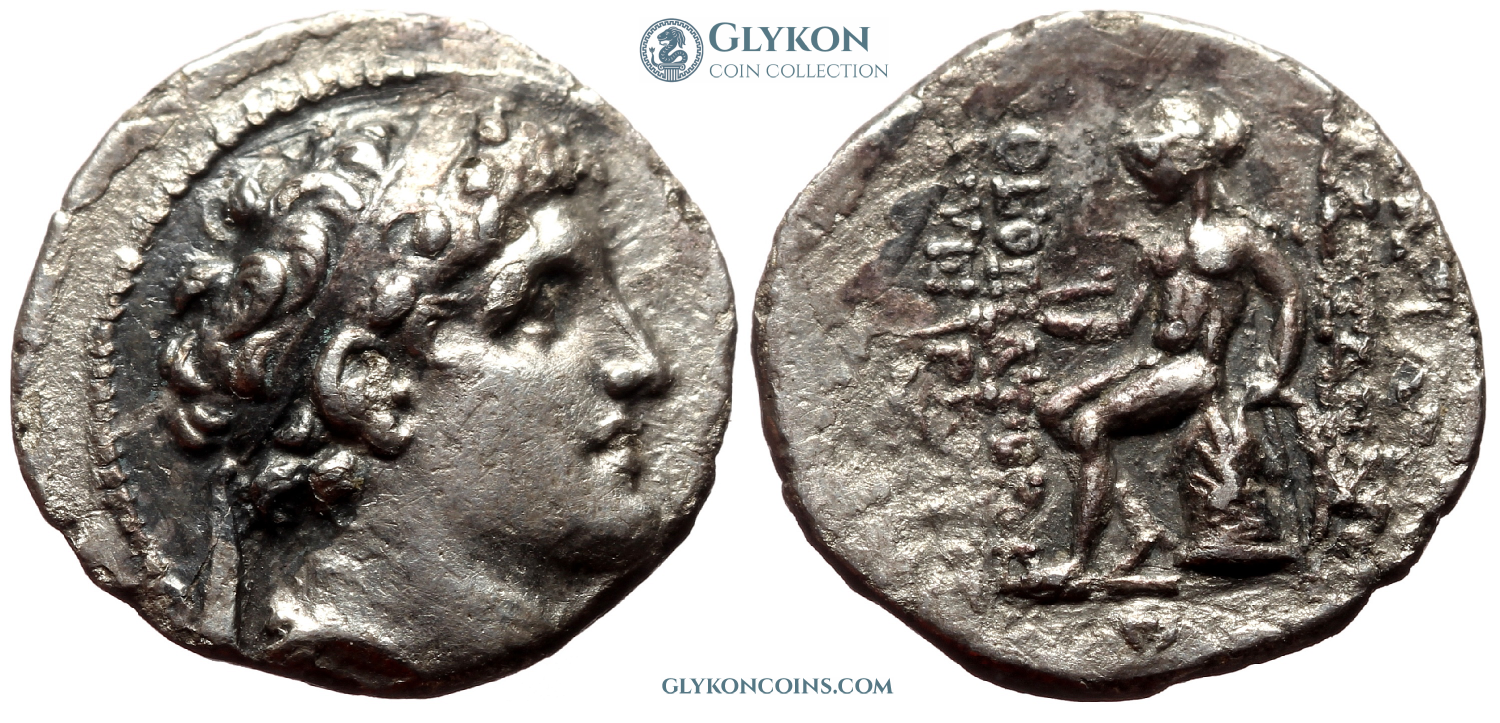
Seleucid Empire, Alexander I Balas (152-144 BC)
Denomination: Drachm
Mint: Antioch on the Orontes
Time: 152-144 BC
Weight: 3.46 g
Diameter: approx. 17.4 mm
Reference: SMA 186; BMC 21
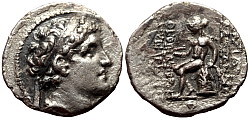
Obverse: Diademed head of Alexander I to right.
Reverse: Naked Apollo seated on omphalus ("navel of the world") to left, examining an arrow and holding a bow. Monogram below. Legend: ΒΑΣΙΛΕΩΣ ΑΛΕΧΑΝΔΡΟΥ ΘEOΠATΡOΣ ΕΥΕΡΓΕΤΟΥ (of king Alexander, of divine father, the benefactor). |
|
 |
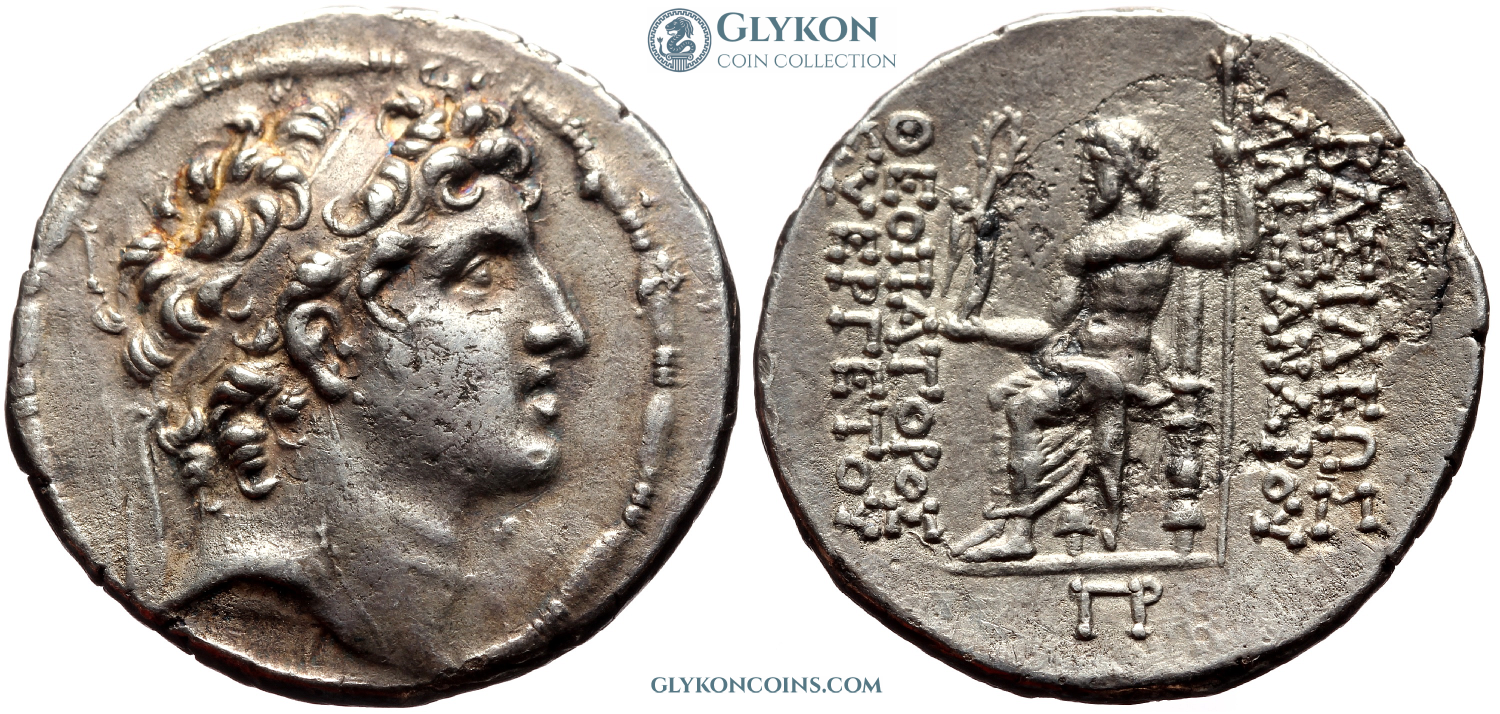
Seleucid Empire, Alexander I Balas (152-144 BC)
Denomination: Tetradrachm
Mint: Antioch on the Orontes
Time: 175-164 BC
Weight: 16.28 g
Diameter: approx. 29.4 mm
Reference: SC 1781.1g
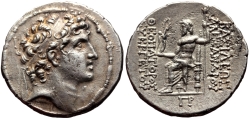
Obverse: Diademed head of Alexander I to right.
Reverse: Zeus Nikephoros ("Zeus the Victory-bearer") seated on stool-throne to left, wearing a himation over his lower limbs, on outstretched right hand supporting small Nike with wreath facing right, lotus-tipped scepter in left hand. Monogram below. Legend: ΒΑΣΙΛΕΩΣ ΑΛΕΧΑΝΔΡΟΥ ΘEOΠATΡOΣ ΕΥΕΡΓΕΤΟΥ (of king Alexander, of divine father, the benefactor). |
|
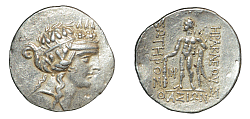 |
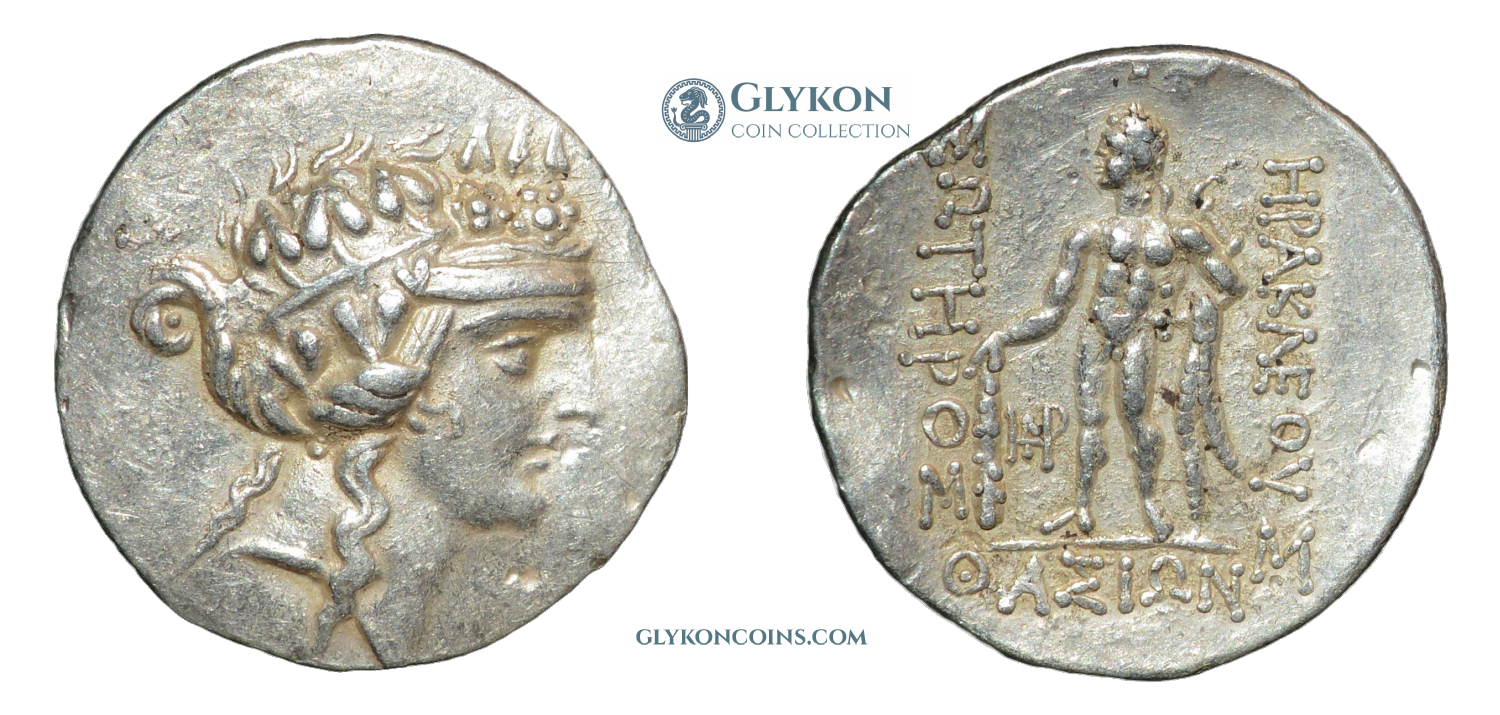
Thassos or Thasos (island off Thrace)
Denomination: Tetradrachm
Time: 148-80 BC
Weight: 16.69 g
Diameter: approx. 32.6 mm
Reference: SNG Copenhagen 1040-50; HCG 6, 359; ex Heritage Europe 86, Lot number: 3759
Obverse: Youthful head of Dionysos facing right, wearing ivy and flowery wreath.
Reverse: Heracles standing naked facing left, holding club and a lionskin. Control monogram on the lower left, between club and leg. Legend: HPAKΛEOYΣ ΣΩTHPOΣ ΘAΣIΩN (Heracles, savior of Thasians).
Comment: Thassos, island known from bawdy coins with Satyrs, had for most of history control over productive silver mines on the mainland. After Romans completed their conquest of Greece in 140s BC they authorized some cities, including Thasos, to mint coins for local use. Thasian tetradrachms with Dionysos and Heracles proved to be extremely popular and continued to be minted for several decades. They were also extensively imitated, including by tribes living alongside the Danube. It is estimated by some that the number of such imitations might exceed those minted officially. |
|
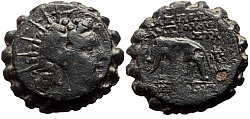 |
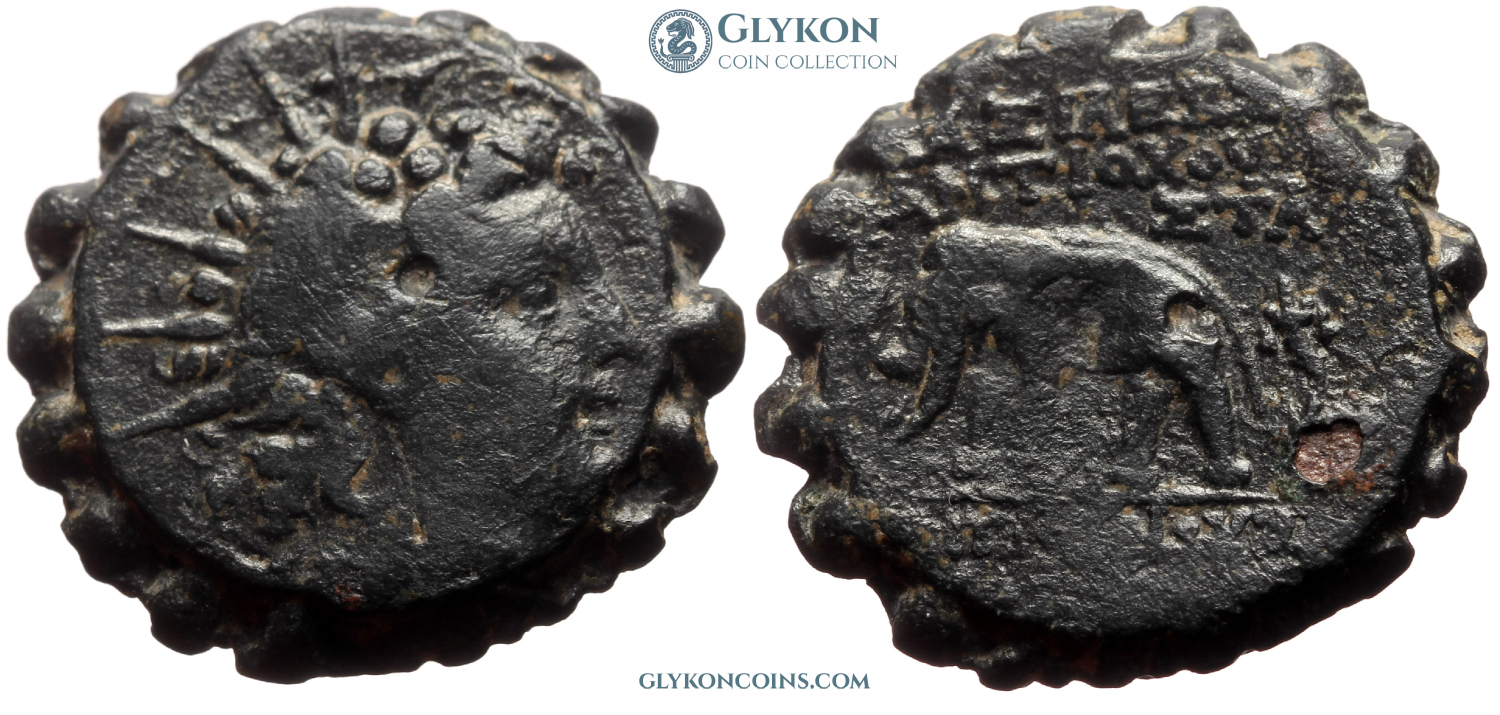
Seleucid Empire, Antiochus VI Dionysus (144-141 BC)
Denomination: Serrated AE22
Mint: Antioch on the Orontes
Time: 144-141 BC
Weight: 7.42 g
Diameter: approx. 21.5 mm
Reference: SNG Spaer 1772/3; Houghton SC 2006a; BMC 45-46
Obverse: Head of Antiochus VI to right, in radiate crown.
Reverse: Elephant treading to left. Cornucopia right, monogram ΣTA above. Legend: BAΣIΛEΩΣ ANTIOXOY EΠΙΦΑΝOY ΔIONYΣOY (of king Antiochus, god manifest, Dionysus). |
|
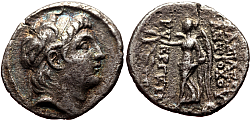 |
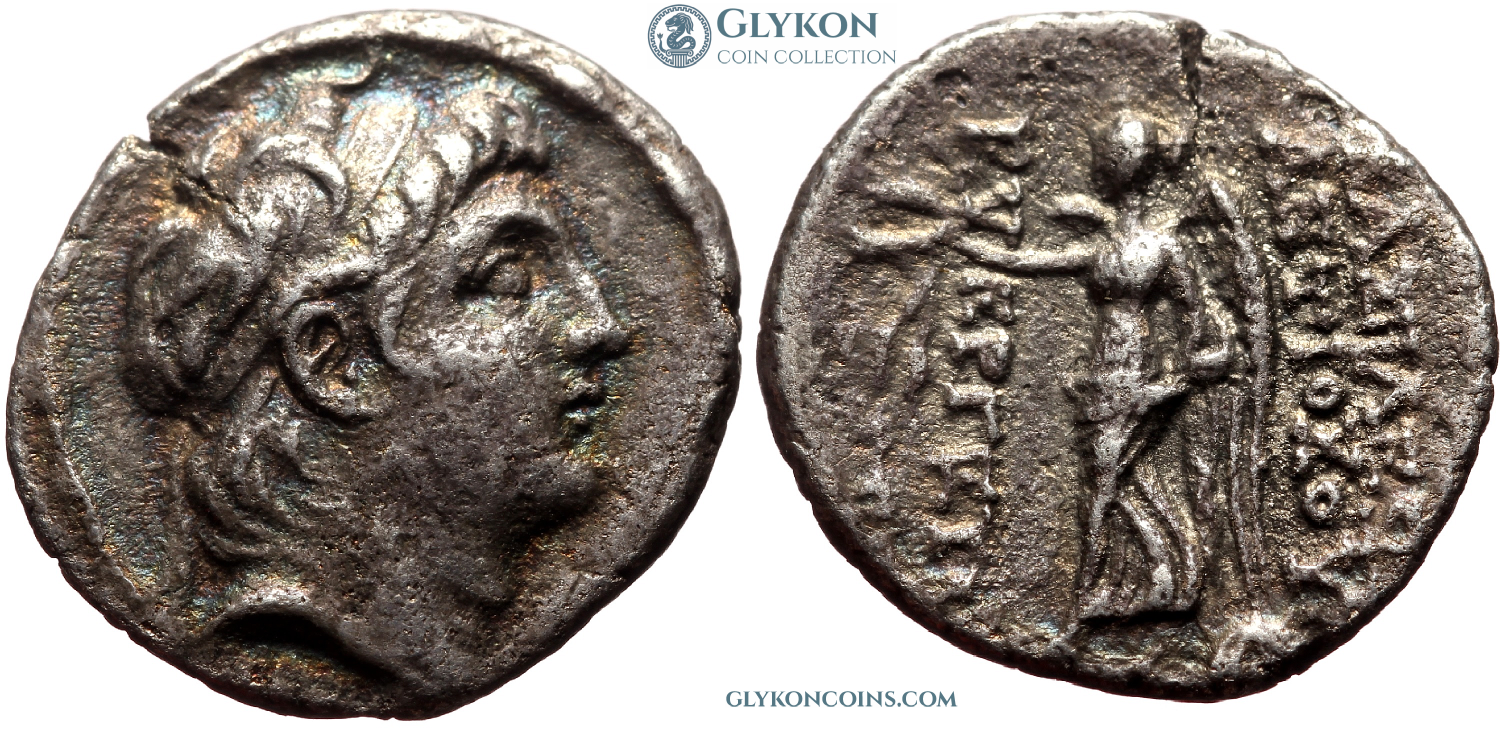
Seleucid Empire, Antiochus VII Sidetes (138-129 BC)
Denomination: Drachm
Mint: Antioch on the Orontes
Time: 138-129 BC (lifetime)
Weight: 3.64 g
Diameter: approx. 17.3 mm
Reference: SMA 306; SC 2.2062/2e
Obverse: Diademed head of Antiochus VII to right.
Reverse: Nike walking to left, holding wreath in right hand. Legend: ΒΑΣΙΛΕΩΣ ANTIOXOY ΕΥΕΡΓΕΤΟΥ (of king Antiochus the benefactor).
Comment: The last truly great Seleucid king. His fame and prestige far outlived his untimely death and coinage in his name continued to be used and struck for many decades afterwards. |
|
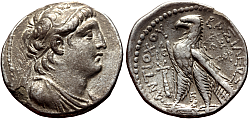 |
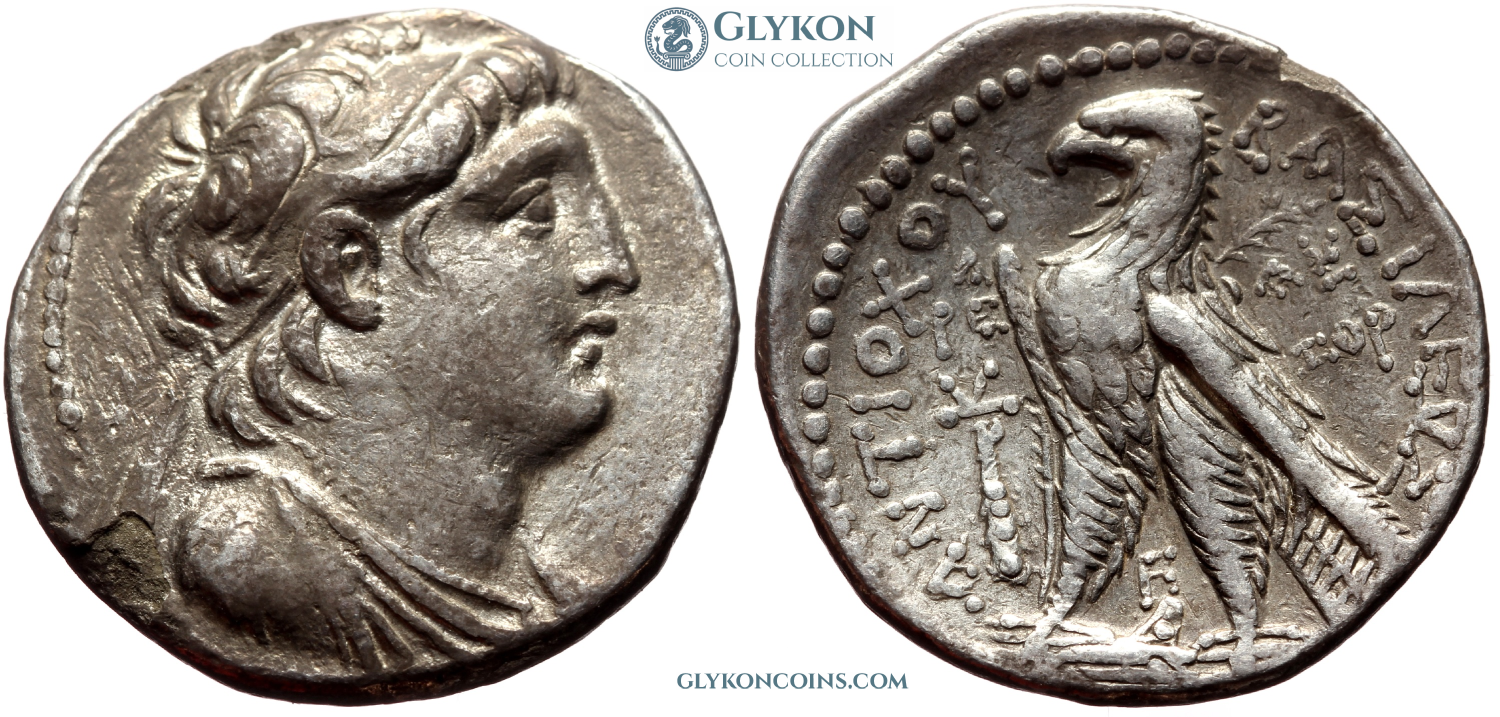
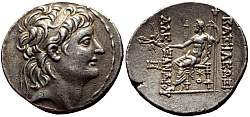
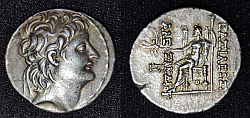
Seleucid Empire, Antiochus VII Sidetes (138-129 BC)
Denomination: Tetradrachm
Mint: Tyre
Time: 138-129 BC (lifetime)
Weight: 13.40 g
Diameter: approx. 28.0 mm
Reference: BMC 7
Obverse: Diademed, draped bust of Antiochus VII to right.
Reverse: Eagle standing on a ship's prow to left, palm leaf behind. Monograms around. Heracles/Baal-Melkart's club lower left. Legend: ΒΑΣΙΛΕΩΣ ANTIOXOY (of king Antiochus).
Comment: Coin that served as the basis for the famous Tyrean shekel, also known as the biblical "pieces of silver". |
|
 |
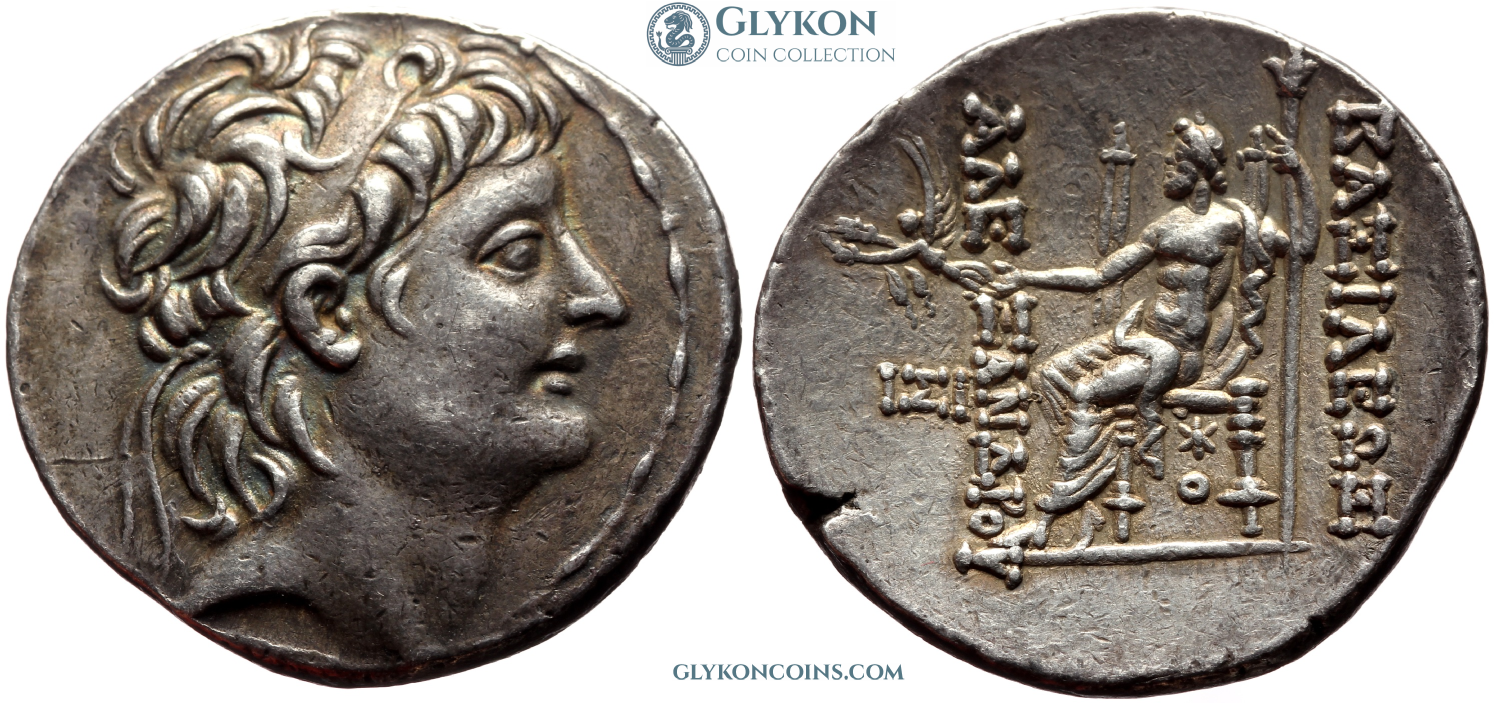
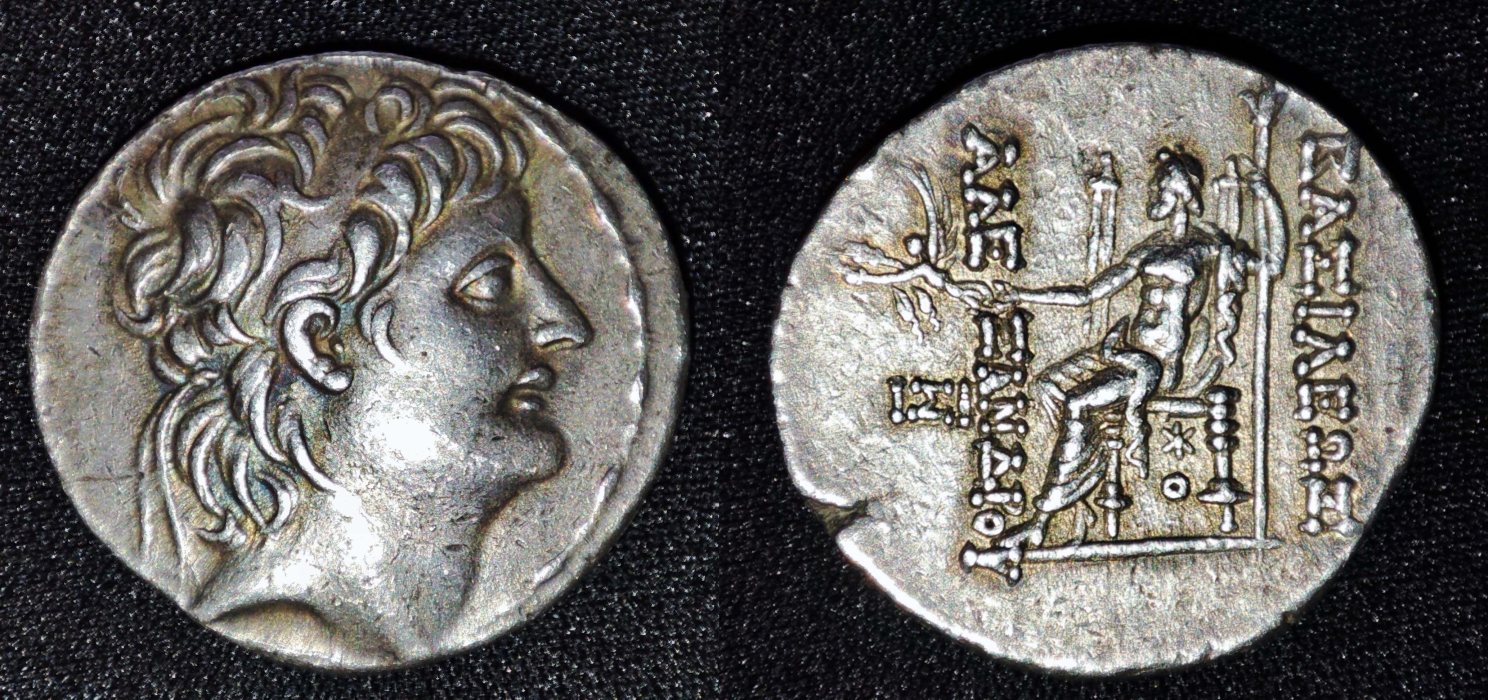
Seleucid Empire, Alexander II Zabinas (128-122 BC)
Denomination: Tetradrachm
Mint: Antioch on the Orontes
Time: 128-122 BC
Weight: 16.83 g
Diameter: approx. 30.4 mm
Reference: SC 2217.3c var (rare variant with Theta or Omicron instead of Delta below star)
Obverse: Diademed head of Alexander II to right.
Reverse: Zeus Nikephoros ("Zeus the Victory-bearer") seated on stool-throne to left, wearing a himation over his lower limbs, on outstretched right hand supporting small Nike with wreath facing left, lotus-tipped scepter in left hand. Star and Θ or Ο within the throne. Monogram left. Legend: ΒΑΣΙΛΕΩΣ ΑΛΕΧΑΝΔΡΟΥ (of king Alexander). |
|
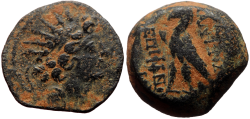 |
Seleucid Empire, Antiochus Antiochus VIII Grypus Grypus (125-96 BC)
Denomination: AE19
Mint: Antioch on the Orontes
Time: 115-113 BC
Weight: 6.22 g
Diameter: approx. 19.0 mm
Reference: SC 2307 v; BMC 25 v
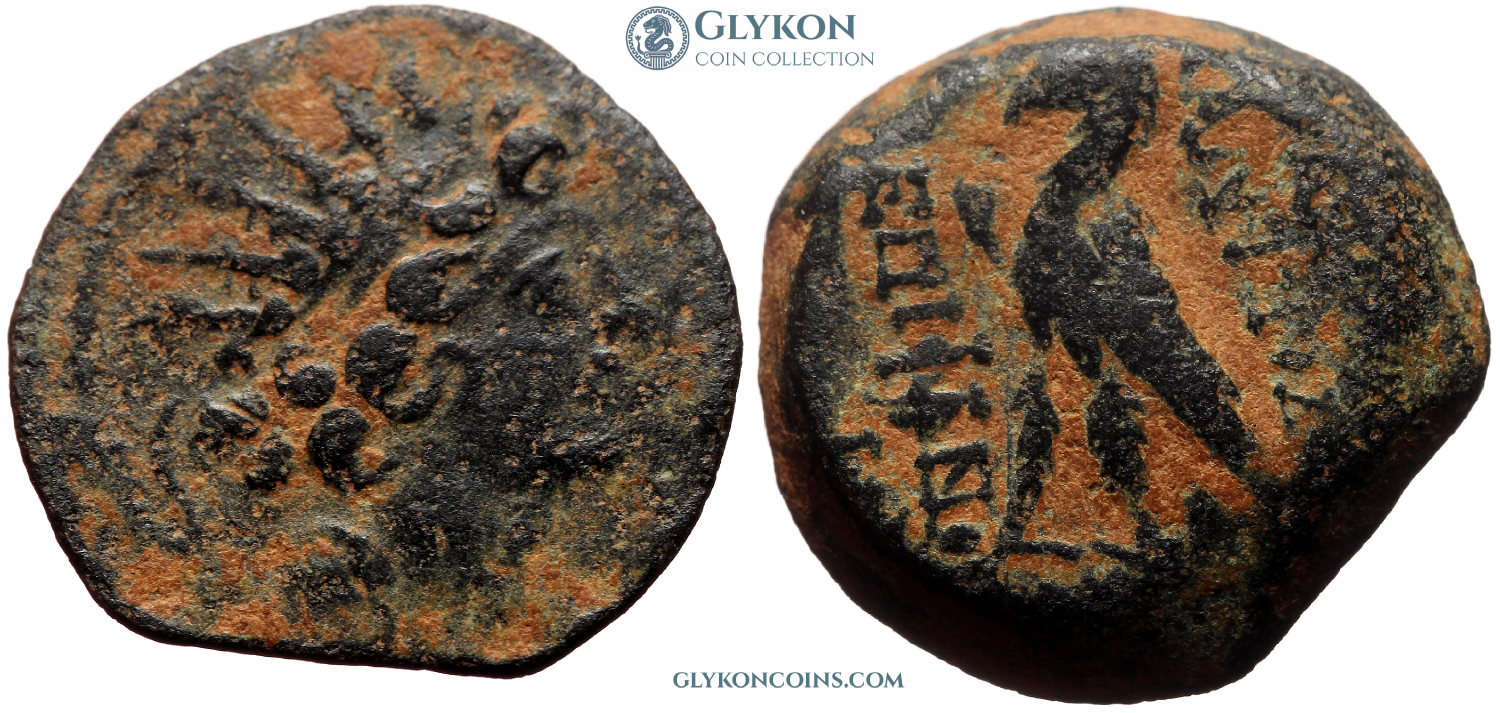
Obverse: Head of Antiochus Antiochus VIII Grypus to right, in radiate crown.
Reverse: Eagle standing to left, spear behind. Legend: BAΣIΛEΩΣ ANTIOXOY EΠΙΦΑΝOY (of king Antiochus, god manifest). |
|
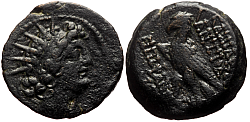 |
Seleucid Empire, Antiochus Antiochus VIII Grypus Grypus (125-96 BC)
Denomination: AE19
Mint: Antioch on the Orontes
Time: 125-96 BC
Weight: 5.91 g
Diameter: approx. 19.1 mm
Reference: SC 2307; HGC 9, 1212; DCA 279
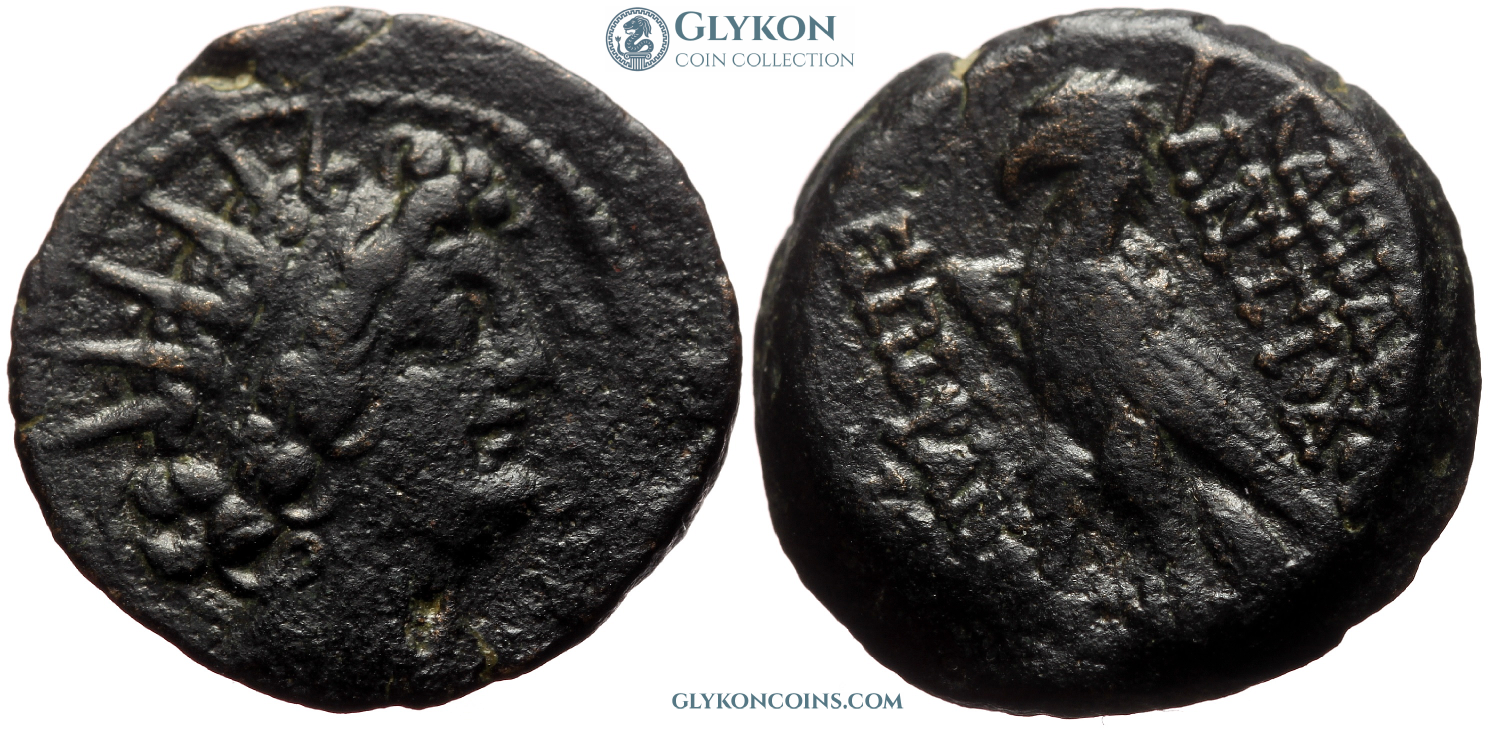
Obverse: Head of Antiochus Antiochus VIII Grypus to right, in radiate crown.
Reverse: Eagle standing to left, spear behind. Legend: BAΣIΛEΩΣ ANTIOXOY EΠΙΦΑΝOY (of king Antiochus, god manifest). |
|
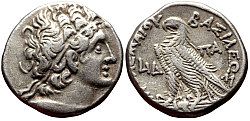 |
Ptolemaic Kingdom, Ptolemy X Alexander I (107-88 BC)
Denomination: Tetradrachm
Mint: Alexandria
Time: 101/100 BC
Weight: 12,90 g
Diameter: approx. 24.4 mm
Reference: Svoronos 1674
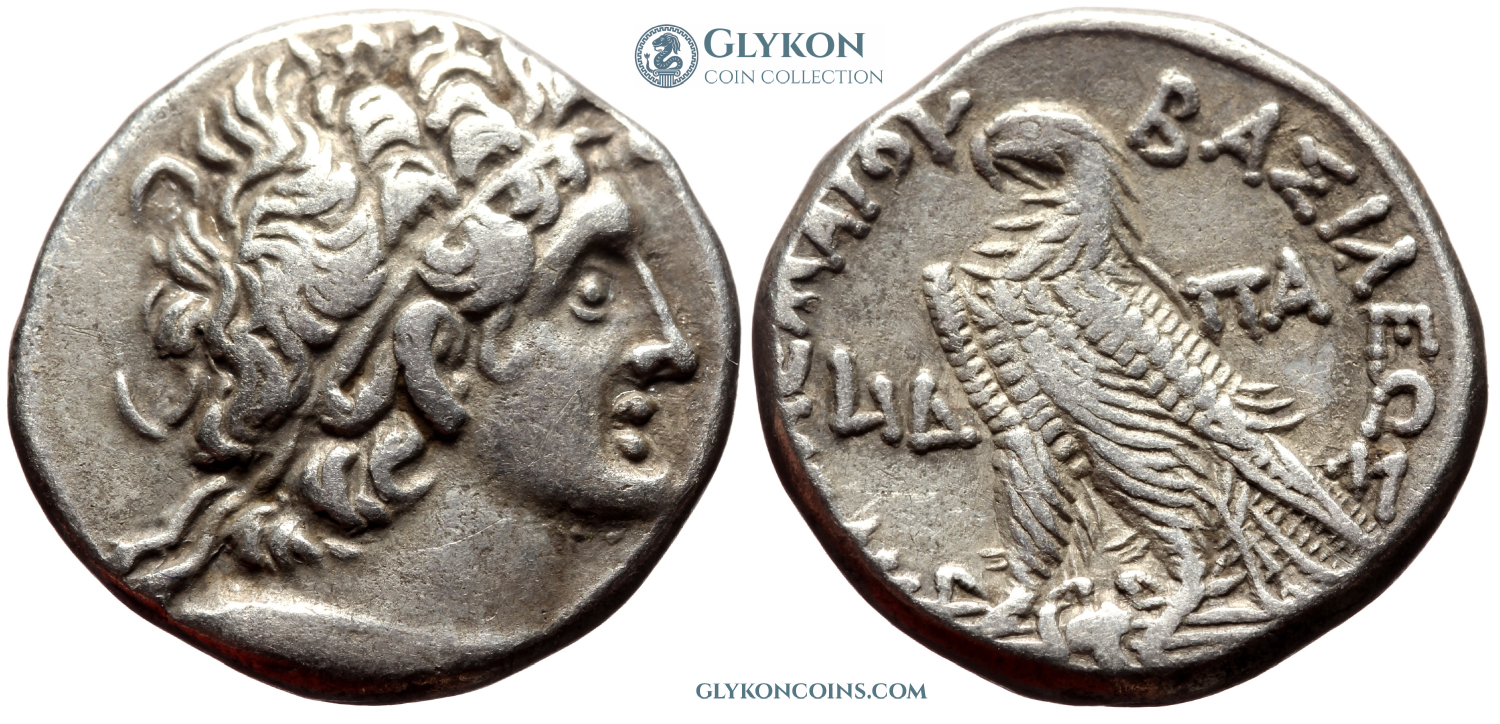
Obverse: Diademed head of Ptolemy I to right, part of aegis below.
Reverse: Eagle standing on a thunderbolt to left. Flanking year- and mint marks LIΔ-ΠA. Legend: BAΣIΛEΩΣ ΠΤΟΛΕΜΑΙΟΥ (of king Ptolemy). |
|
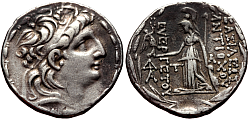 |
Kingdom of Cappadocia, Ariarathes VII Philometor (116-101 BC)
Denomination: Tetradrachm
Mint: Ariaratheia or Eusebia-Tyana
Time: 116-101 BC
Weight: 16.32 g
Diameter: approx. 28.4 mm
Reference: HGC 9-1069; SC 2150.5
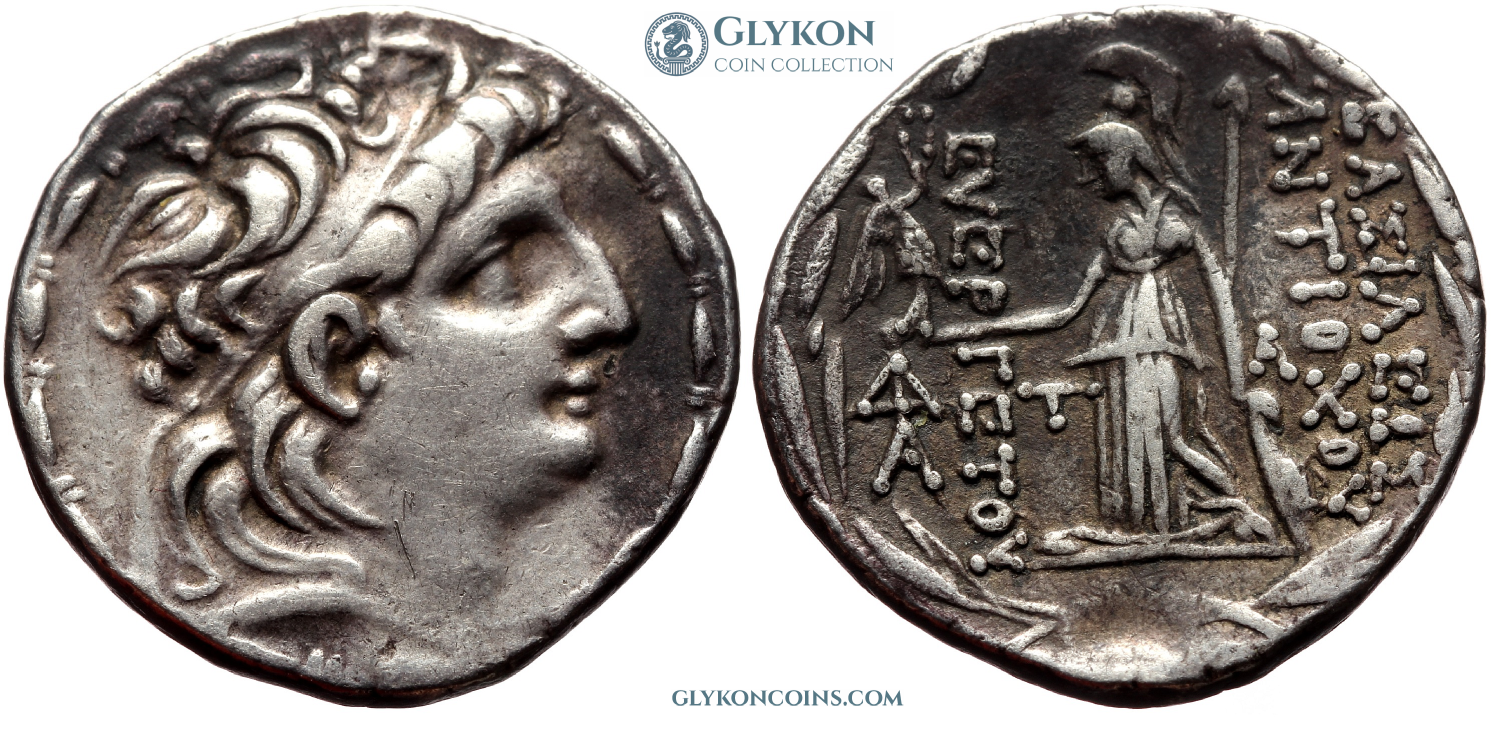
Obverse: Within wreath diademed head of Antiochus VII to right.
Reverse: Within laurel wreath Athena Nikephoros ("Athena Bringer of Victory") standing to right, in outstretched right hand Nike holding a wreath to right. Spear and shield behind. T and Λ flanking Athena. Monogram lower left. Legend: ΒΑΣΙΛΕΩΣ ANTIOXOY (of king Antiochus).
Comment: Part of the numerous coinage in the name of Antiochus VII that continued to be minted for decades after the great Seleucid's death. Possible reason is that these coins were readily accepted by mercenaries, who at the time composed the bulk of armies of local kingdoms. |
|
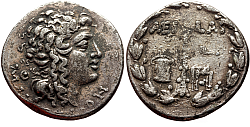 |
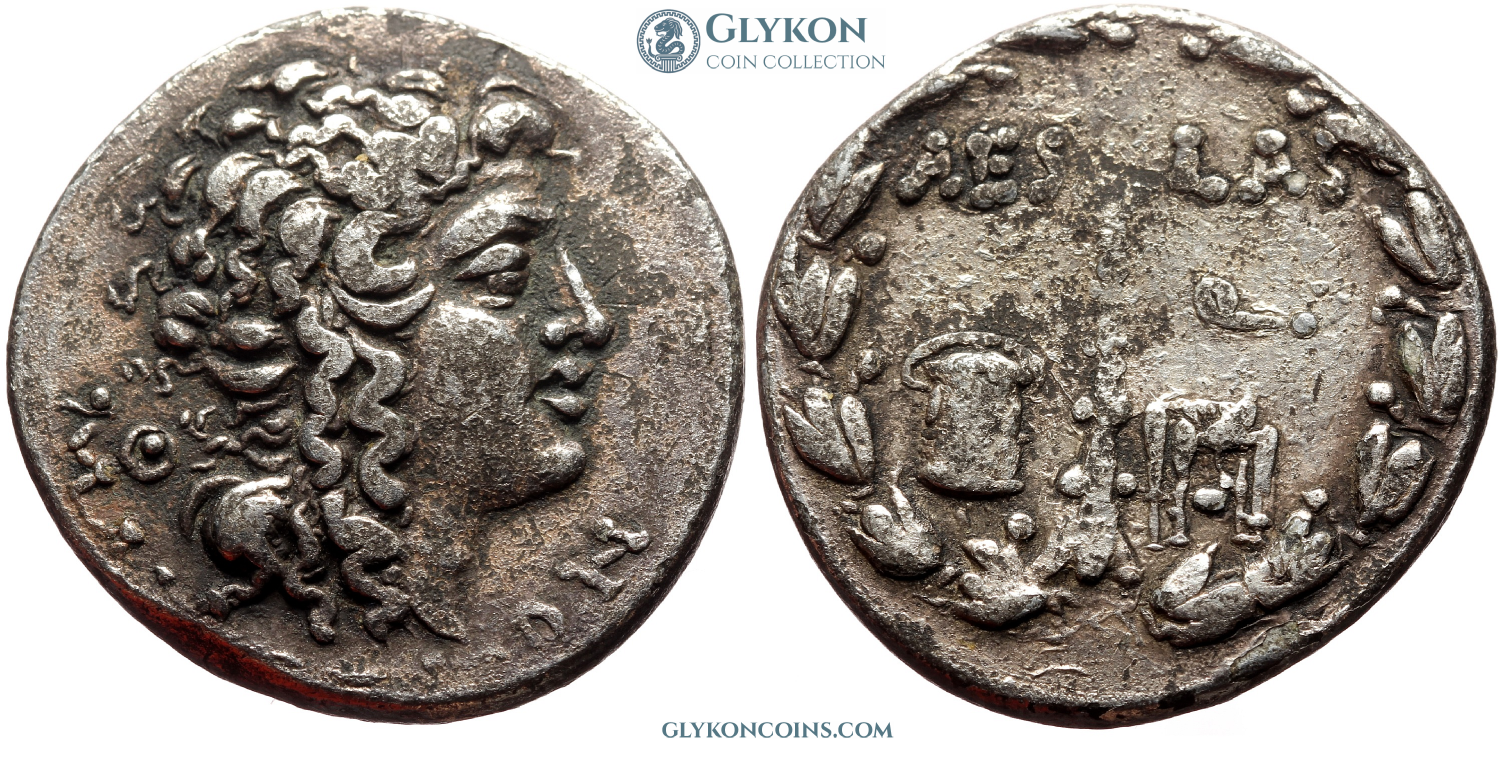
Macedon, Roman province.
Denomination: Tetradrachm
Mint: Thessalonica (?)
Time: 95-70 BC, questorship of Aesillas
Weight: 16.81 g
Diameter: approx. 28.5 mm
Reference: Bauslaugh Gr. VII Obv. 98/Rev. 368a; HGC 110
Obverse: Head of deified Alexander the Great to right. Θ left. Legend: MAKEΔONΩN (of Macedonians).
Reverse: Within olive wreath money chest, club downwards, curule chair and culullus. Legend: AESILLAS.
Ex Auktion Münz Zentrum 94, Köln 1998.
Comment: During the Mithridatic Wars, the Romans briefly resumed the production of coins in Macedon. This was presumably to pay soldiers recruited from that province. All coins bore the name of the quaestor Aesillas, who held office in Macedon at the time. A long break from the previous issues of coins caused the Romans to settle on a completely new design. The inclusion of Alexander's portrait on the obverse was undoubtedly intended to stir the patriotism of soldiers enlisted in Macedon. |
|
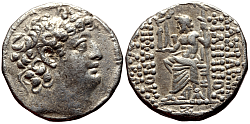 |
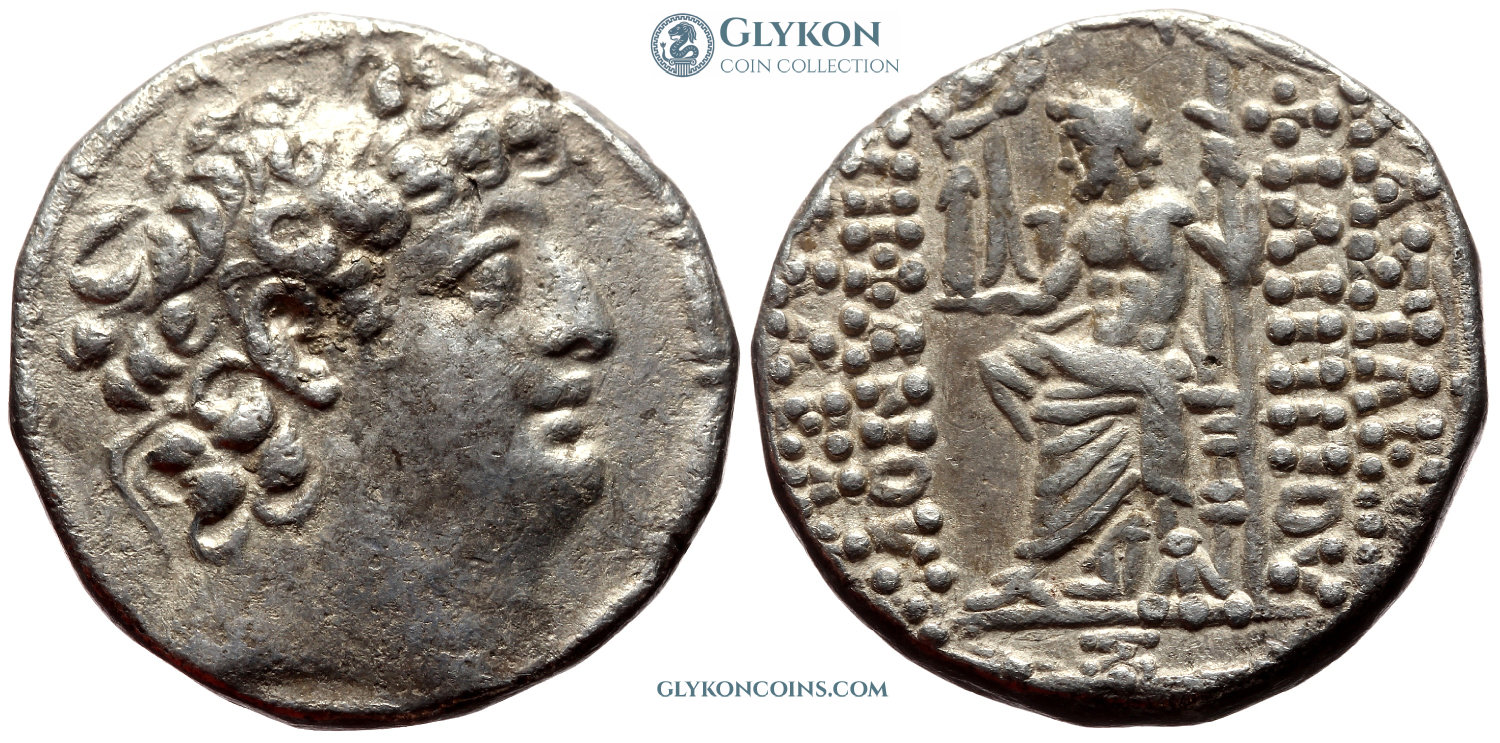
Seleucid Empire, Philip I Philadelphus (94–83 BC)
Denomination: Tetradrachm
Mint: Antioch on the Orontes
Time: 94–83 BC (lifetime)
Weight: 15.22 g
Diameter: approx. 24.1 mm
Reference: BMC 4; ; SNG Spaer 2808
Obverse: Within wreath diademed head of Philip I facing right.
Reverse: Zeus Nikephoros ("Zeus the Victory-bearer") seated on stool-throne facing left, wearing a himation over his lower limbs, Nike to right with wreath on outstretched right hand, scepter in left hand. Σ in exergue below. Monogram left. Legend: ΒΑΣΙΛΕΩΣ ΦIΛIΠΠΟΥ EΠΙΦΑΝOY ΦIΛAΔEΛΦOY (of king Philip, god manifest, sibling-lover).
Comment: One of the last Seleucids, Philip carried out a monetary reform that proved popular. Coins in his standard and in his name were therefore minted long after his death and even long after the fall of his dynasty. |
|
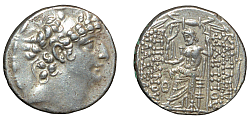 |
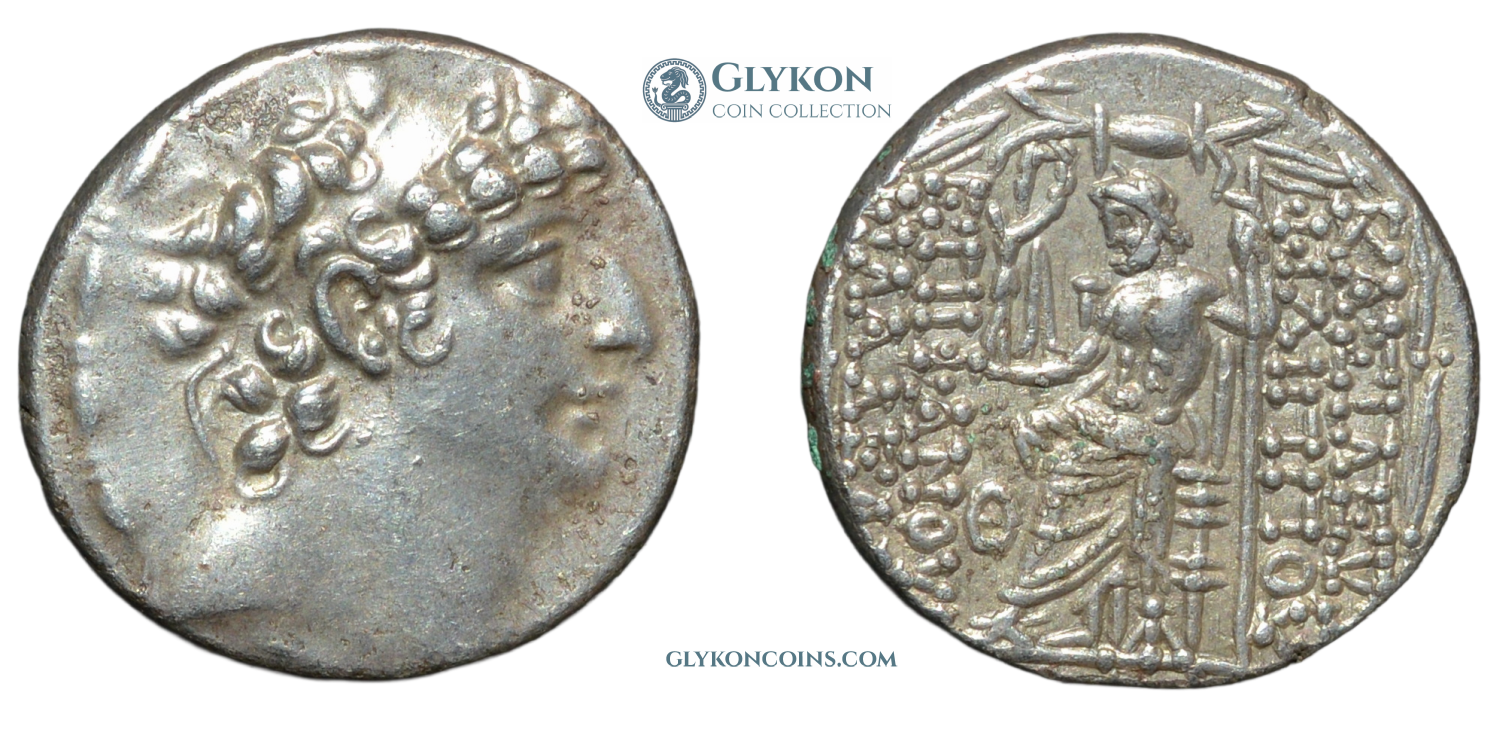
Seleucid Empire, Philip I Philadelphus (94–83 BC)
Denomination: Tetradrachm
Mint: Antioch on the Orontes
Time: 94–83 BC (lifetime)
Weight: 15.62 g
Diameter: approx. 25.5 mm
Reference: SC 2463.2e; HCG 9, 1319
Obverse: Within wreath diademed head of Philip I facing right.
Reverse: Zeus Nikephoros ("Zeus the Victory-bearer") seated on stool-throne facing left, wearing a himation over his lower limbs, Nike to right with wreath on outstretched right hand, scepter in left hand. Θ on the lower left. Legend: ΒΑΣΙΛΕΩΣ ΦIΛIΠΠΟΥ EΠΙΦΑΝOY ΦIΛAΔEΛΦOY (of king Philip, god manifest, sibling-lover).
Comment: Almost the same type as above. |
|
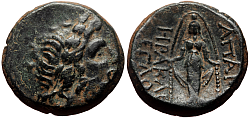 |
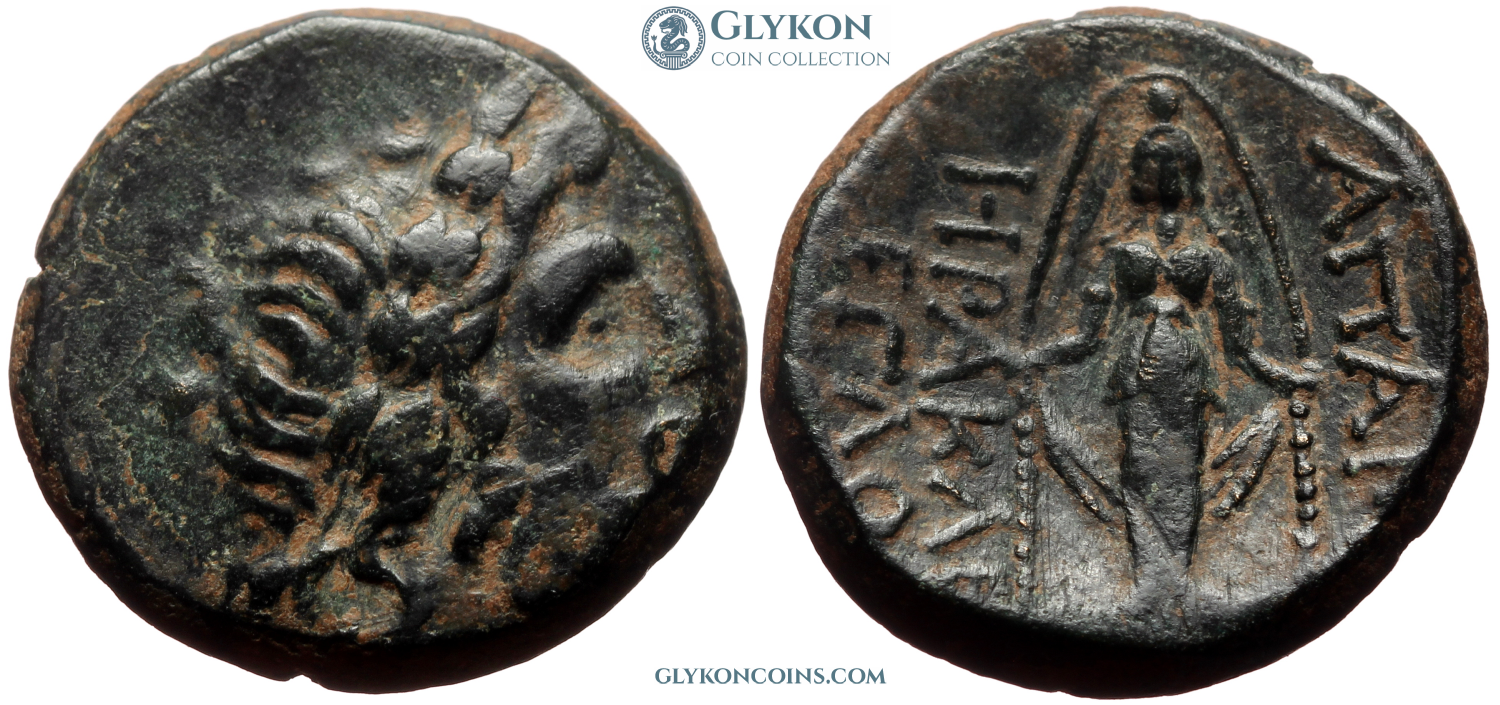
Apamea (Phrygia)
Denomination: AE20
Time: 88-40 BC; magistrates Heracles and Eglo(gistes?)
Weight: 7.44 g
Diameter: approx. 12.09 mm
Reference: SNG Cop 183; SNG von Aulock 3470
Obverse: Laureate head of Zeus facing right.
Reverse: Under an arch, a cult statue of Artemis-Anaitis (syncretic fusion of Greek Artemis and Iranian Anahita) facing front, polos (cylindrical crown) on her head. Legend: AΠAME-HΡAKΛEI-EΓΛO (of Amapea, of Heracles, of Eglo). |
|
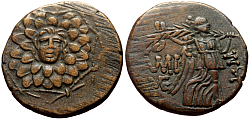 |
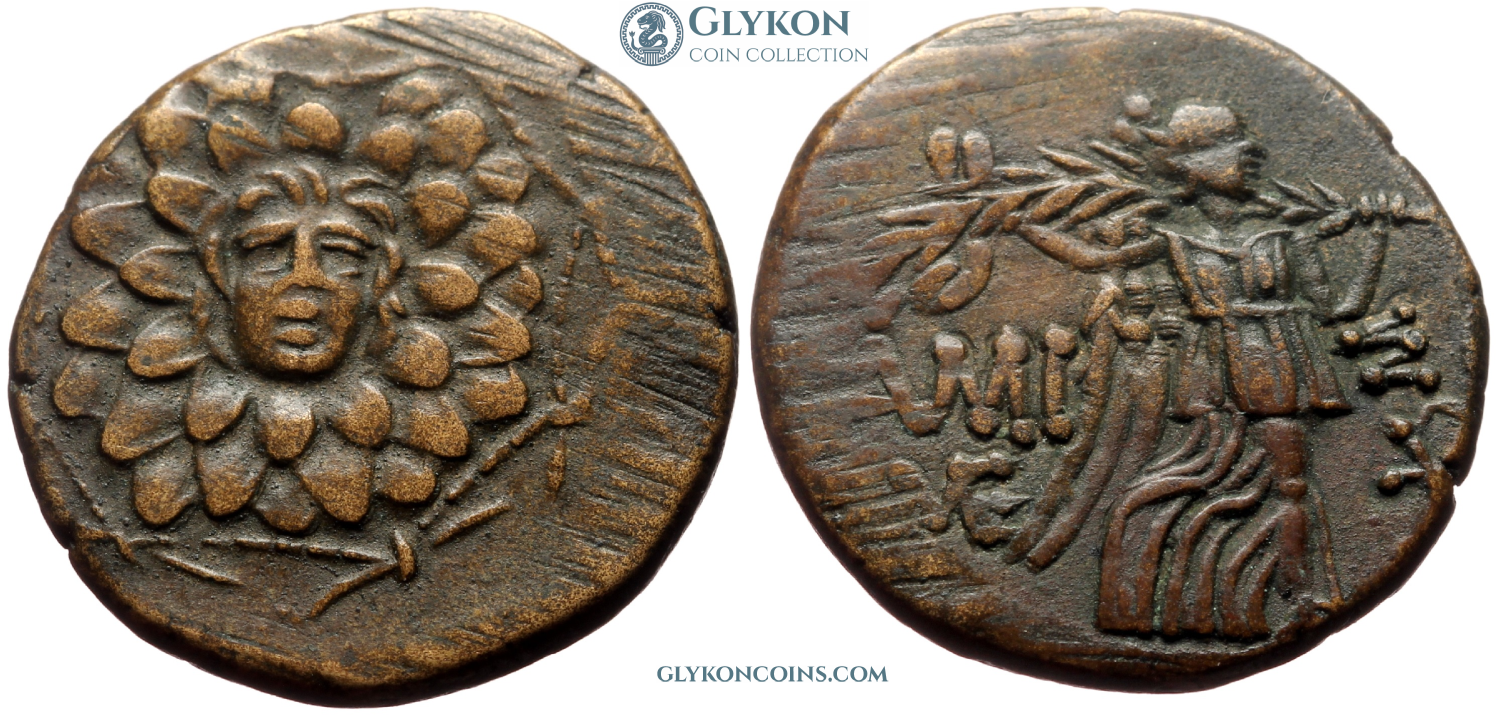
Amisos (Pontos)
Denomination: AE20
Time: 85-65 BC
Weight: 6.17 g
Diameter: approx. 21.2 mm
Reference: Sear 3642
Obverse: Aegis with facing Gorgon face in the middle.
Reverse: Nike walking to right, holding palm branch over her shoulder. Monogram right. Legend: AMI-ΣOY (of Amisos). |
|
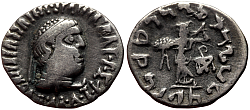 |
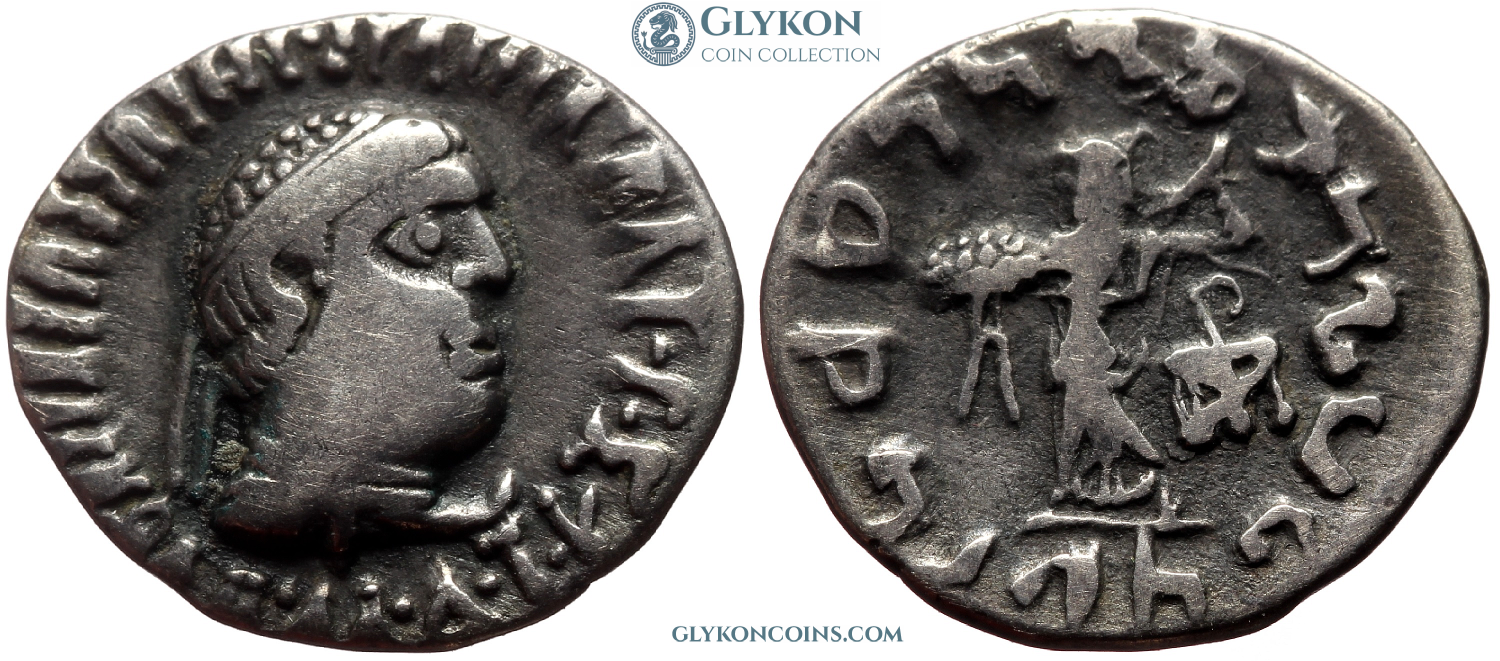
Indo-Greek Kingdom, Apollodotos II Soter (80-65 BC)
Denomination: Drachm
Mint: unknown easternmost mint
Time: 80-65 BC (presumably closer to the latter date)
Weight: 2.17 g
Diameter: approx. 17.3 mm
Reference: Bop 2D; MIG 424c
Obverse: Diademed and draped bust of Apollodotos II to right. Legend: BAΣIΛEΩΣ ΣΩTPOΣ KAI ΦIΛOΠATPOΣ AΠOΛΛOΔOTOY (of king savour fatherloving Apollodotos) in partially bungled letters.
Reverse: Athena Alkidemos ("Athena defender of the people") walking to left, holding thunderbolt and aegis. Monogram lower right. Legend in Kharoṣṭhī script: Tratarasa Maharajasa Apalatasa (of savour king Apollodotos).
Comment: Representing the twilight of the Greek rule in India, Apollodotos' numerous coinage is marked by a sudden decline in quality of artistry in the latter part of his reign. Scholars tend to associate this with a period of turmoil and territorial losses. In particular it's speculated that Apollodotos lost the access to Hellenistic cities of Bactria and Western India and their pool of engravers and had to resort to use less skilled artists that remained in territories under his control. |
|
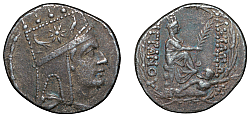 |
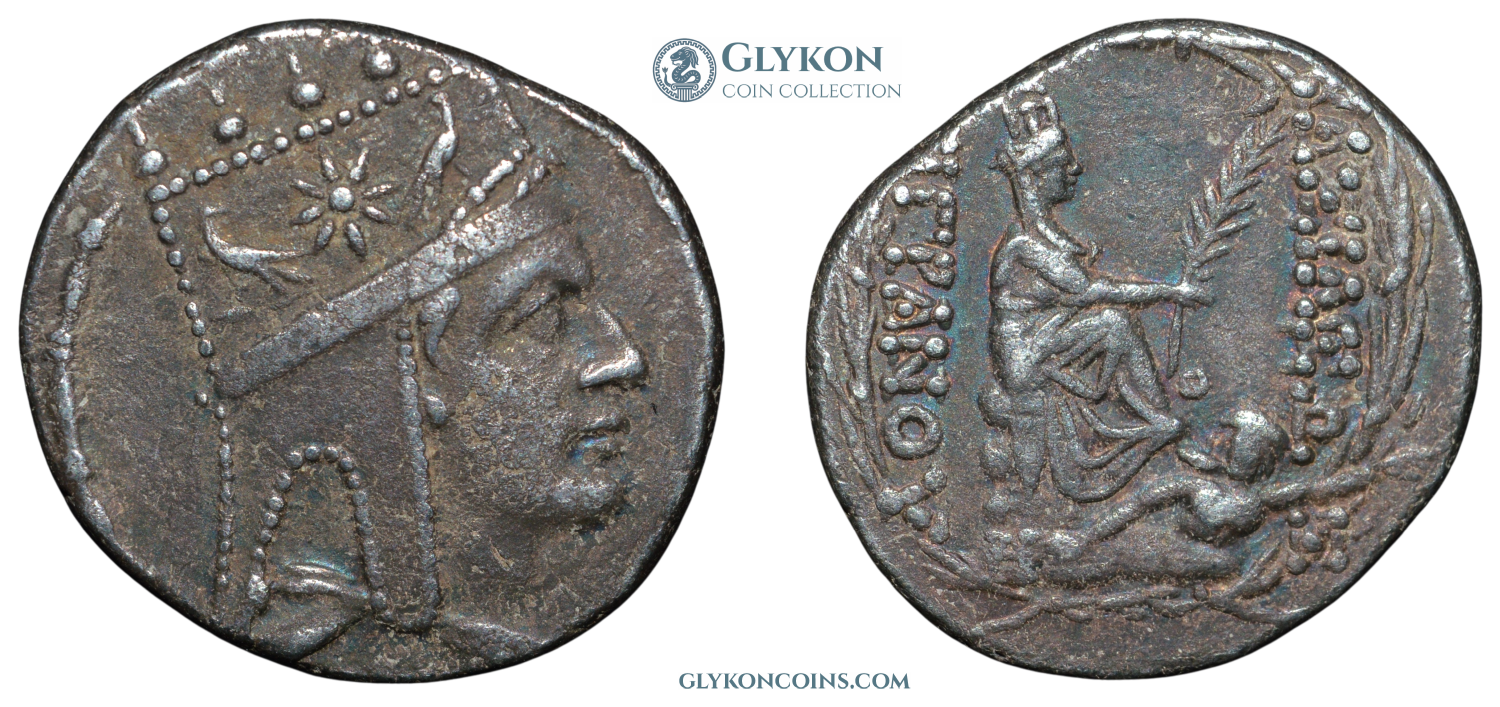
Ancient Armenia, Tigranes II the Great (95-55 BC)
Denomination: Tetradrachm
Mint: Tigranocerta
Time: 80-68 BC
Weight: 15.52 g
Diameter: approx. 26.2 mm
Reference: Bedoukian 21/23; Kovacs 75.1
Obverse: Head of Tigranes facing right, wearing five-peaked royal tiara decorated with an eight-pointed star flanked by two standing eagles, their heads turned towards the star.
Reverse: Draped and crowned Tyche of Artaxata, seated facing right on a throne made of rocks, holding a palm branch in an outstretched right hand. River god Araxes swimming towards right at her feet. Monogram Σ and Ω. Legend: ΒΑΣΙΛΕΩΣ ΤΙΓΡΑΝΟΥ (of King Tigranes).
Comment: One of the last Oriental monarchs who resisted the unstoppable Roman expansion. His coinage points to a highly Hellenized, refined culture of his mountain empire. |
|
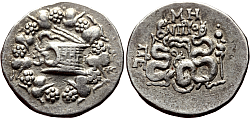 |
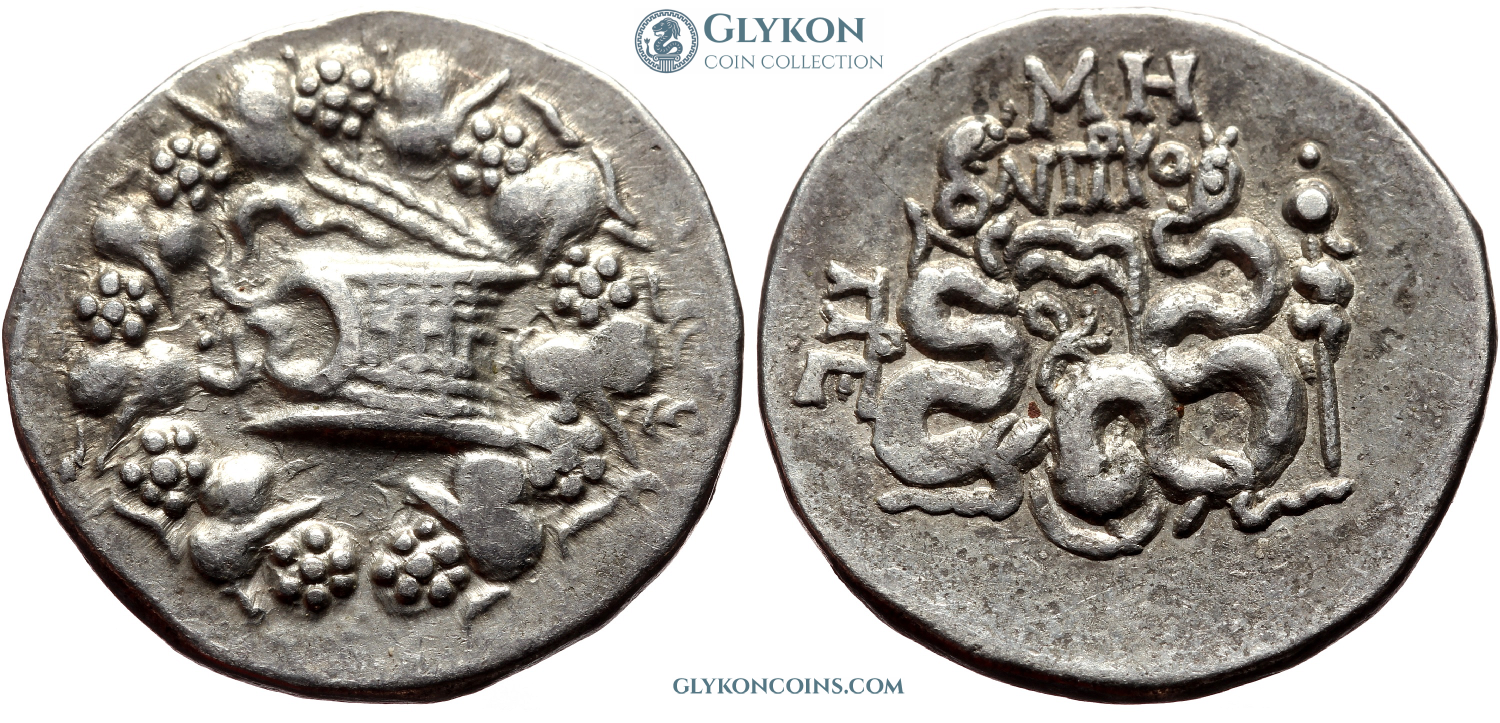
Pergamon (Mysia)
Denomination: Tetradrachm
Time: 76-67 BC
Weight: 12.20 g
Diameter: approx. 27.6 mm
Reference: SNG Cop. 437 var; BMC Mysia p. 125, 116; Kleiner 41
Obverse: Within ivy wreath with berries Cista mystica (ritual basket with snakes) with half open lid, snake emerges on left.
Reverse: Two entagled snakes with erected heads flanking a bow-case. Monograms above and left.
Comment: Cystophoric coinage was minted in many cities of Asia after the downfall of the Pergamene kingdom. |
|
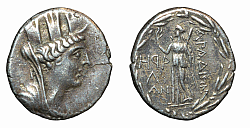 |
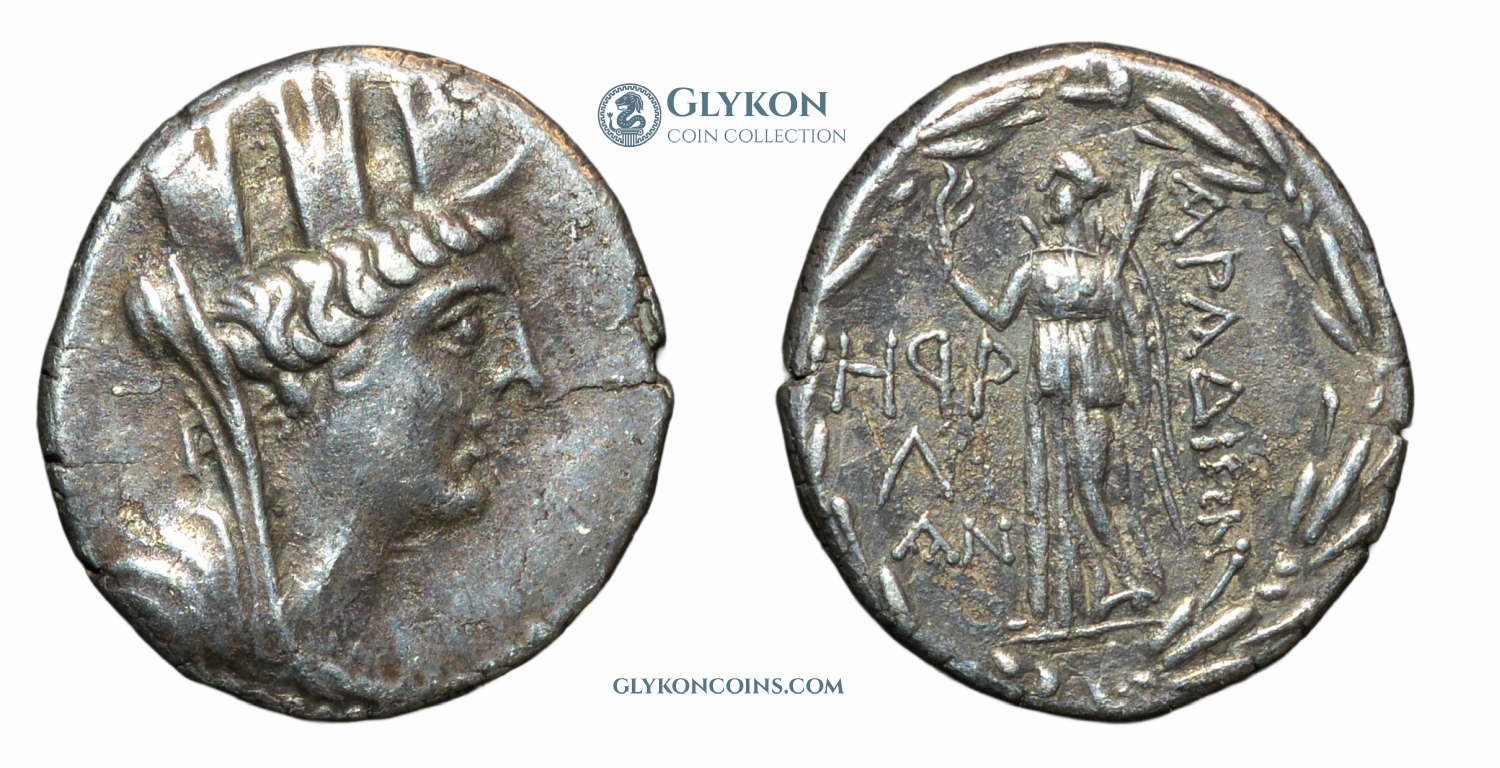
Arados (Phoenicia)
Denomination: Tetradrachm
Time: 62-61 BC
Weight: 14.91 g
Diameter: approx. 27.1 mm
Reference: BMC 283; S. Cop 57; Ex. Artemide XXV/236, Ex. InAsta RSM 86/109
Obverse: Bust of draped Tyche in a turreted crown facing right.
Reverse: Nike standing facing left, holding aphlaston and palm branch. Legend: AΡAΔIΩN, Phoenician letter gimel (resembling Λ, that is lambda) over AN. Date: HЧP.
Comment: Arados, modern Arwad, was one of the Phoenician city-states that gained independence (and thus started minting civic coinage) in the wake of the disintegration of the Seleucid Empire. |
|
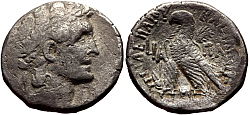 |
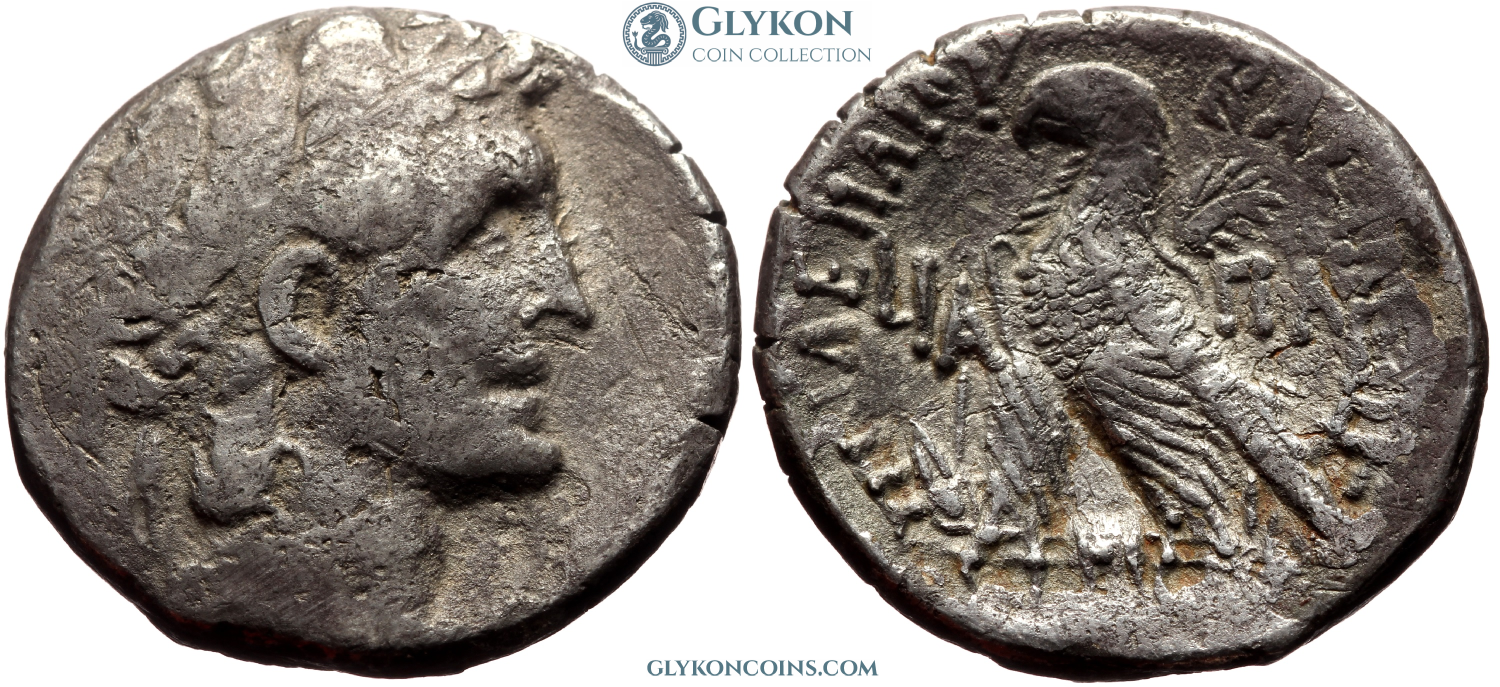
Ptolemaic Kingdom, Cleopatra VII Thea Philopator (51-30 BC)
Denomination: Tetradrachm
Mint: Alexandria
Time: 42/41 BC
Weight: 10.82 g
Diameter: approx. 26.7 mm
Reference: Svoronos 1825; SNG COP 415
Obverse: Diademed head of Ptolemy I to right with feminized facial features, wearing aegis.
Reverse: Eagle standing on a thunderbolt to left. Palm branch behind. Headress of Isis lower left. Flanking year- and mint marks LIA-ΠA. Legend: BAΣIΛEΩΣ ΠΤΟΛΕΜΑΙΟΥ (of king Ptolemy).
Comment: Coin of the famous Cleopatra VII, once attributed to her father, Ptolemy XII Auletes. Some see Cleopatra's own face in the feminine features of Ptolemy I on the obverse. |