| No. |
Photo |
Description |
|
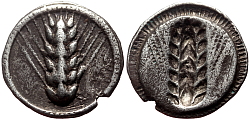 |
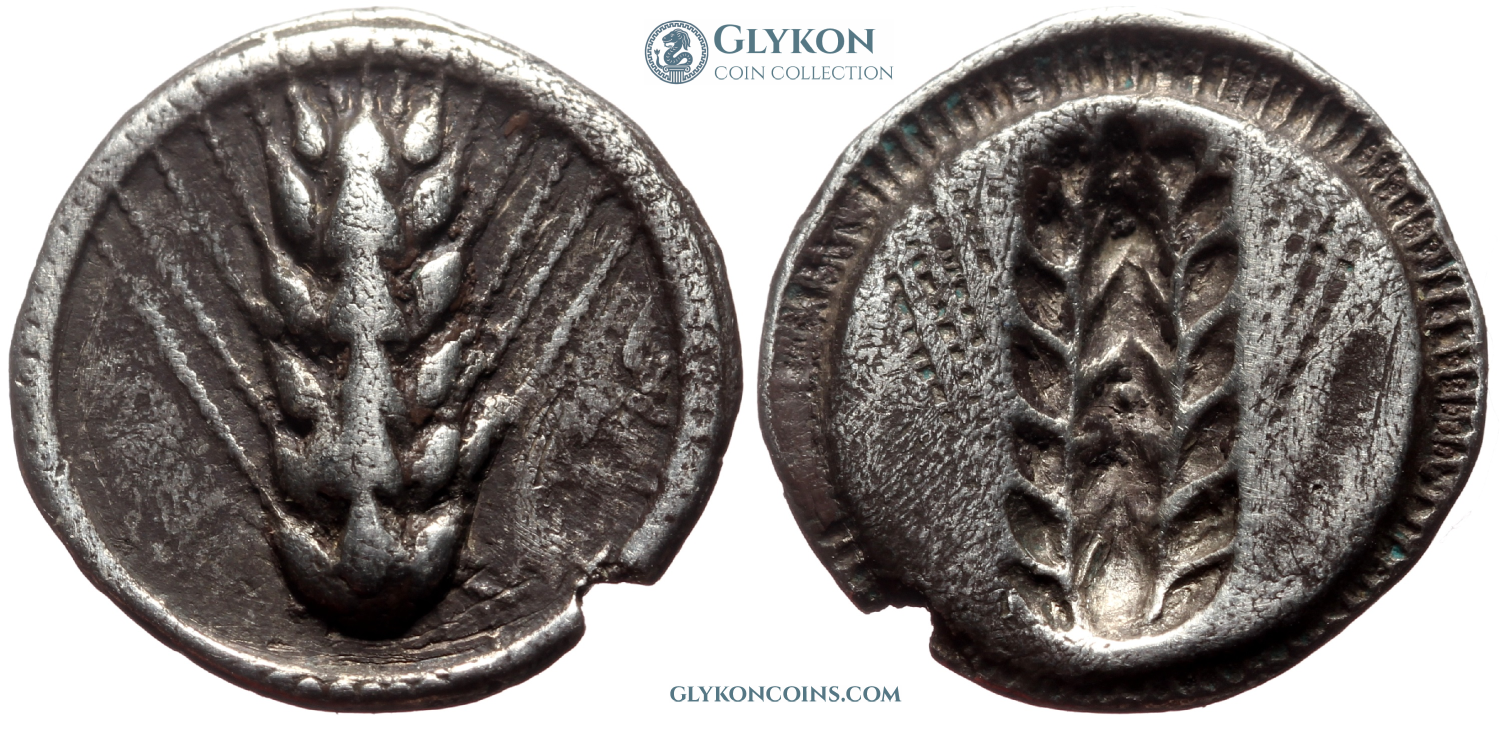
Metapontum (Lucania in Italy)
Denomination: Drachm
Time: 540-510 BC
Weight: 2.42 g
Diameter: approx. 17 mm
Reference: Noe 79-82, HN Italy 1480
Obverse: Ear of grain (barley).
Reverse: same but incuse. |
|
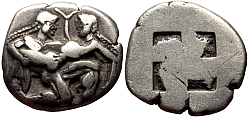 |
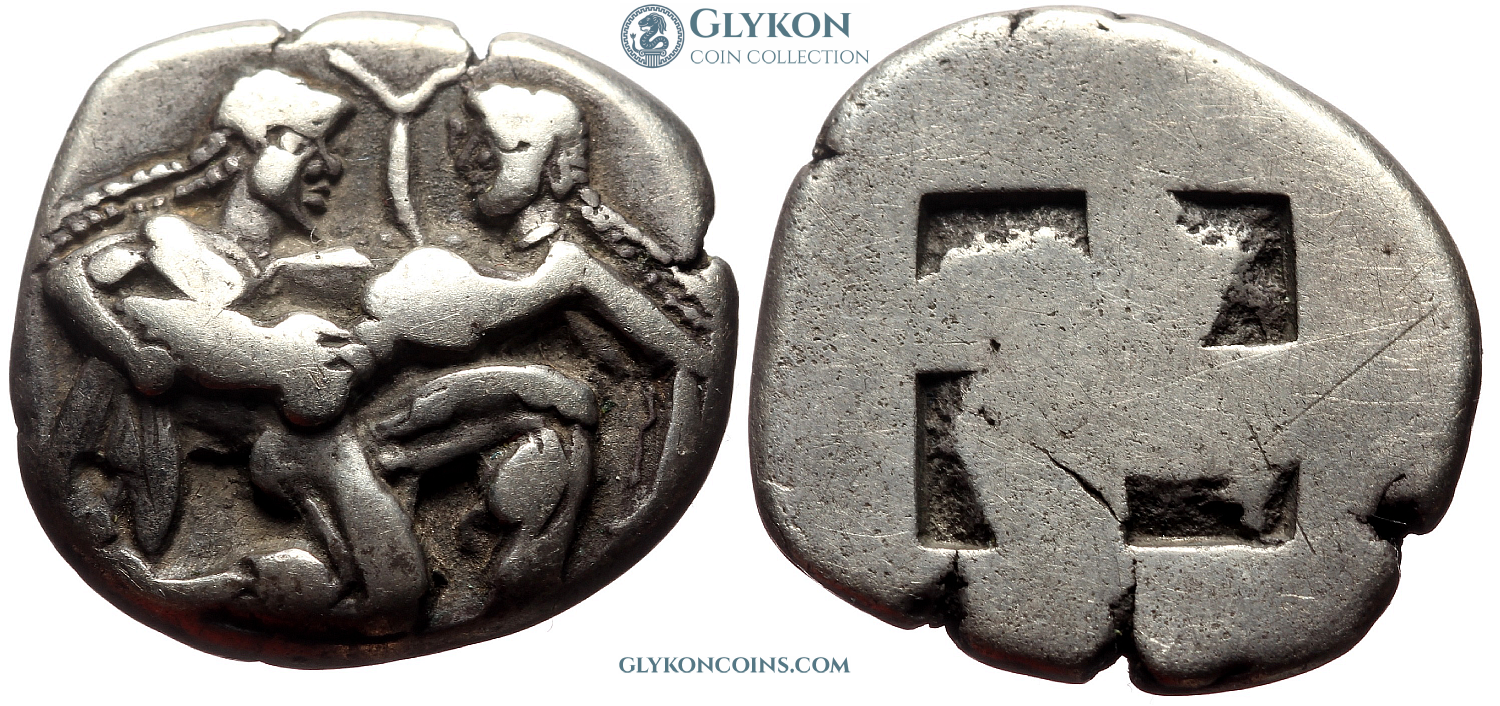
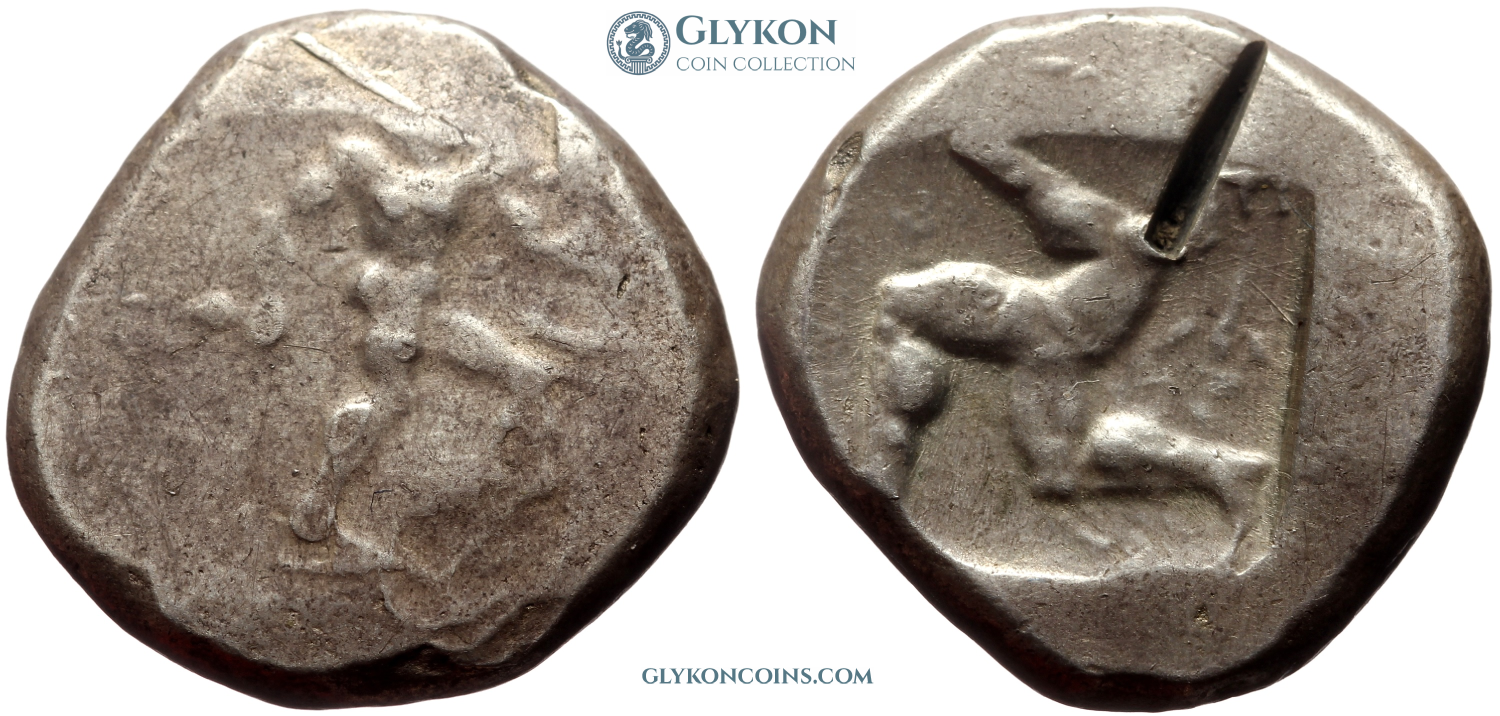
Thassos or Thasos (island off Thrace)
Denomination: Stater
Time: 525-463 BC
Weight: 8.26 g
Diameter: approx. 20 mm
Reference: SNG Copenhagen 1008 var, Sear 1357
Obverse: Ithyphallic satyr running to the right, carrying off a nymph who raises her hand in protest.
Reverse: Quadripartite incuse. |
|
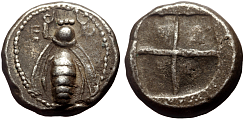 |
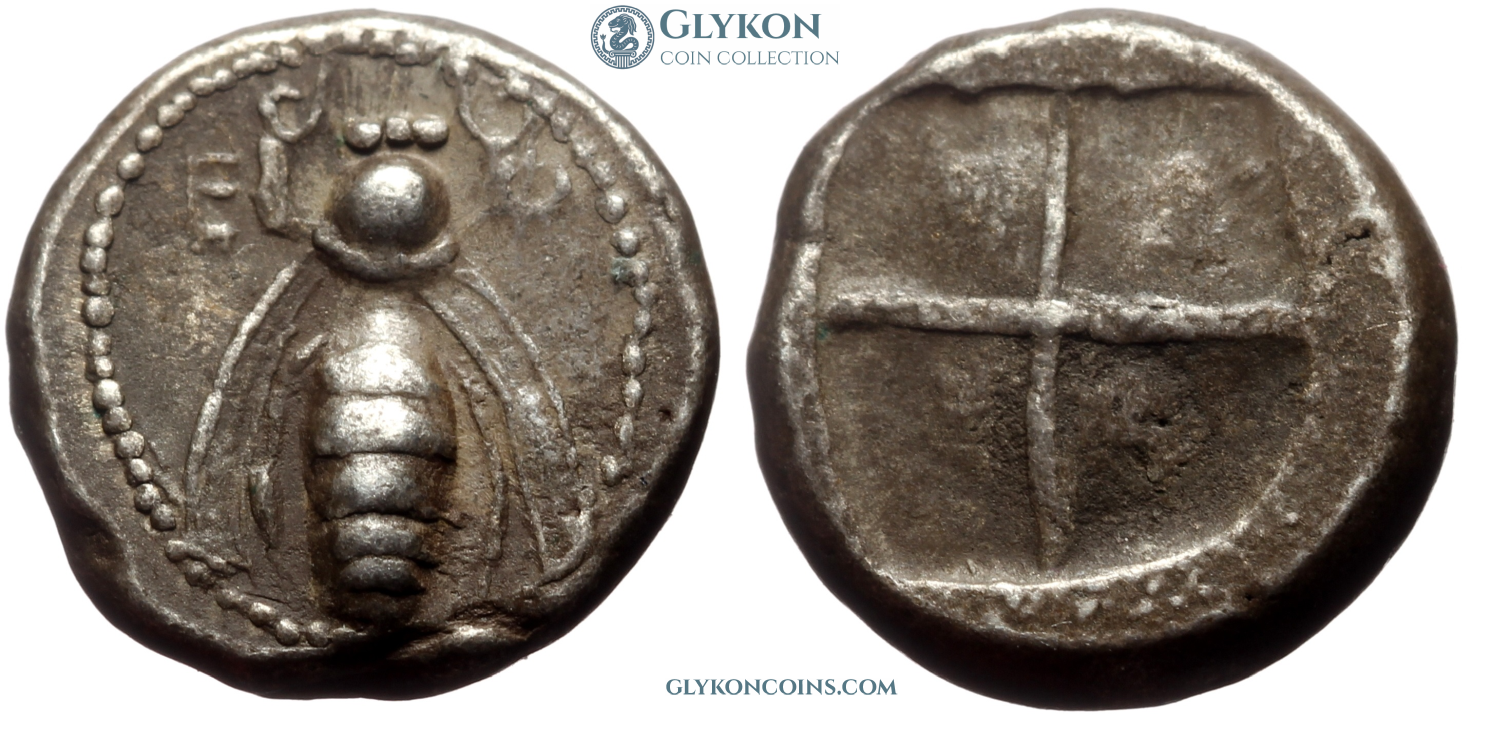
POSSIBLE MODERN FORGERY
Ephesus (Ionia)
Denomination: Drachm
Time: about 500 BC
Weight: 3.06 g
Diameter: approx. 13.7 mm
Reference: Karwiese 205-53, SNG Kayhan 121-3
Obverse: Bee with wings and tendrils between the letters Ε and Φ.
Reverse: Quadripartite incuse square.
Comment: Already after this website was published, I was informed that this could be part of a very deceptive series of fakes produced in the Balkans (unfortunately, nowadays a hotbed of coin forgery). And deceptive it is, for I have bought it on one of the main online coin marketplaces with established vendors. |
|
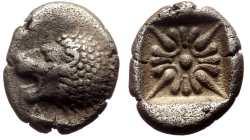 |
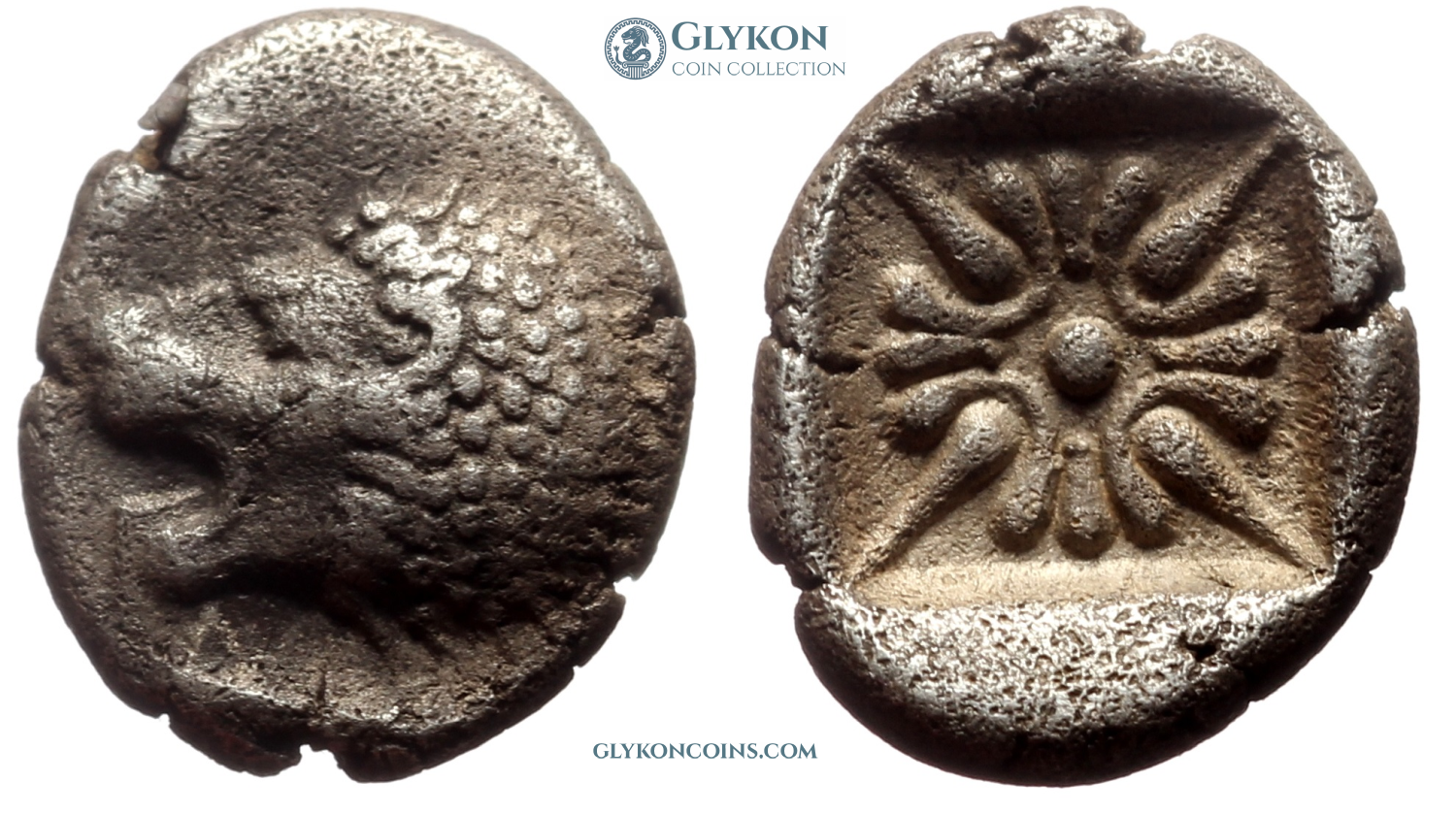
Miletus (Ionia)
Denomination: Diobol
Time: late 6th/early 5th century BC
Weight: 0.99 g
Diameter: approx. 10.4 mm
Reference: SNG Kayhan 1381
Obverse: Forepart of a lion facing left.
Reverse: Incuse square with a stellate or flowery design within. |
|
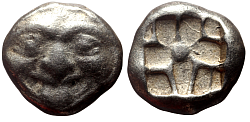 |
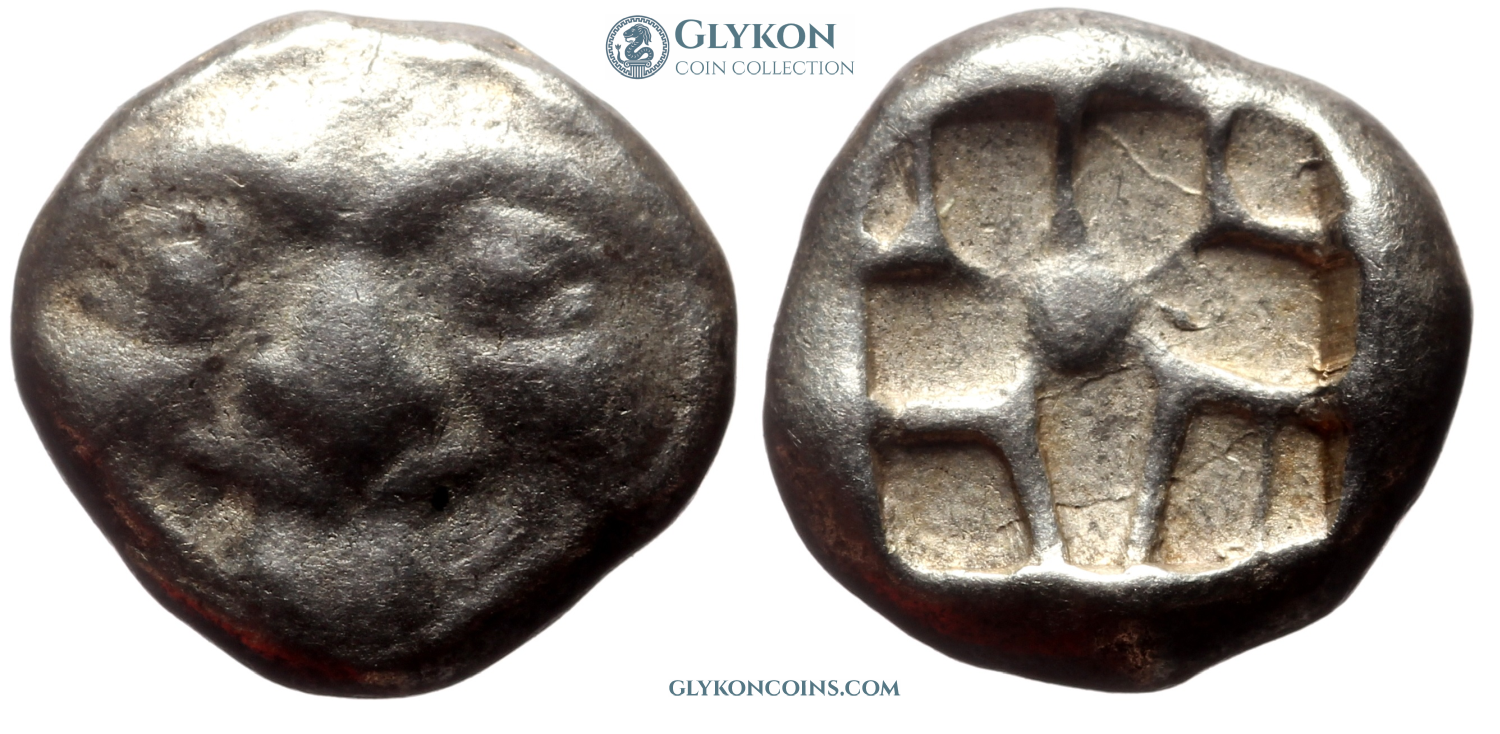
Parion or Parium (Mysia)
Denomination: Drachm
Time: about 480 BC
Weight: 3.07 g
Diameter: approx. 12.6 mm
Reference: SNG France 1342
Obverse: Grinnig Gorgoneion's face with a protruding tongue.
Reverse: Irregular incuse punch with a cruciform design within. |
|
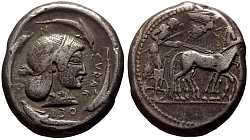 |
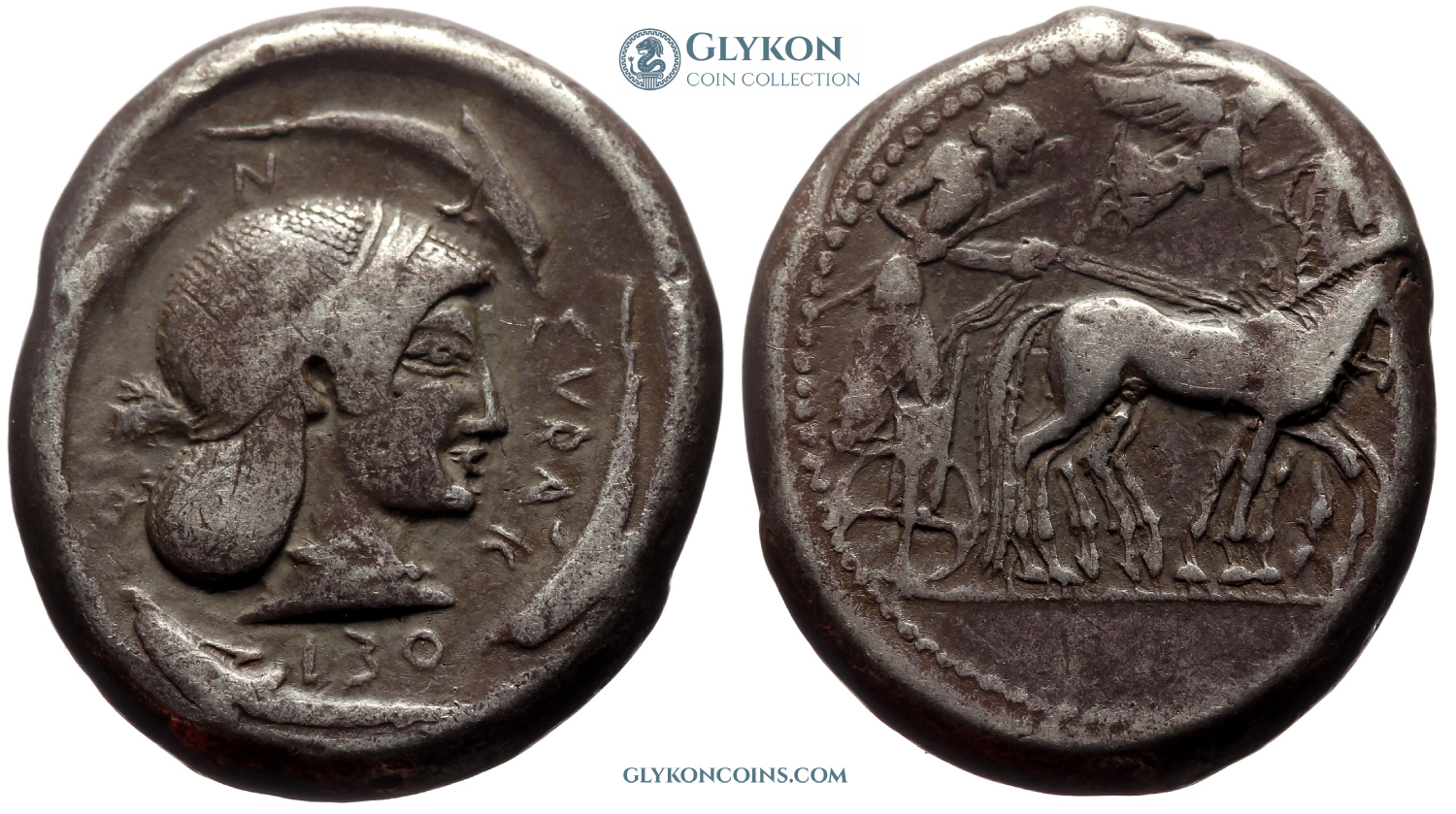
Syracuse (Sicily)
Denomination: Tetradrachm
Time: 480-475 BC (tyranny of Gelon I)
Weight: 17.40 g
Diameter: approx. 25 mm
Reference: E. Boehringer, Die Muenzen von Syrakus, Group III, Series VIIIa, 104 (V48/R71)
Obverse: Head of Arethusa facing right, surrounded by four dolphins; legend: ΣVΡΑΚ-ΟΣΙ-Ο-Ν.
Reverse: Charioteer in a quadriga riding right, Nike flying above crowning horses. |
|
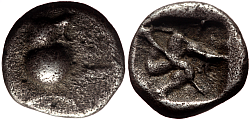 |
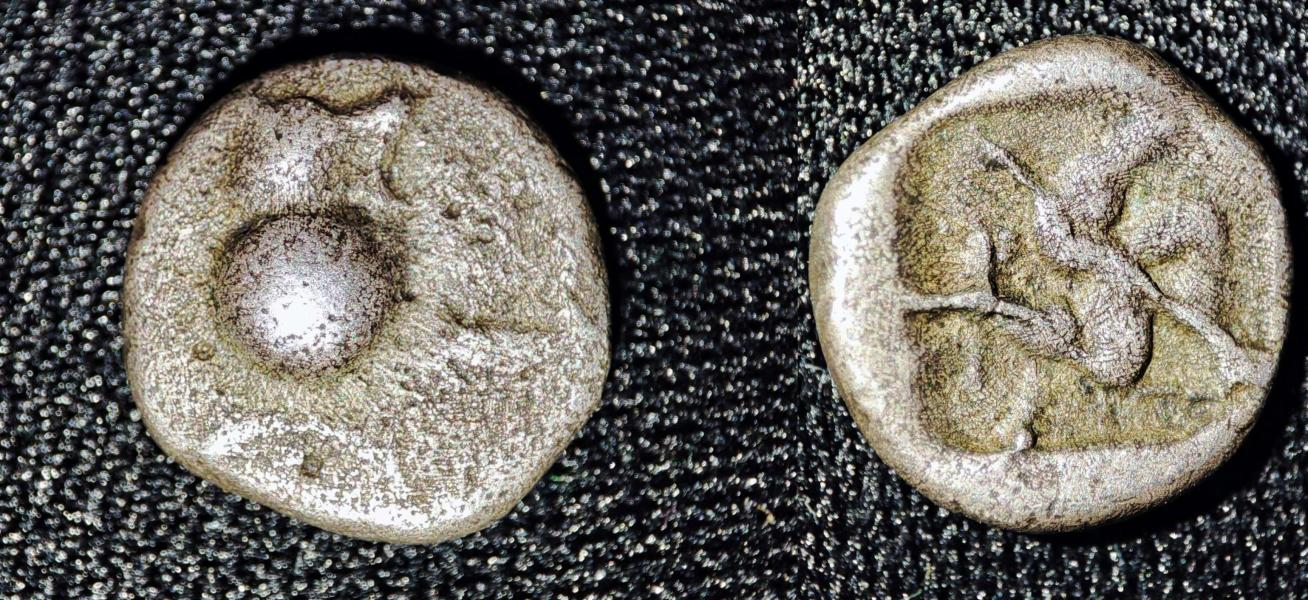
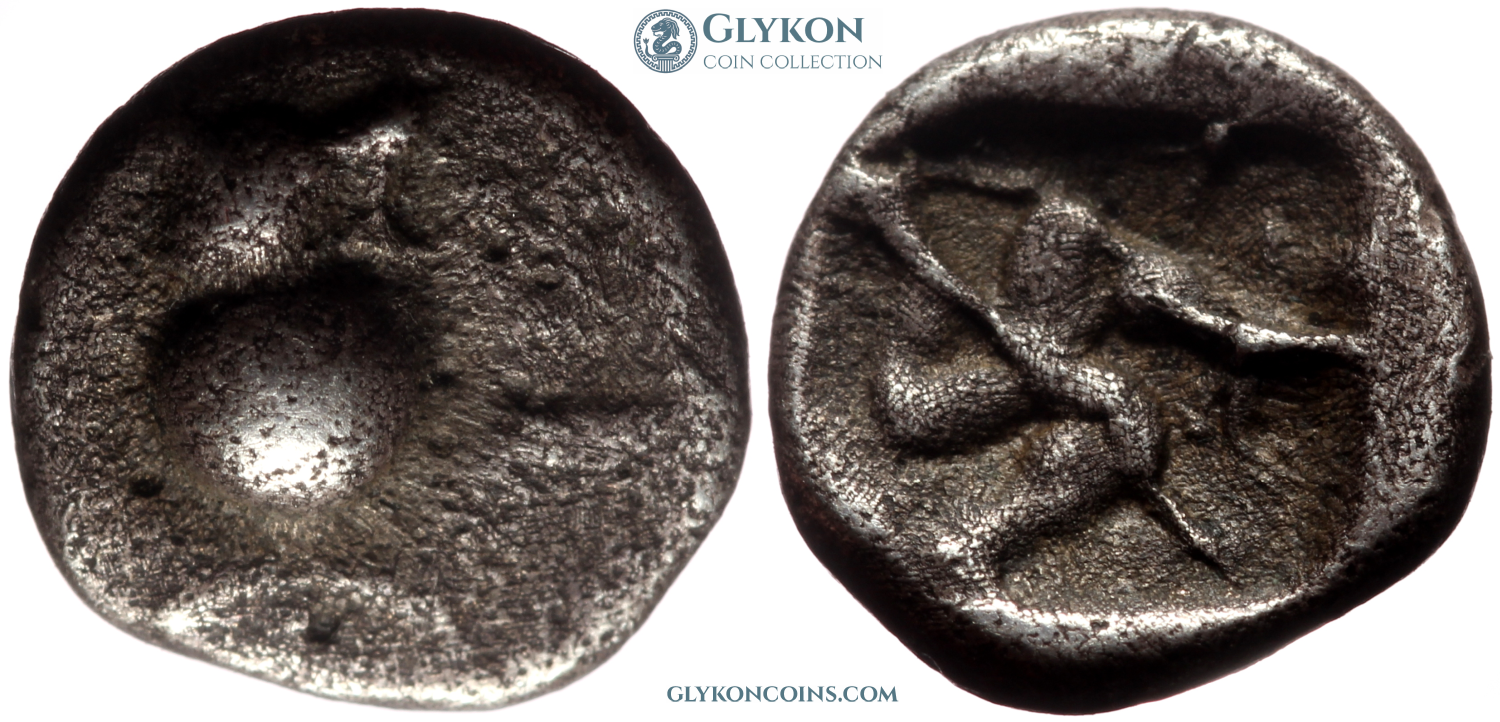
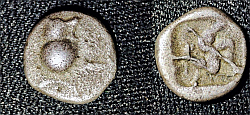
Aspendos (Pamphylia)
Denomination: Obol
Time: 465-430 BC
Weight: 1.01 g
Diameter: approx. 9.4 mm
Reference: Klein 616; Traité II 1544
Obverse: A vase.
Reverse: Incuse square with a triskelion within.
Comment: reportedly from the collection of E. E. Clain-Stefanelli, I was unable to verify it. |
|
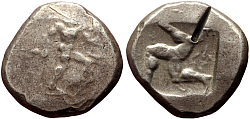 |
Aspendos (Pamphylia)
Denomination: Stater
Time: 465-430 BC
Weight: 10.95 g
Diameter: approx. 21.4 mm
Reference: SNG von Aulock 4483; SNG Copenhagen 175
Obverse: A warrior holding spear and shield, advancing right.
Reverse: Incuse square with a triskelion within. Test cut.
Comment: Minted with worn out dies, very common with this type. |
|
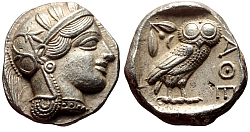 |
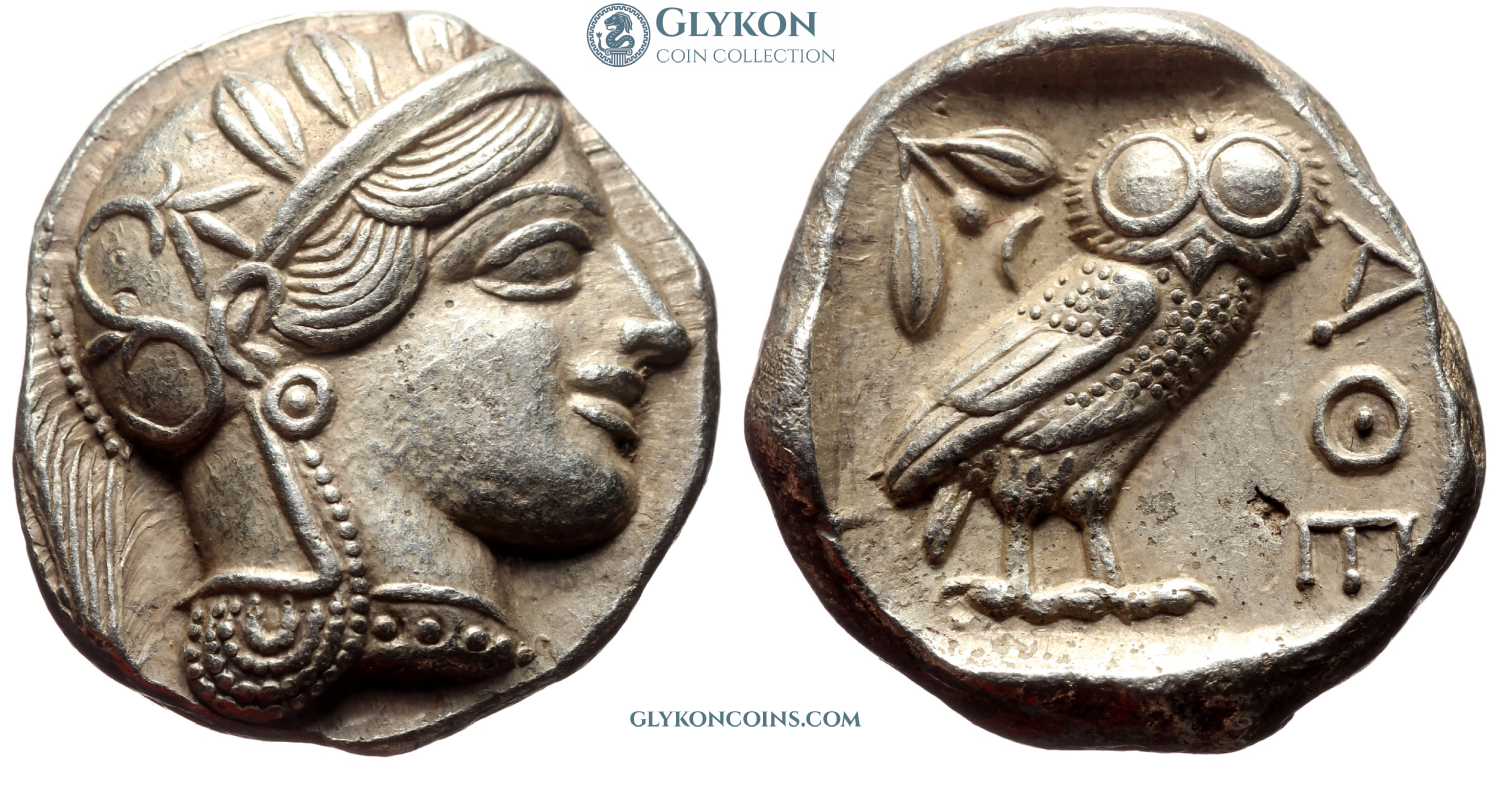
Athens (Attica)
Denomination: Tetradrachm
Time: 454-413 BC
Weight: 17.15 g
Diameter: approx. 24 mm
Reference: Kroll 8; Sear 2526; SNG Cop. 31; HGC 4, 1597
Obverse: Head of Athena facing right, wearing crested helmed adored with olive leaves.
Reverse: Within incuse square an owl standing right, head facing. Above left, a crescent and olive branch. Legend: AΘE on right.
Comment: Perhaps the most famous coin of antiquity, minted in great quantities by Athens and widely imitated in the Mediterranean and beyond. |
|
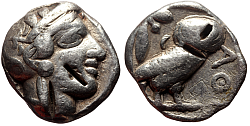 |
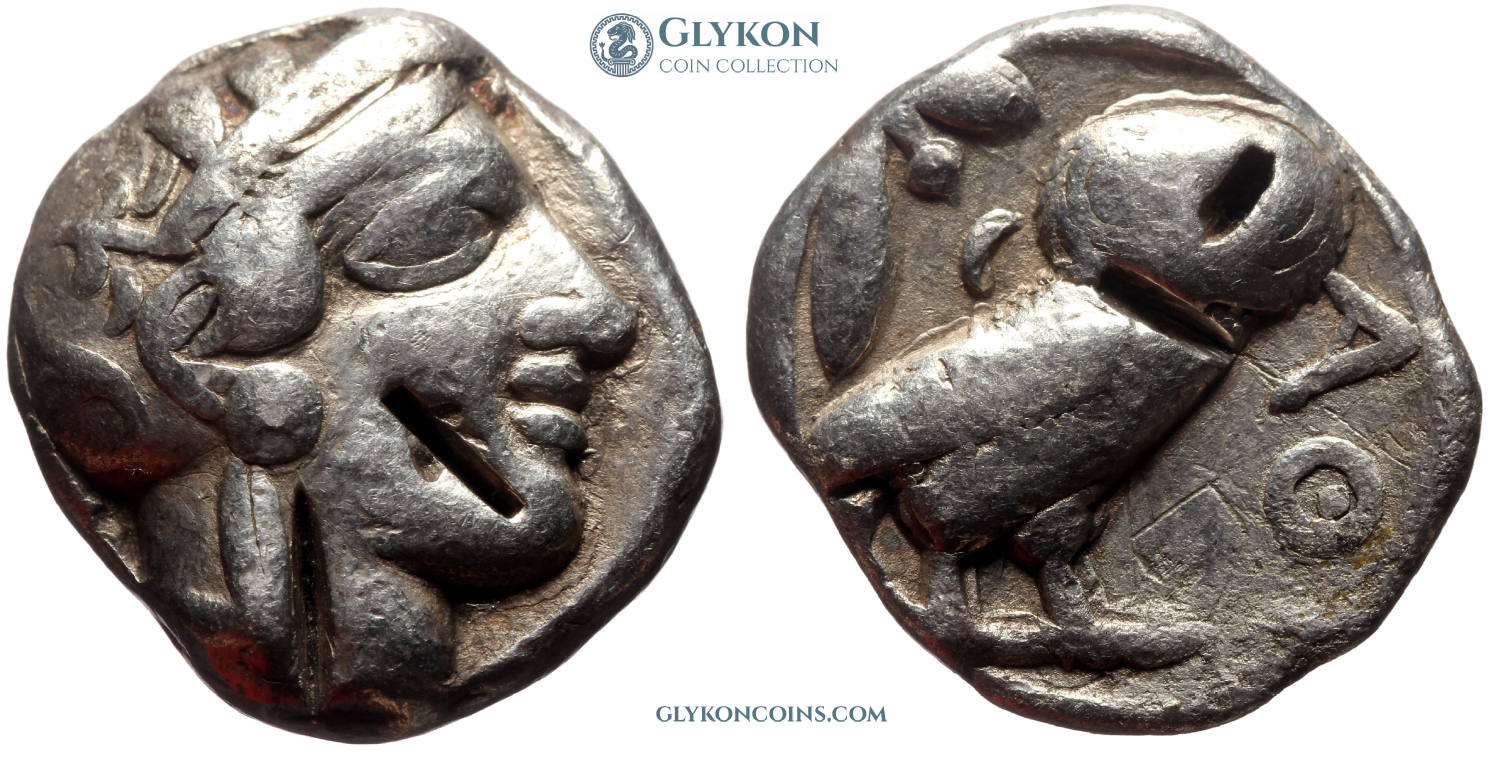
Athens (Attica)
Denomination: Tetradrachm
Time: 454-413 BC
Weight: 16.88 g
Diameter: approx. 24.6 mm
Reference: Kroll 8; Sear 2526; SNG Cop. 31; HGC 4, 1597
Obverse: Head of Athena facing right, wearing crested helmed adored with olive leaves. Test cuts.
Reverse: Within incuse square an owl standing right, head facing. Above left, a crescent and olive branch. Legend: ΑΘΕ right. Test cuts.
Comment: Same type as above, but displaying effects of extensive circulation on the ancient market. Test cuts by a hot rod or knife were a common method of discerning ancient forgeries which were usually made of base metals like copper coated with a thin layer of silver (this type of ancient forgery is nowadays called "fourrée"). In Athens a public servant was always present at the marketplace offering the service free of charge. |
|
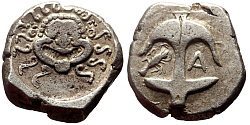 |
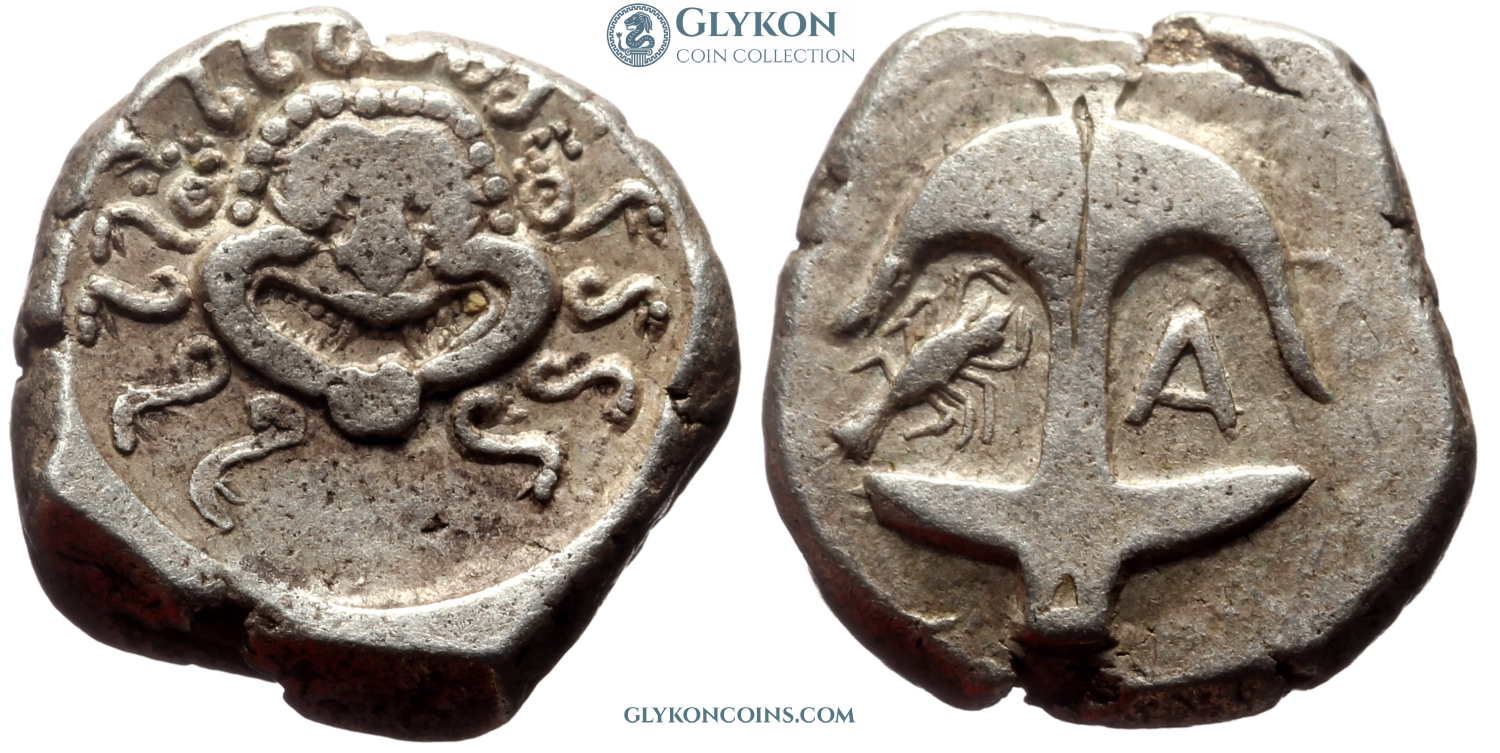
MODERN FORGERY
Apollonia Pontika (Thrace)
Denomination: Drachm
Time: about 450-400 BC
Weight: 3.48 g
Diameter: approx. 14.3 mm
Reference: BMC Mysia 5-7
Obverse:Grinning Gorgoneion's face with a protruding tongue, surrounded by serpentine hair-locks.
Reverse: Anchor between Α and a crayfish.
Comment: This piece is part of the infamous “New York Hoard”, a batch of counterfeit coins purportedly from Apollonia Pontika, dispersed in the 1990s during a numismatic fair in New York. Due to their convincing appearance, these forgeries fooled many veteran collectors and vendors. The hoard, as well as the preceding “Black Sea Hoard”, is also infamous for its perhaps legendary origin. Reportedly, a Bulgarian lifeguard discovered a hoard of genuine coins and was duped by German dealers to whom he sold them. After realizing that he could have obtained a much better price than the one received, he enlisted an accomplice and later produced two batches of exceptionally well-made forgeries. Or so the legend circulating among collectors says. I can’t vouch for its truthfulness.
I do wonder, though, whether it was even legal in Bulgaria to sell a cup of ancient coins to foreign dealers even if they were well-intentioned.
This specimen was also purchased from a reputed dealer. It looks very convincing and was identified as a fake only by a die match with a confirmed forgery. I’ve decided to keep it for its informative and historical value. |
|
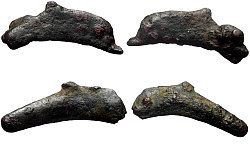 |
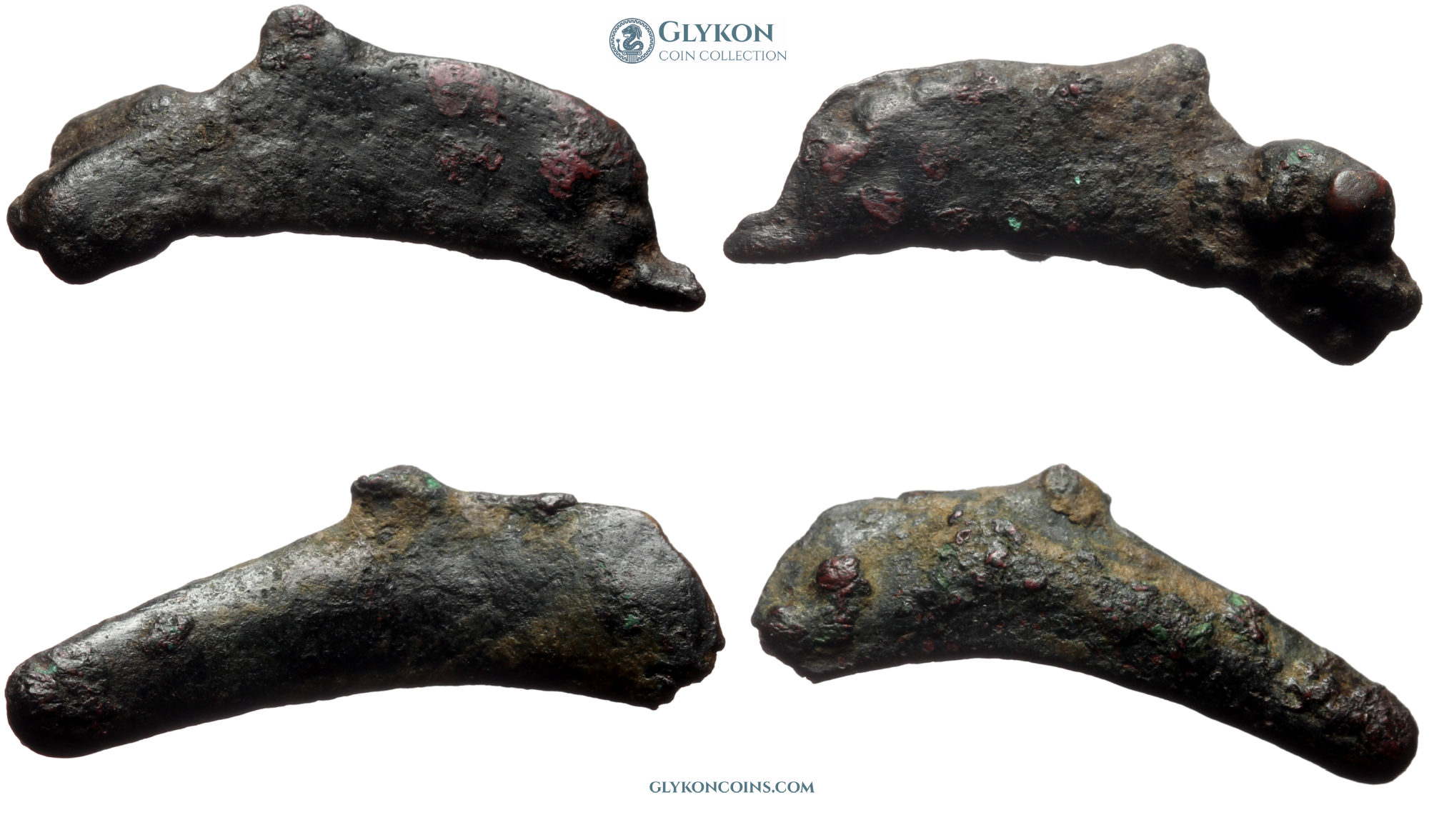
Pontic Olbia (colony near modern Mykolaiv, Ukraine)
Denomination: Bronze dolphin-shaped cast proto-money
Time: 5th century BC
Weight: 2.18 g and 1.72 g
Diameter: ---
Reference: SNG BMC 361-367
Obverse: ---.
Reverse: ---. |
|
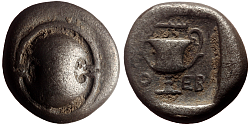 |
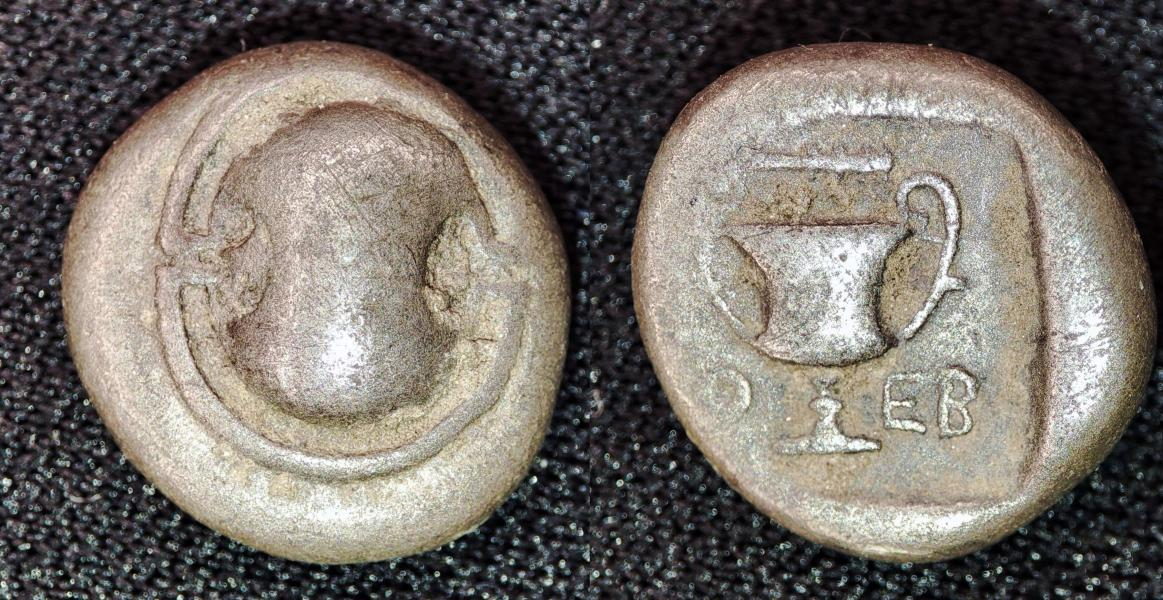
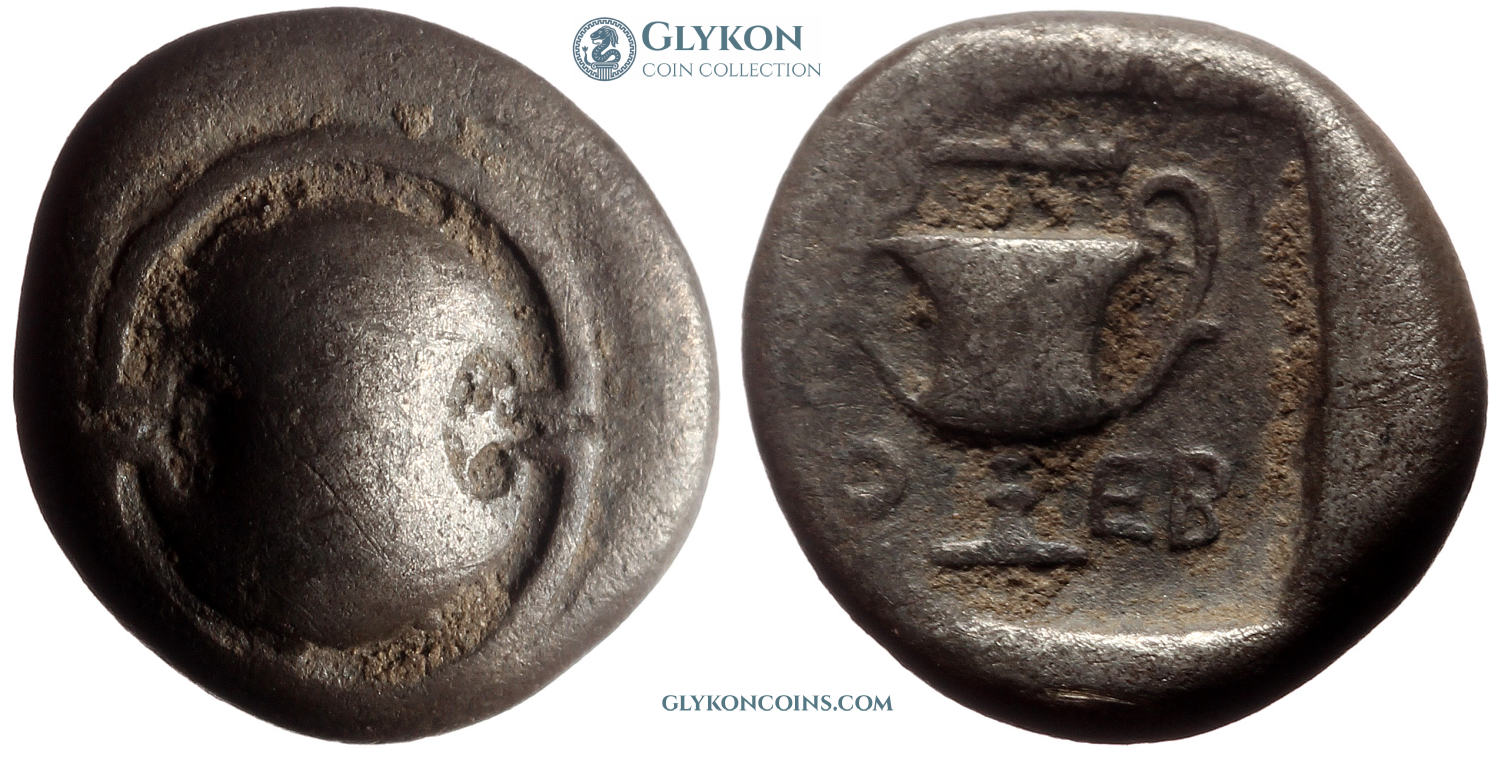
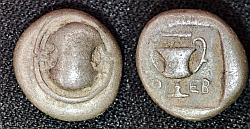
Boeotia (Thebes with allied cities)
Denomination: Hemidrachm
Time: 425-375 BC
Weight: 2.46 g
Diameter: approx. 12.2 mm
Reference: BCD Boiotia 412; SNG Delepierre 1362; BMC 78
Obverse: Boeotian "national" shield, oblong with cutouts.
Reverse: Within an incuse square: a club above, below it a large amphora. Legend: Θ-ΕΒ
Comment: rare variant with short legend. |
|
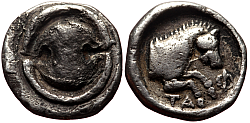 |
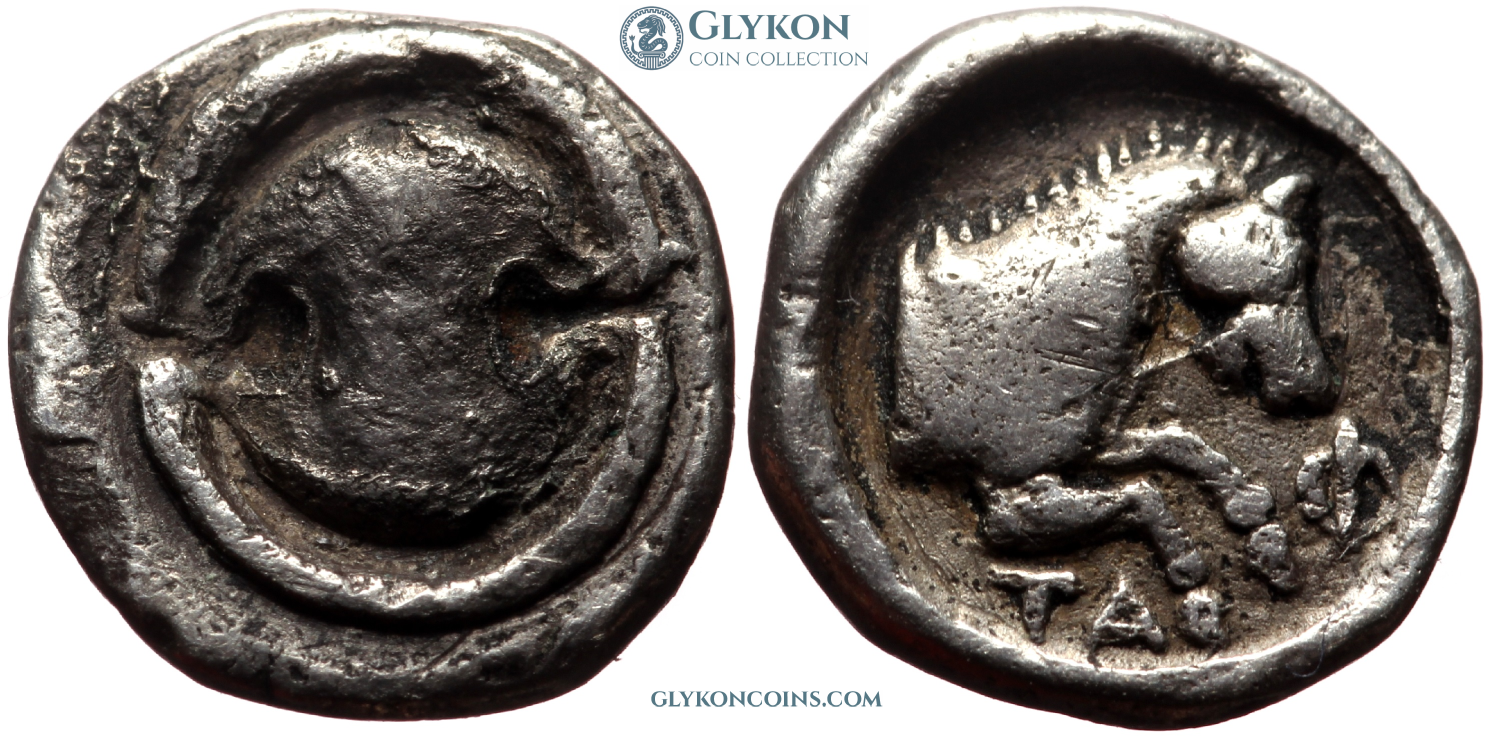
Tanagra (city in Boeotia)
Denomination: Obol
Time: 387-374 BC
Weight: 0.92 g
Diameter: approx. 10.7 mm
Reference: Traite 351
Obverse: Boeotian "national" shield, oblong with cutouts.
Reverse: Forepart of a horse facing right. Legend below: ΤΑ-Θ. |
|
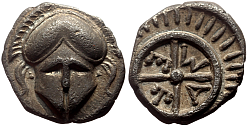 |
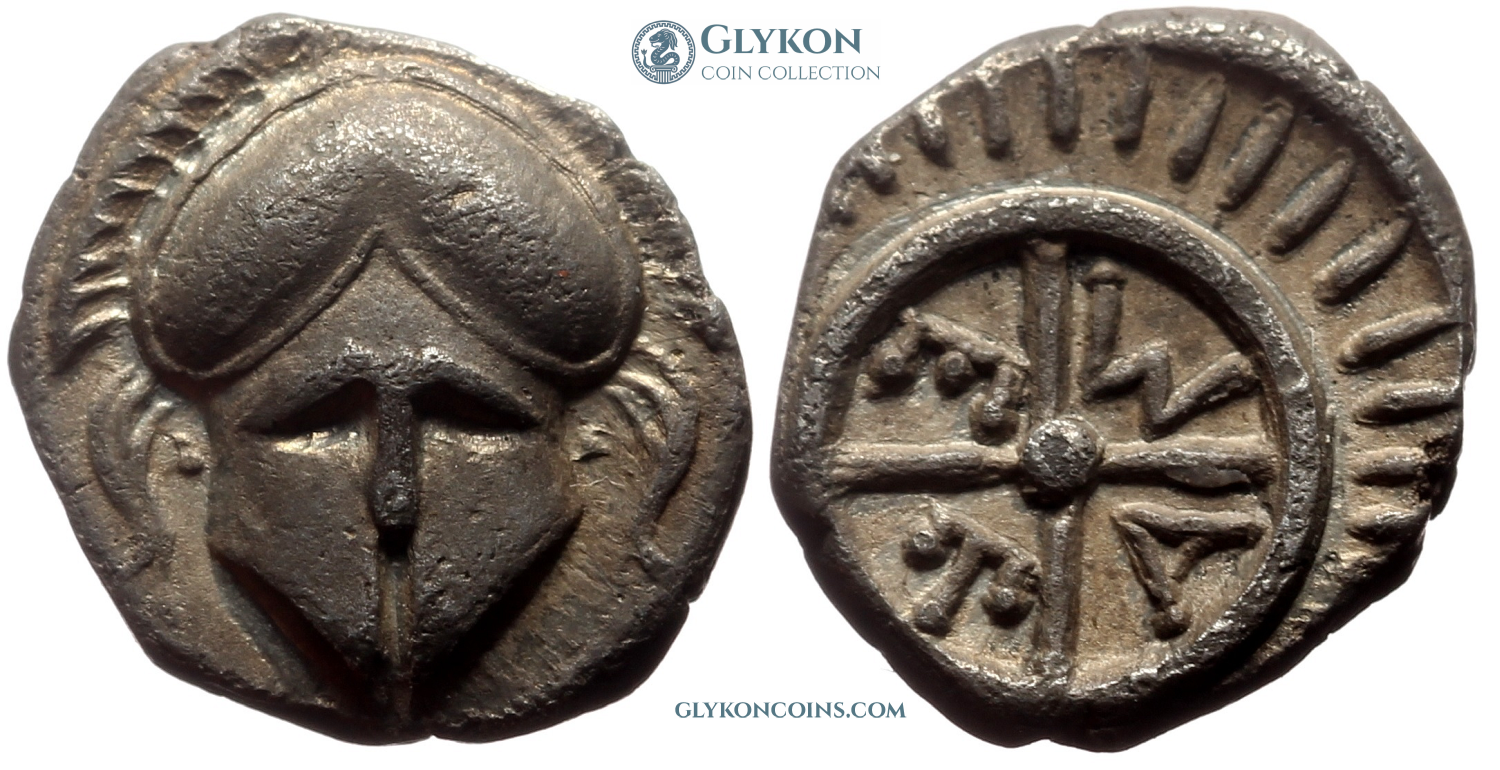
Mesembria (Thrace)
Denomination: Diobol
Time: 400-350 BC
Weight: 1.25 g
Diameter: approx. 11.7 mm
Reference: SNG Cop 652; HGC 3, 1560.
Obverse: Facing crested Corinthian helmet.
Reverse: Four-spiked wheel with Μ-Ε-Τ-Α within. |
|
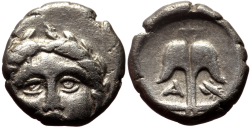 |
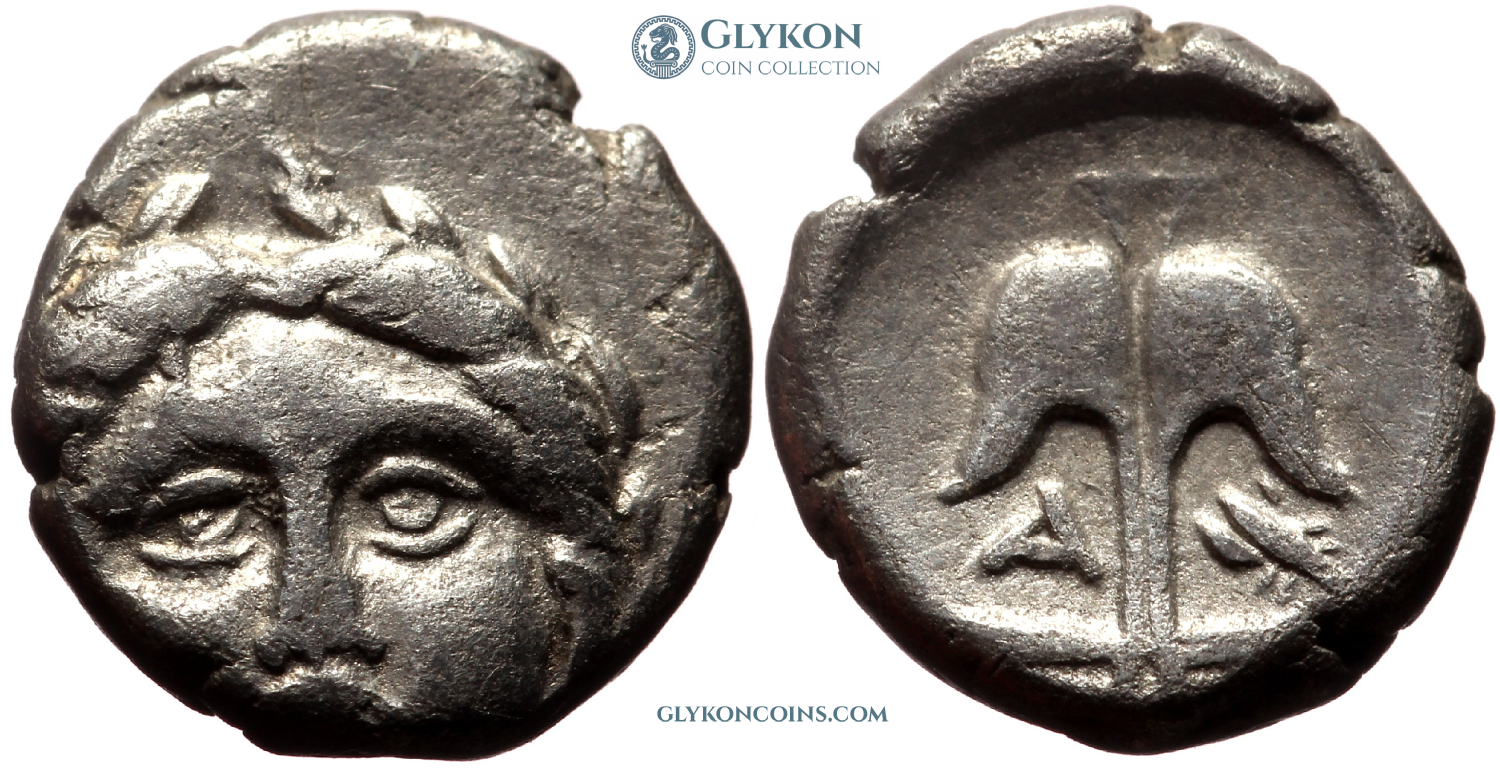
Apollonia Pontika (Thrace)
Denomination: Diobol
Time: early 4th century BC
Weight: 0.84 g
Diameter: approx. 9.7 mm
Reference: SNG Cop 461
Obverse: Facing laureate head of Apollo or a Gorgoneion.
Reverse: Anchor between Α and a crayfish. |
|
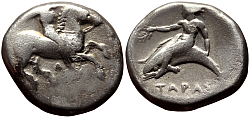 |
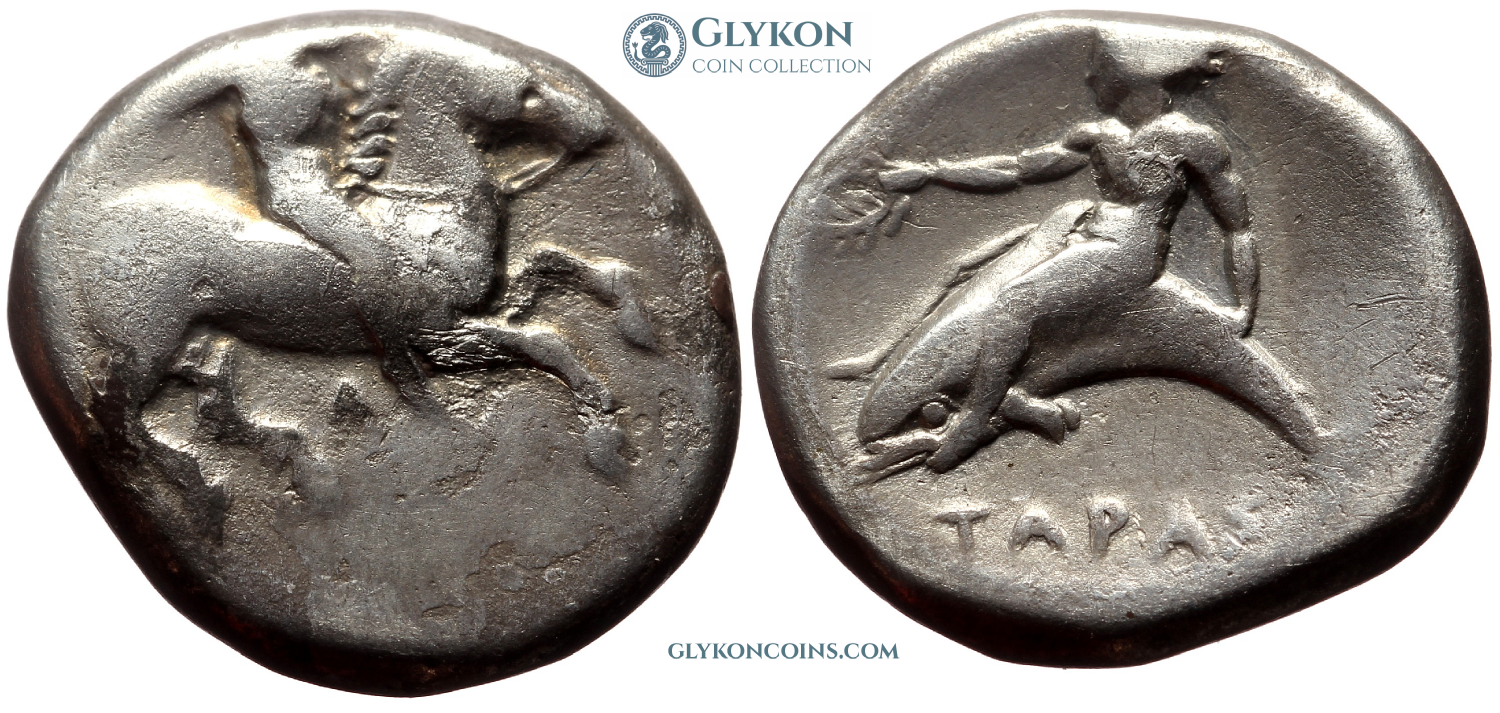
Tarentum (Apulia)
Denomination: Didrachm (Nomos)
Time: 380-345 BC
Weight: 7.54 g
Diameter: approx. 19.6 mm
Reference: Vlasto 488
Obverse: Horse rider galloping to the right.
Reverse: Eponymous hero Taras riding a dolphin and holding a wreath, facing left. Legend below: ΤΑΡΑΣ |
|
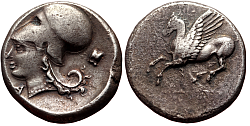 |
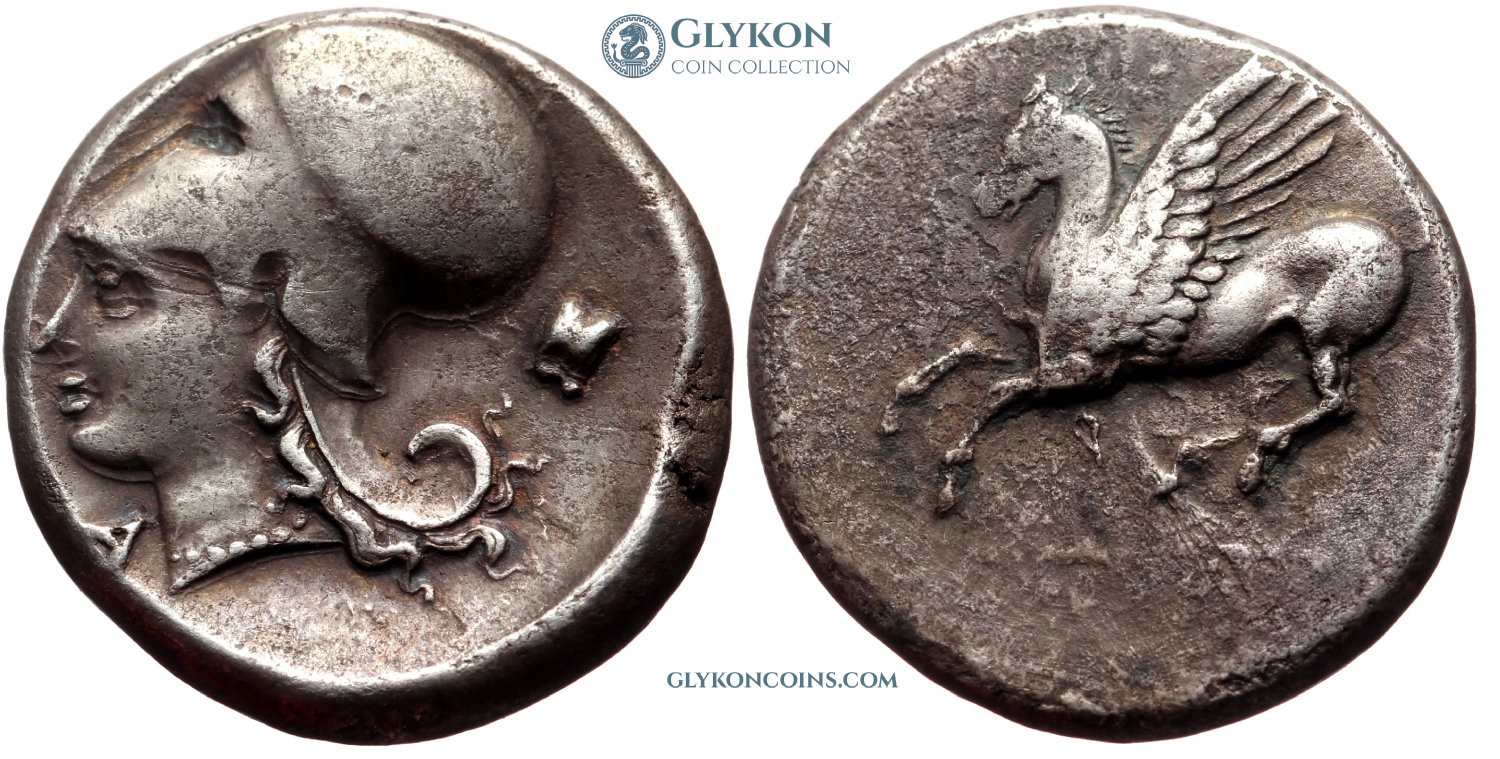
Corinth (Peloponnese)
Denomination: Stater
Time: 345-300 BC
Weight: 8.44 g
Diameter: approx. 21.3 mm
Reference: Calciati Pegasi 400, Ravel 1039
Obverse: Head of Athena wearing a Corinthian helmet, facing left. Monogram Α to the left, astragalos symbol to the right.
Reverse: Flying pegasus facing left, necklace below. |
|
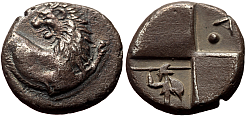 |
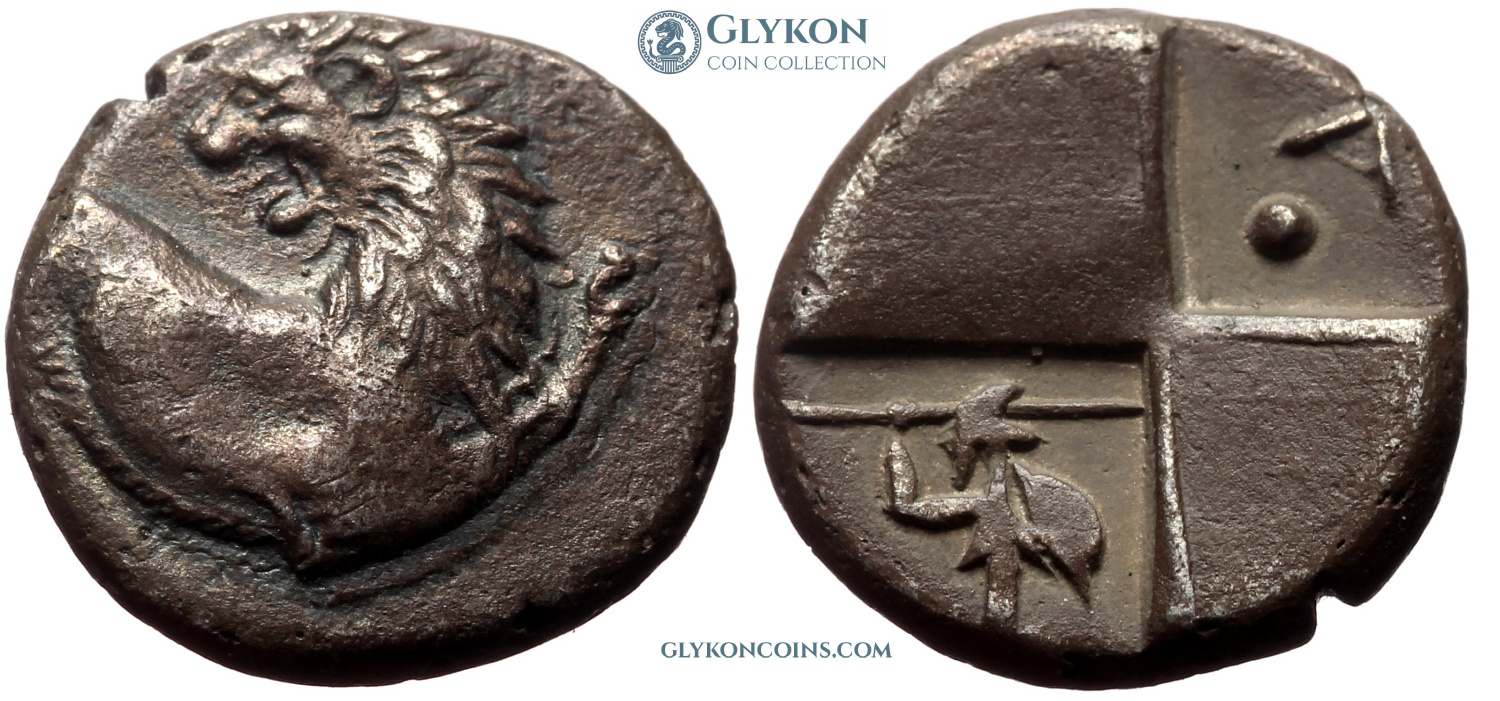
Chersonesos (Thrace)
Denomination: Hemidrachm
Time: 386-368 BC
Weight: 2.08 g
Diameter: approx. 12.9 mm
Reference: Weber 2418
Obverse: Forepart of a lion jumping or raising right, head turned left.
Reverse: Quadripartite incuse square. In two opposite parts: Α with pellet and Athena Promachos ("Athena fighting in the frontline").
Comment: extremely rare variant, not found in standard references. |
|
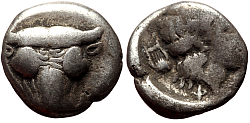 |
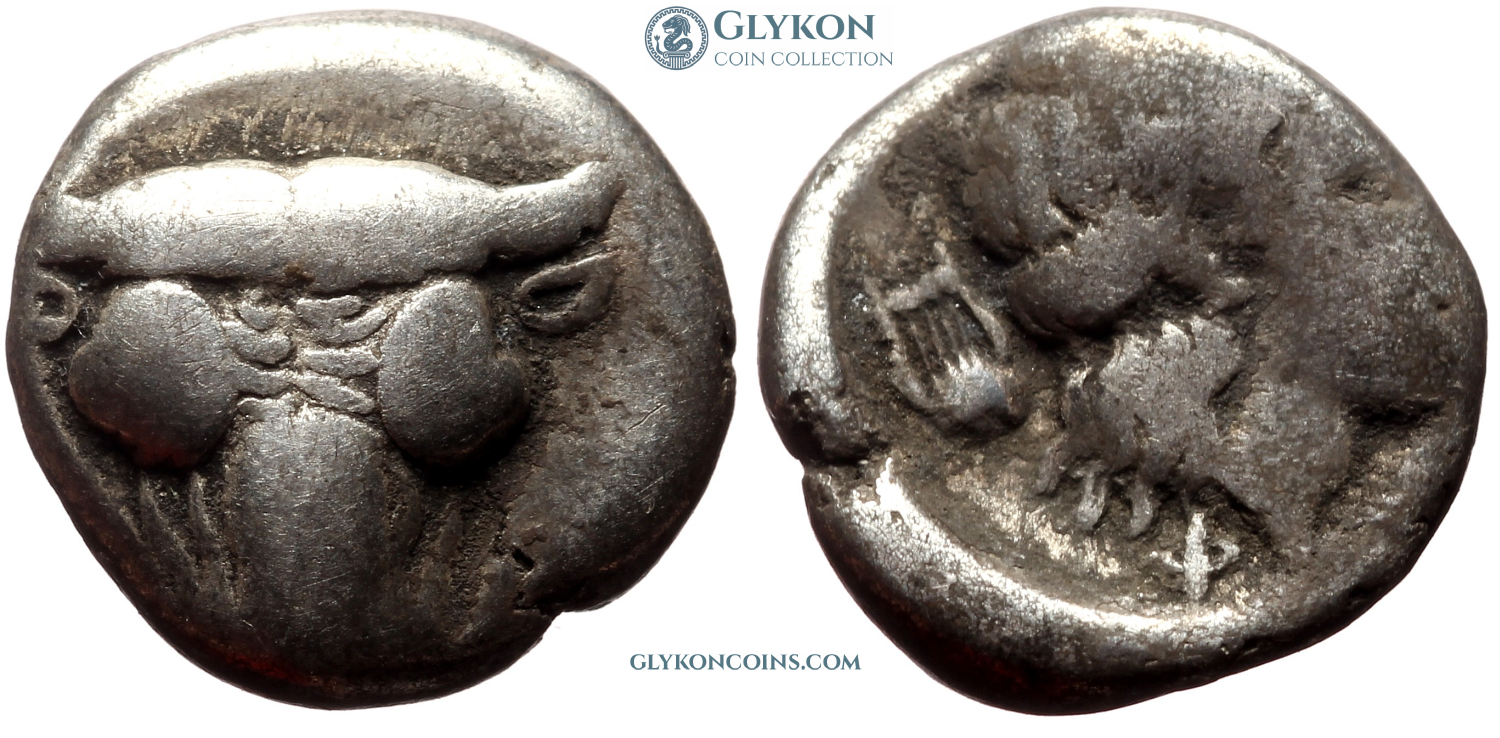
Phocian Confederacy
Denomination: Triobol/Hemidrachm
Time: 354-352 BC, magistracy of Onomarchos
Weight: 2.60 g
Diameter: approx. 12.5 mm
Reference: BCD 294, BMC 81
Obverse: Bull's head facing.
Reverse: Head of Apollo facing right, lyre behind.
Comment: minted at the time of the Third Sacred War, likely from silver looted by the Phocians from the Oracle of Delphi's treasury. |
|
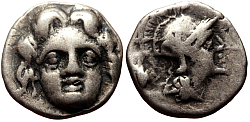 |
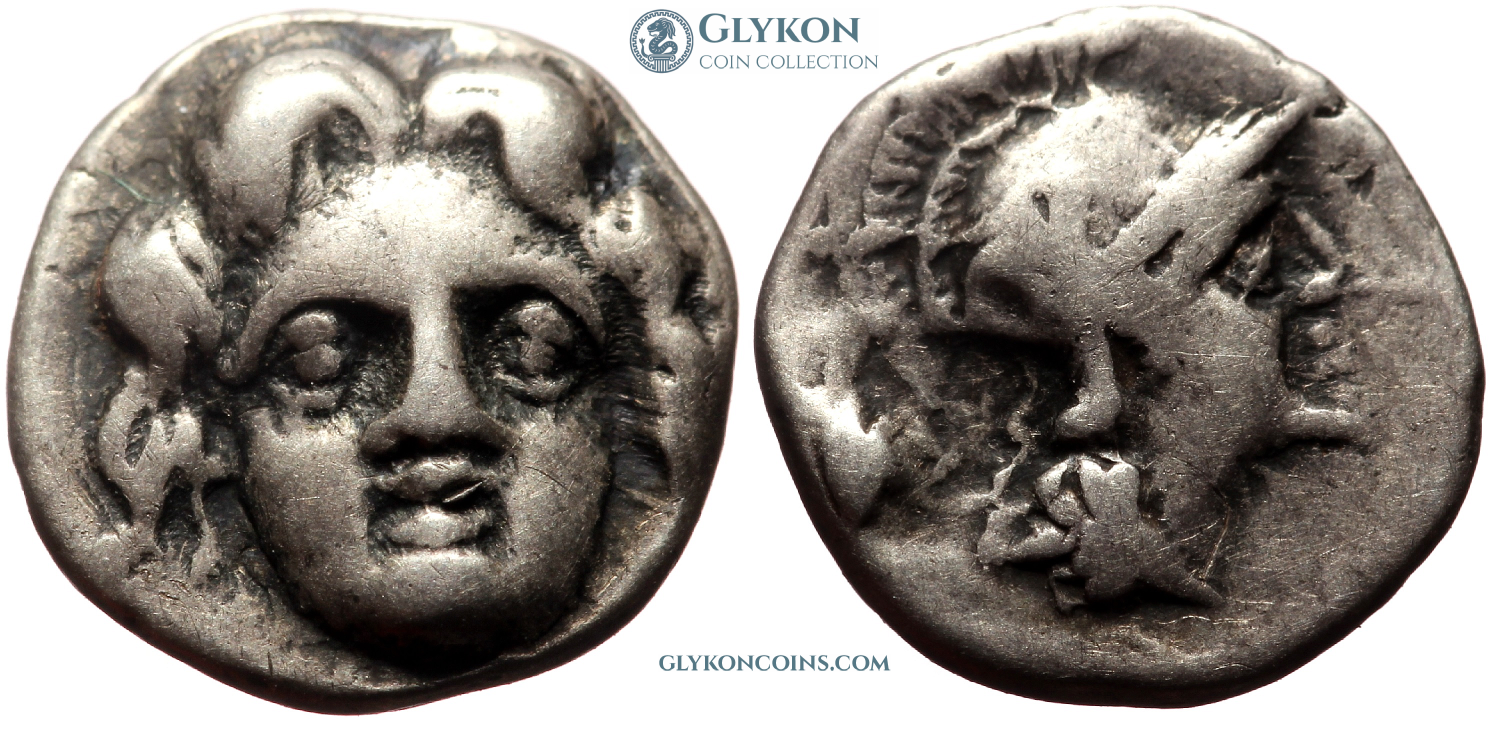
Selge (Pisidia)
Denomination: Obol
Time: 350-300 BC
Weight: 0.96 g
Diameter: approx. 9.7 mm
Reference: SNG Paris 1930-1934. SNG von Aulock 5266
Obverse: Facing head of a Gorgoneion.
Reverse: Head of Athena wearing a crested helmet facing right, astragalos symbol behind. |
|
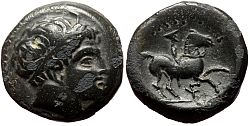 |
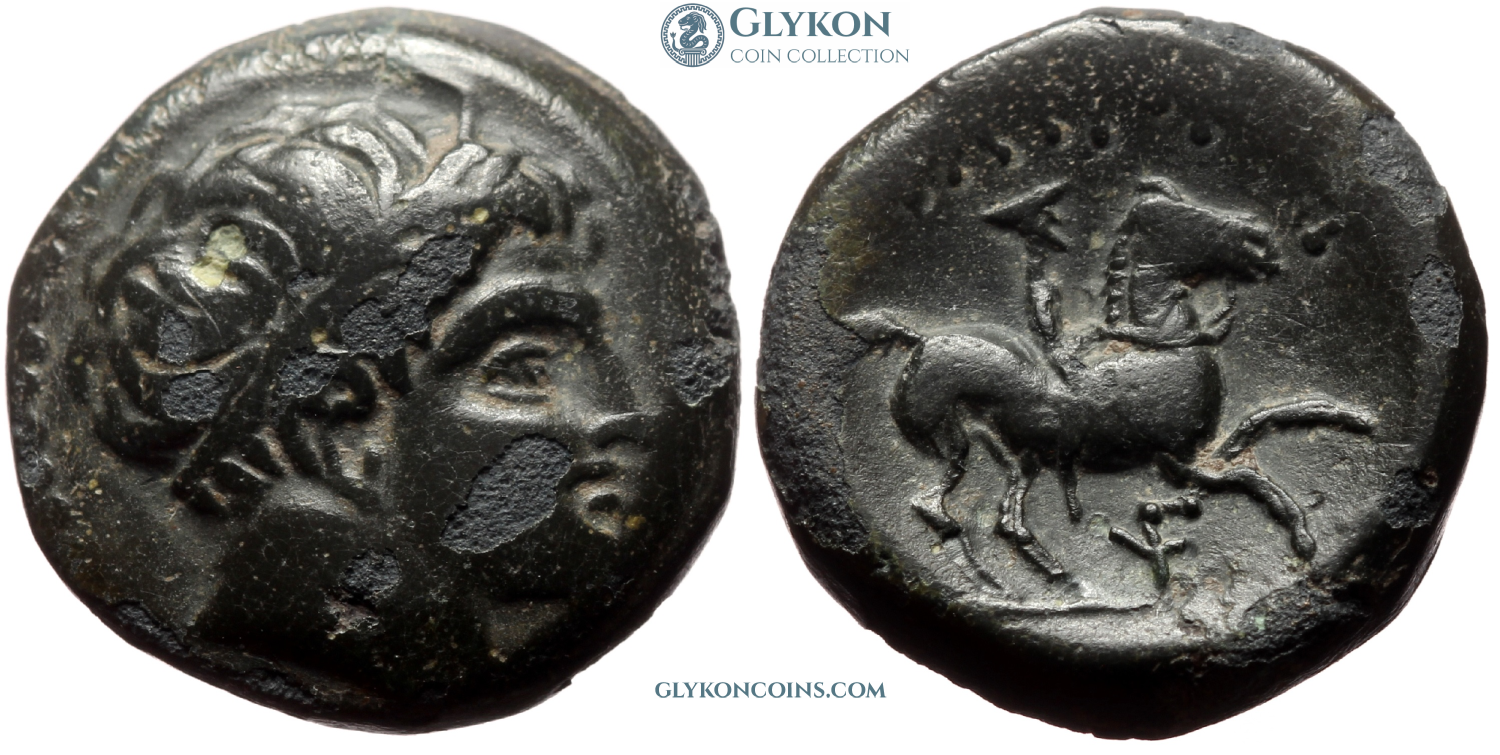
Macedon, Philip II (359-336 BC)
Denomination: AE16
Mint: Pella (?)
Time: 359-336 BC
Weight: 5.91 g
Diameter: approx. 16.7 mm
Reference: SNG Cop. 582-612 var
Obverse: Head of youthful Apollo facing right, hair bound.
Reverse: Youthful rider wearing petaos facing right. Legend: ΦIΛIΠΠΟΥ above. Control mark below. |